TL;DR Bitcoin inflows from retailers on Binance have fallen to a record low, averaging 329 BTC per day. Retail participation remains far below the levels seen during the 2018 and 2021 market
TL;DR
- Bitcoin inflows from retailers on Binance have fallen to a record low, averaging 329 BTC per day.
- Retail participation remains far below the levels seen during the 2018 and 2021 market cycles.
- Spot Bitcoin ETFs and changing investor behavior may be contributing to weaker retail exchange activity.
- The latest data suggests institutional participation continues to play a larger role in the Bitcoin market.
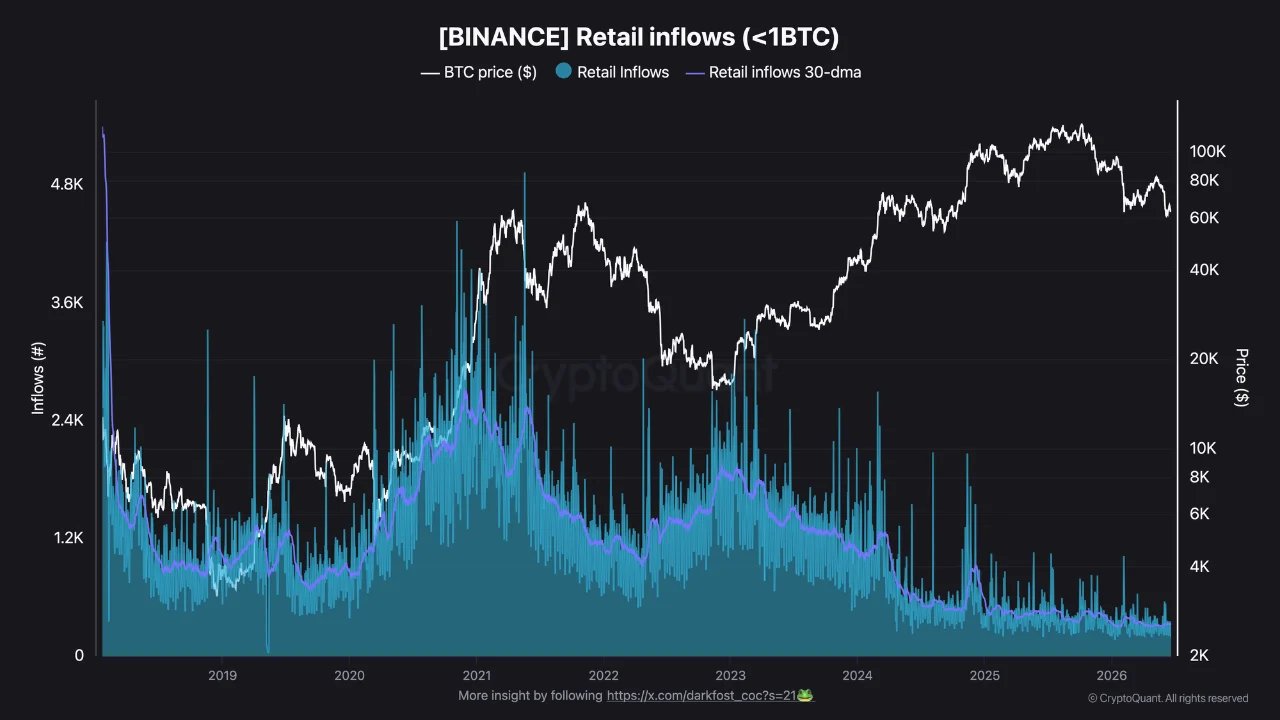
Retail participation in the market continues to weaken, with Bitcoin inflows on Binance by retailers falling to their lowest level since the exchange launched, according to CryptoQuant data. The latest figures show that wallets depositing less than 1 BTC into Binance now average 329 BTC per day on a monthly basis, a sharp decline from previous market cycles.
Looking at metrics, compared with earlier bull markets, the drop is significant. During the 2021 cycle, average daily retail inflows on Binance reached 2,690 BTC, with a single-day peak of 4,900 BTC in May. In 2018, monthly average inflows were even higher at 3,700 BTC, while daily deposits climbed to a record 10,400 BTC on January 4.
Binance Retail Inflows Data | Source:
CryptoQuantThe data suggests that retail traders have played a much smaller role in the current Bitcoin cycle than in previous years, even as institutional participation has continued to expand.
Retail Activity Remains Well Below Previous Market Cycles as Bitcoin Inflows Increase
CryptoQuant’s chart shows a steady decline in retail inflows over the past several years, with the latest readings marking the weakest participation recorded on Binance.
Several factors may explain the trend. Some investors may have shifted their exposure away from Bitcoin toward other digital assets, while others have opted for alternative investment vehicles such as spot Bitcoin exchange-traded funds (ETFs). The growing availability of regulated ETFs has provided investors with another way to gain Bitcoin exposure without holding the asset directly on a cryptocurrency exchange.
The data may also reflect changing investor behavior. Rather than actively trading, some retail holders could be maintaining longer investment horizons or waiting for stronger market conditions before increasing their exposure.
Unlike previous market cycles, Bitcoin’s recent highs failed to trigger a meaningful increase in retail deposits on Binance, suggesting that the composition of the market continues to evolve.
Institutional Participation Appears to Reshape the Bitcoin Market
The latest figures align with broader market trends showing weaker retail demand throughout 2026. Previous CryptoQuant data indicated that monthly retail Bitcoin inflows had fallen to just over 300 BTC, while retail demand growth weakened significantly after a brief recovery earlier in the year.
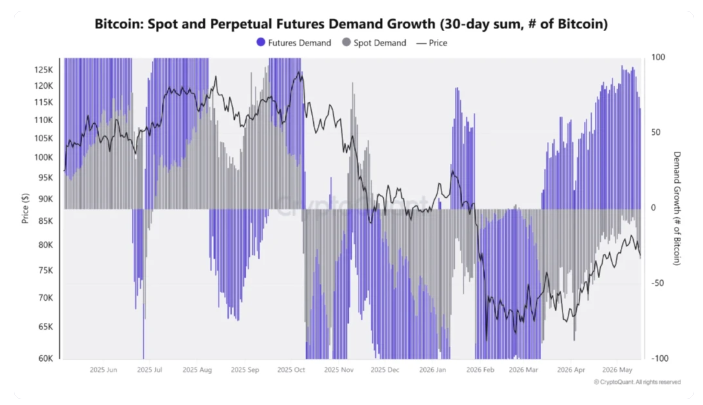
At the same time, earlier market analysis showed that Bitcoin’s recoveries were increasingly supported by futures activity rather than strong spot buying. During recent rebounds, futures demand remained positive while spot demand stayed negative, highlighting a disconnect between derivatives markets and direct Bitcoin purchases.
Futures Demand Data | Source:
CryptoQuantThe continued decline in retail inflows also suggests that the selling pressure once generated by small investors has become far less influential than in earlier cycles. While the data does not identify a single cause, it points to a Bitcoin market that is increasingly shaped by institutional products, evolving investment strategies, and changing participant behavior rather than the retail-driven rallies seen in previous years.
The post Bitcoin Inflows by Retailers on Binance Fall to Record Low as Market Participation Continues to Shift appeared first on Blockonomi.