Bitcoin has surged past $123,000 in 2025, cementing its status as the top-performing asset of the year so far. With year-to-date (YTD) gains exceeding 30%, it has outperformed gold (~27%) and
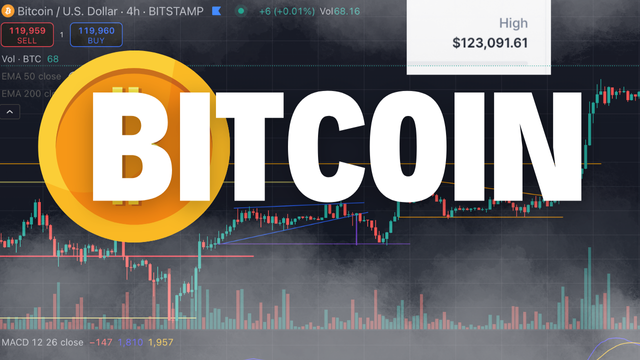
Bitcoin has surged past $123,000 in 2025, cementing its status as the top-performing asset of the year so far. With year-to-date (YTD) gains exceeding 30%, it has outperformed gold (~27%) and many traditional asset classes. But behind this explosive growth is a complex blend of macroeconomic factors, technical patterns, and institutional dynamics.

1. Institutional Inflows Drive Momentum
One of the most powerful forces behind Bitcoin's rally has been institutional participation:
- In the past 30 days alone, U.S.-based spot Bitcoin ETFs saw $5.2 billion in net inflows.
- Corporations have accumulated at least $280 million worth of Bitcoin for their treasuries.
- Bitcoin’s increasing role as a corporate reserve asset marks a shift in how traditional businesses are treating crypto.
This growing institutional confidence has spilled over into other cryptocurrencies—Ethereum and Solana, in particular—gaining traction as potential long-term investment targets.

2. Regulatory Momentum: The Stablecoin Bill and Beyond
In parallel, the U.S. Congress is preparing to pass major legislation on digital assets:
- A Stablecoin Bill is being reviewed, aiming to provide clarity and accountability to crypto-backed digital dollars.
- Other measures from "Crypto Week" include the Clarity Act and Anti-CBDC Surveillance State Act, which aim to protect innovation while setting a regulatory foundation.
This wave of regulation, instead of spooking investors, appears to be instilling confidence that crypto is being taken seriously at the federal level.
3. Supply Constraints: Demand Outpacing Miner Output
Bitcoin’s rally is also being supported by fundamental supply-demand imbalances:
- Mining output has slowed post-halving, yet demand—especially from ETFs and institutions—has surged.
- This imbalance adds upward pressure to prices and contributes to the bullish thesis.
4. Macroeconomic Backdrop: Dollar Weakness and Geopolitical Risk
Broader macroeconomic conditions have also played in Bitcoin’s favor:
- The U.S. Dollar Index (DXY) has weakened amid global uncertainty.
- Investors are increasingly viewing Bitcoin as a hedge against inflation, fiat instability, and geopolitical unrest.
- Former President Trump’s announcement of a 30% import tariff on Mexico and the EU, set to take effect on August 1, created volatility in markets and pushed capital toward hard assets.
Although Bitcoin and Ethereum saw slight pullbacks following the announcement, XRP showed strength with a ~1.8% rise, suggesting that not all crypto assets react uniformly to macro shocks.
5. Technical Patterns & Price Models
Technically, Bitcoin is showing signs of a continuation pattern:
- Analysts identify a bull flag formation, potentially pointing to a breakout above $140,000.

- The Stock-to-Flow (S2F) model projects a price target of more than$330,000 by the end of 2025 if current momentum sustains

However, some caution is warranted. The Crypto Fear & Greed Index currently reads 70, indicating the market is entering overbought territory.

6. Market Structure: Why BTC Is Pausing in the $120K–$130K Range
Despite strong fundamentals, Bitcoin appears to be consolidating between $120K and $130K. Three key structural factors explain this:
A. Dealer Gamma Effect
- Options market makers (dealers) hold many contracts centered around this price range.
- As prices approach $120K or $130K, dealers hedge by buying or selling, effectively suppressing large swings.
B. DVOL (Implied Volatility)
- Implied volatility is around 36%, near recent lows.
- This suggests the market isn’t expecting major short-term moves—although a sharp rise in DVOL could trigger a breakout or correction.
C. Dollar Strength (DXY)
- A stronger dollar reduces investor appetite for riskier assets like Bitcoin.
- This serves as a headwind for further immediate gains.
Conclusion: What’s Next?
Bitcoin’s 2025 rally is being driven by a rare alignment of institutional demand, macroeconomic catalysts, and technical setups. Yet as the market consolidates and indicators signal possible exhaustion, traders should balance optimism with caution.
With regulatory clarity on the horizon, persistent corporate accumulation, and ETFs showing record inflows, the long-term case for Bitcoin remains compelling. Still, near-term volatility and macro risks—like trade tensions and liquidity conditions—could influence the pace of the next breakout.
All eyes are now on whether BTC can break decisively above $130K—or whether this current rally takes a breather before another leg up.