Bitcoin traders heading into the Federal Reserve's September policy decision have positioned for a rate hike as their base case, yet the asymmetric risk may lie elsewhere: an unexpected hold
Bitcoin traders heading into the Federal Reserve's September policy decision have positioned for a rate hike as their base case, yet the asymmetric risk may lie elsewhere: an unexpected hold could force a faster and more disorderly repricing than a hike that markets have already absorbed into positioning.
Why Bitcoin Traders Are Positioned for a Hike, Not a Pause
When a policy outcome is widely anticipated, it tends to become embedded in market positioning well before the announcement itself. Traders who expect a hike have already adjusted leverage, hedges, and dollar exposure accordingly, meaning the hike itself delivers less shock than the expectation premium already paid. For related coverage, see ZKP Crypto’s 6,000x Growth Setup Steals the Spotlight as Bitcoin Holds $89K & ETH Struggles Near $3.9K.
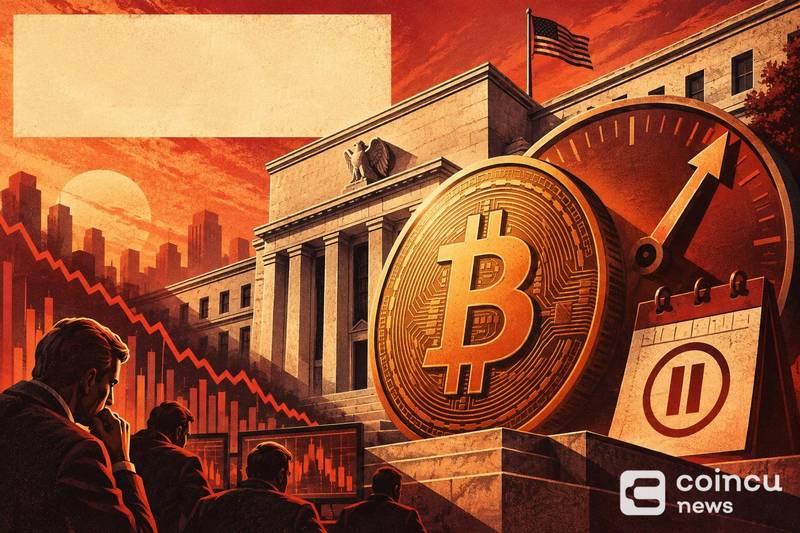
The Federal Open Market Committee meeting calendar sets the date against which all of this positioning is timed. Bitcoin, which trades continuously and reacts to macro liquidity signals in real time, is particularly sensitive to the gap between what the Fed does and what traders expected it to do, as crypto markets demonstrated ahead of Fed Chair Kevin Warsh's Jackson Hole speech earlier this year.
The base-case expectation for a hike is also relevant to institutional positioning in adjacent structures: activity in corporate Bitcoin treasury strategies and structured products often recalibrates around macro rate inflection points, since the cost of capital and dollar liquidity conditions affect the attractiveness of BTC-denominated exposure.
How a Surprise Hold Creates More Disruption Than a Priced-In Hike
A surprise hold forces traders to rapidly unwind assumptions built into their current positions. Where a hike confirms the consensus, a hold invalidates it, and the speed of that repricing, rather than its direction, is where the volatility is generated. Traders on both sides of the Bitcoin market must simultaneously reassess, as analysis of the positioning dynamics ahead of this meeting has highlighted.
A hold is also ambiguous in a way a hike is not. It can signal that the Fed sees deteriorating financial conditions and is pausing out of caution, which is bearish for risk assets including Bitcoin. Alternatively, it can signal that the tightening cycle is nearing its end, which has historically been supportive for assets sensitive to dollar liquidity. That interpretive split means the initial price move may reverse sharply as the Fed's accompanying statement and press conference provide more context.
This dynamic is directly relevant to readers tracking on-chain valuation signals for Bitcoin, since macro-driven repricing events can distort short-term transfer volumes and complicate chain-level analysis.
What to Watch After the Fed Announces
The first Bitcoin move after the decision is typically a headline reaction to the rate outcome itself. The more informative signal comes in the minutes following the Fed's statement and during the press conference, when forward guidance and the rationale behind the decision become clear. A hold explained by caution about credit conditions carries a different implication than a hold framed as a deliberate pause in a completed cycle.
Traders should watch the US dollar index alongside Bitcoin, since a surprise hold that weakens the dollar tends to provide a liquidity tailwind for BTC, while a hold that strengthens the dollar on safe-haven demand suggests the opposite. Treasury yields, particularly the 2-year, will reflect the market's revised expectations for future rate changes within minutes of the announcement and serve as a leading indicator for how derivatives markets reprice Bitcoin's short-term trajectory.
Derivatives positioning itself matters here. Open interest concentration at specific strike prices in Bitcoin options can amplify moves if the surprise outcome triggers a cascade of gamma exposure. Monitoring funding rates on perpetual futures in the hour after the decision reveals whether the initial directional move is being chased with leverage or faded, a distinction that separates a durable repricing from a stop-hunt spike. Institutional flows into Bitcoin-linked products, similar to those tracked around structured Bitcoin lending facilities, may also shift materially if the macro liquidity regime interpretation changes.
FAQ: Bitcoin and the Fed Rate Decision
Can a Fed rate hike already be priced into Bitcoin?
Yes. When traders widely expect a hike, they incorporate that expectation into positioning before the meeting. The announcement then confirms rather than surprises, limiting the additional price impact. The risk premium for the expected outcome has already been paid.
Why could a Fed hold move Bitcoin more than a rate hike?
A hold is an unexpected outcome when consensus expects a hike. Unexpected outcomes require traders to unwind existing positions quickly, and the speed of that unwind, combined with the interpretive ambiguity of a hold, can produce larger and more volatile moves than a hike that simply confirms the consensus.
Which markets should Bitcoin traders watch after the decision?
The US dollar index, 2-year Treasury yields, and Bitcoin perpetual futures funding rates provide the most immediate macro context. Dollar strength or weakness after the announcement is a direct signal of how the market is interpreting the policy rationale, while funding rates show whether leverage is being added to the initial Bitcoin move or reduced.
Disclaimer: This article is for informational purposes only and does not constitute financial or investment advice. Cryptocurrency and digital asset markets carry significant risk. Always do your own research before making decisions.
The post Bitcoin Traders Brace for Fed Hike as Surprise Hold Raises Risk was initially published on Coincu.