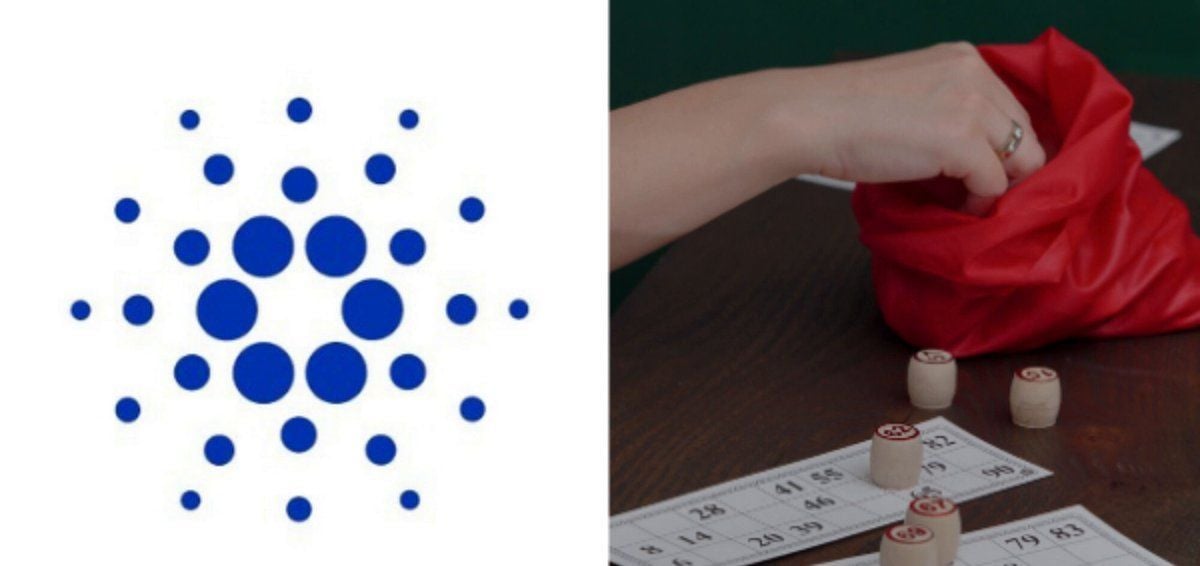
Most blockchains make leader selection visible to everyone on the network. Cardano does the opposite. At every slot, each stake pool runs a private lottery that only it can see, and the resul
Most blockchains make leader selection visible to everyone on the network. Cardano does the opposite. At every slot, each stake pool runs a private lottery that only it can see, and the result determines whether that pool gets to produce the next block.
How the Private Lottery Works
The mechanism behind this is a verifiable random function (VRF). VRFs allow pools to run a lottery locally and privately using a secret key. If the resulting number falls below a certain threshold, that pool is elected slot leader.The threshold is calculated so that the higher a pool's stake, the higher its probability of winning the slot.
The privacy is intentional and serves a security purpose: because no outsider can observe the draw in advance, attackers cannot identify and target upcoming block producers. Some slots produce no winner at all; occasionally two pools win simultaneously, and the protocol handles both outcomes by design. Short forks happen when two leaders produce blocks close together, known as slot battles, and nodes keep the valid chain with more blocks or density.
If a pool wins, it includes a proof in the block so everyone can verify the win after the fact.In Praos, each epoch has an agreed-upon nonce that all participants must use as input to their VRF. That nonce is derived by hashing values from the blocks of the previous epoch, which is the loop encoded in the name Ouroboros, the ancient symbol of a snake eating its own tail.
Ouroboros is the first provably secure proof-of-stake protocol, and the first blockchain protocol to be based on peer-reviewed research.In the Cardano protocol, time is divided into epochs that last 432,000 slots, each lasting one second.
Delegation: Staking Rights Without Giving Up Your Coins
Delegating $ADA to a pool on @Cardano assigns participation rights only. Cardano's delegation is non-custodial: your ADA never leaves your wallet. You issue an on-chain certificate that counts your stake toward a pool while keeping full spending control. Any ADA spent simply drops out of the stake count for that epoch.
There is no lock-up and no slashing. Delegated ADA is never at risk.The more ADA a validator controls, either their own or delegated from others, the higher the probability of being chosen to create a block and receive rewards.
The combination of a private VRF lottery and non-custodial delegation gives Cardano's consensus model two distinctive properties: a meaningful security layer against targeted attacks, and a staking experience that keeps holders in full control of their funds at all times.
Sources:Cardano.org: Ouroboros Proof-of-Stake ProtocolCardano Foundation: Introduction to Proof of Stake BlockchainsCardano Developer Portal: Staking and Delegation