Markets4 min read
AI Is Going to Police AI
As autonomous AI agents take on more responsibility, a new challenge is emerging: who makes sure they're following the rules? Increasingly, the answer may be other AI systems. Artificial inte
The U.S. Commodity Futures Trading Commission has signaled that retail cash Bitcoin transactions may remain subject to futures-era regulatory rules even when a buyer declines financing, accor
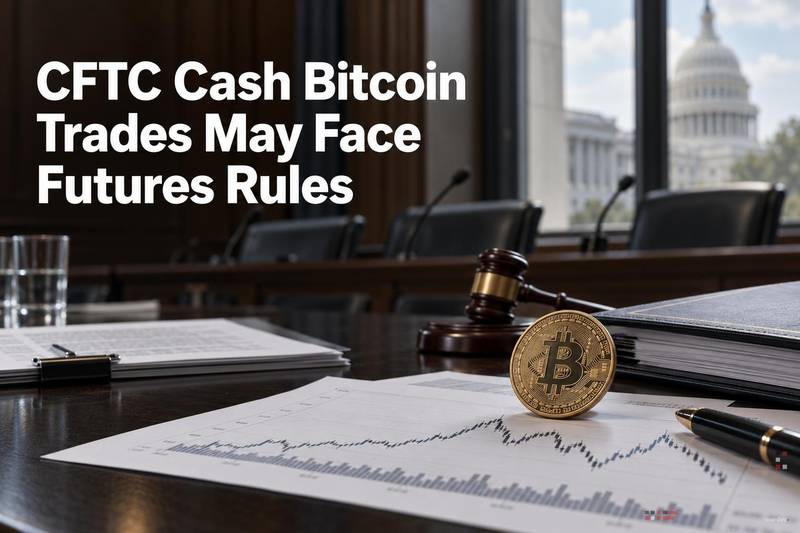
The U.S. Commodity Futures Trading Commission has signaled that retail cash Bitcoin transactions may remain subject to futures-era regulatory rules even when a buyer declines financing, according to a reported CFTC position. The stance suggests that refusing a loan or credit arrangement does not, by itself, determine how a retail Bitcoin trade is classified under U.S. commodity law.
Under the Commodity Exchange Act, certain retail commodity transactions, including spot Bitcoin trades offered to consumers, can be treated as futures contracts if they are not delivered within 28 days and are offered on a leveraged, margined, or financed basis. The reported CFTC position, as reflected in its published guidance on retail commodity transactions involving digital assets, is that the financing element of this test may look beyond whether the individual buyer accepted or declined a loan. For related coverage, see Bitcoin steady as X readies Smart Cashtags trading.
A cash Bitcoin trade is one where a buyer pays in full without borrowing. Financing, in a regulatory sense, typically refers to arrangements where the seller or a connected party extends credit or holds collateral on behalf of the buyer. The CFTC's reported view implies that the platform's capacity to offer financing, or the structural conditions under which the trade occurs, may weigh on the classification even when the individual buyer opts out. Readers should treat this as a reported regulatory stance, not legal advice, and note that transaction-specific facts will determine actual outcomes. For related coverage, see UK Judge Applies Chinese Law in £4B Bitcoin Fraud Claims.
This question has drawn attention alongside broader disputes about which agency governs spot crypto markets, including the CME Group's challenge to CFTC authority over Bitcoin perpetual futures and the CME lawsuit challenging Kalshi's Bitcoin leverage push, both of which hinge on where the CFTC's jurisdictional reach ends.
For traders, the key variables appear to be whether Bitcoin is actually delivered to their custody within the regulatory window, how the platform structures payment and collateral arrangements, and whether the platform has the ability to extend credit even if the specific buyer declines it. These are fact-specific questions that vary by exchange and trade type. CFTC positioning data already shapes how institutional players approach Bitcoin derivatives; retail participants may face analogous scrutiny on spot platforms.
A regulatory position communicated through guidance or enforcement precedent carries weight, but it is not the same as a court judgment or a final rulemaking. Platforms and traders who believe their transactions fall outside futures-rule coverage will need qualified legal counsel to assess specific facts. The core takeaway from the reported CFTC stance is direct: a buyer declining financing does not, standing alone, insulate a retail Bitcoin trade from futures-law treatment.
Additional source references: source document 1.
Disclaimer: This article is for informational purposes only and does not constitute financial or investment advice. Cryptocurrency and digital asset markets carry significant risk. Always do your own research before making decisions.
Read original article on coinlive.me