The CLARITY Act has lost momentum after Senate leaders ruled out passage before the August recess. Political disputes surrounding ethics rules and crypto oversight continue to dominate Senate
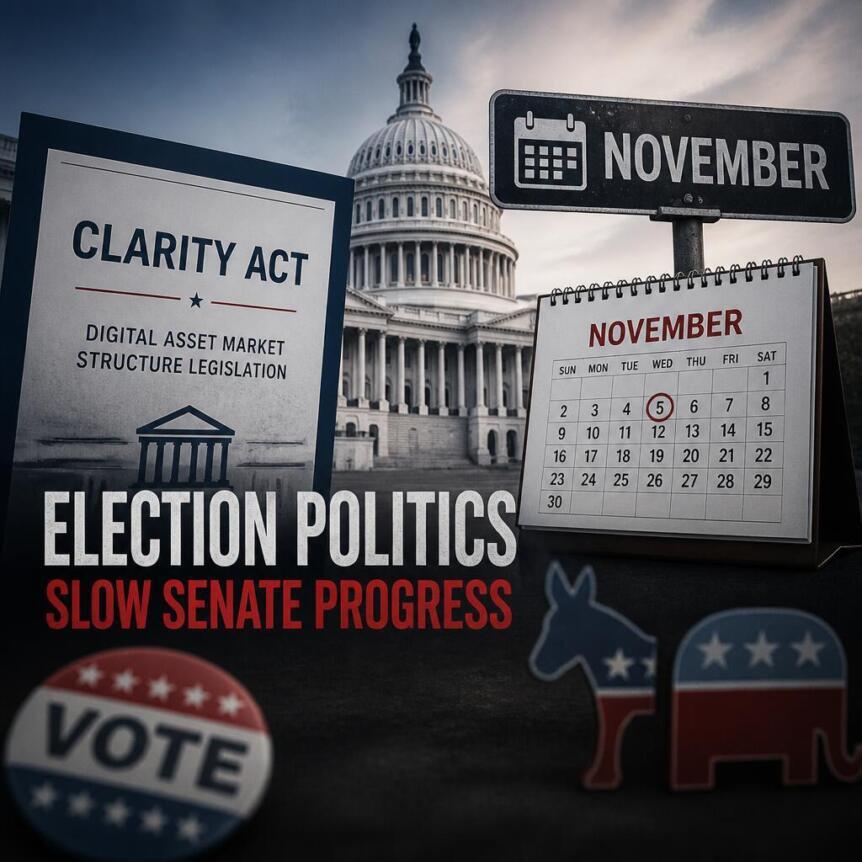
The CLARITY Act has lost momentum after Senate leaders ruled out passage before the August recess. Political disputes surrounding ethics rules and crypto oversight continue to dominate Senate discussions. As a result, attention has shifted toward a possible November window when election pressures may ease.
Election Politics Pushes Clarity Act Beyond August
The CLARITY Act has entered another period of uncertainty after Senate Majority Leader John Thune indicated that lawmakers will not pass it before the August recess. As a result, industry participants now expect the Senate to revisit the legislation later this year. Current discussions now point toward November as the next realistic opportunity for progress.
Wintermute Head of Policy and Advocacy Ron Hammond believes election politics now outweigh legislative momentum despite bipartisan backing. He maintains that the bill still has enough support across party lines to advance. However, political priorities continue to dominate Senate activity before the midterm elections.
The latest delay follows months of negotiations involving lawmakers, regulators, and crypto industry representatives. Supporters continue promoting the bill as a framework for digital asset market regulation. Meanwhile, political disagreements have slowed efforts to move the legislation toward a final Senate vote.
Ethics Debate Adds Pressure to Senate Negotiations
Ethics provisions involving President Donald Trump and other federal officials have become another major issue surrounding the CLARITY Act. Democratic lawmakers continue seeking stronger restrictions on elected officials participating in crypto business activities. Republicans have shown greater willingness to discuss additional safeguards during negotiations.
The latest draft includes Department of Justice oversight for ethics enforcement involving public officials and digital assets. However, several Democratic lawmakers argue that the proposal gives excessive authority to the Justice Department. Consequently, negotiations over governance standards continue without reaching broad agreement.
Political messaging before the elections has also increased pressure on bipartisan negotiations. Senate Minority Leader Chuck Schumer reportedly wants Democrats to emphasize corruption concerns during the campaign period. That strategy could reduce bipartisan cooperation until election-related political activity declines later this year.
The ethics debate has developed alongside wider discussions about regulatory transparency across the digital asset sector. Lawmakers continue balancing market oversight with concerns surrounding conflicts of interest. Therefore, ethics negotiations remain closely linked to the broader regulatory framework within the legislation.
Banking Opposition and Legislative Priorities Create More Obstacles
Hammond also identified banking organizations and other crypto opponents as contributors to the legislative slowdown. According to his assessment, those groups continue extending policy discussions during every negotiation stage. Their continued participation has increased the time required for lawmakers to address outstanding issues.
At the same time, Congress faces an increasingly crowded legislative calendar during the remaining months of the year. Government funding measures require immediate attention before existing deadlines expire. Defense legislation also remains among the Senate’s highest priorities before lawmakers conclude the current session.
Prediction markets now reflect lower expectations for the CLARITY Act becoming law before year-end. Polymarket currently assigns a 37% probability to passage this year, compared with previous expectations above 80%. That decline reflects growing uncertainty surrounding the Senate timetable rather than changes in the bill itself.
The CLARITY Act previously gained bipartisan support after lawmakers sought clearer rules for digital asset markets. Supporters argue that the legislation would define regulatory responsibilities between federal agencies while establishing legal certainty for crypto businesses. Despite that objective, election politics, ethics negotiations, banking opposition, and competing legislative priorities continue delaying Senate action, leaving November as the most discussed period for renewed consideration.
This article was originally published as Clarity Act Faces November Timeline as Election Politics Slow Senate Progress on Crypto Breaking News – your trusted source for crypto news, Bitcoin news, and blockchain updates.