Cornell University has released a Bitcoin Adoption Index measuring real-world BTC usage across countries, with El Salvador and Venezuela emerging at the top of the ranking, an academic framin
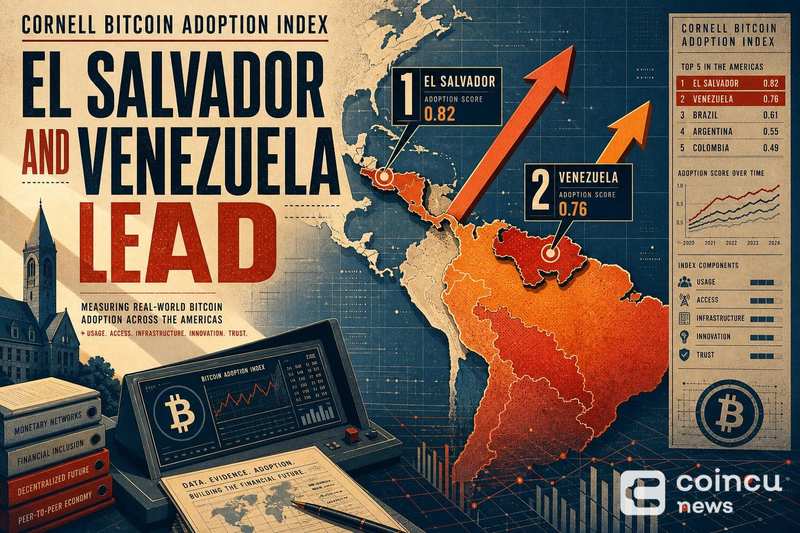
Cornell University has released a Bitcoin Adoption Index measuring real-world BTC usage across countries, with El Salvador and Venezuela emerging at the top of the ranking, an academic framing that shifts the adoption conversation away from price and toward measured, country-level use.
Cornell Attaches an Academic Lens to Bitcoin Adoption
The index originates from Cornell University's public policy research, which maintains a dedicated cryptocurrencies research hub under its Brooks School policy program. The development is an institutional publication rather than a market rumor or community estimate. For related coverage, see Hackers Target $8.7 Billion Mt. Gox Bitcoin Wallets.
The effort carries a standalone presence at the Cornell Bitcoin index site, positioning it as an ongoing measurement project rather than a one-off report. This is an adoption-measurement update, not a Bitcoin price story. For related coverage, see Coinbase appoints Anthony Armstrong to board and audit committee.
An academic index matters because it introduces a documented, repeatable methodology to a subject often dominated by anecdote. That distinguishes it from the enforcement, exchange, and stablecoin headlines that have driven recent coverage, such as reporting on bank-led U.S. dollar stablecoin plans. For related coverage, see Kraken parent company Payward delays IPO to Q2 2027.
Why El Salvador and Venezuela Stand Out
El Salvador and Venezuela lead the ranking, the single most notable outcome of the release. The focus here is leadership in the adoption ranking itself, not assumed economic causes that the available evidence does not confirm.
El Salvador's position reflects its status as a country that formally embraced Bitcoin at the state level. Venezuela's placement points to grassroots and transactional use rather than any official state adoption.
Beyond the two leaders, specific rank numbers and the full country list are not established by the available evidence, and this article does not reconstruct them.
What the Index Signals About Global Adoption
An adoption index is, by construction, an attempt to measure real-world Bitcoin usage or penetration rather than speculative trading interest. The countries highlighted indicate the story is about geographic adoption leadership.
That framing separates adoption narratives from trading narratives: the index tracks where Bitcoin is used or held, not where it is most actively speculated on. For builders and policy watchers, that is a different signal than exchange volume or ETF flows.
The index was presented publicly at the Oslo Freedom Forum, where organizers announced a global Bitcoin adoption index session, aligning the project with human-rights and financial-access themes.
How This Index Can Shape Future Bitcoin Coverage
A named index from a university creates a reference point that future adoption discussions can cite, much as regulatory milestones like the Clarity Act timeline now anchor policy reporting.
The unveiling was documented in independent coverage of the index's Oslo Freedom Forum debut, giving media and analysts a shared framing device for country-level Bitcoin stories.
What remains unclear is the full methodology, the complete ranking, and the update cadence. Those details would matter for any follow-up reporting, and they are the concrete next items to watch as Cornell expands the project.
FAQ About the Cornell Bitcoin Adoption Index
What is the Cornell Bitcoin Adoption Index? It is a Bitcoin adoption ranking published through Cornell University's public policy research, measuring country-level Bitcoin usage.
Which countries lead the index? El Salvador and Venezuela lead the ranking as released.
Why are El Salvador and Venezuela important in Bitcoin adoption discussions? El Salvador is associated with state-level Bitcoin adoption, while Venezuela reflects grassroots transactional use, making both frequent references in adoption debates.
What does the index mean for Bitcoin's global adoption narrative? It provides an academic benchmark for measuring real-world usage, distinct from price or trading activity, that future coverage can reference.
Disclaimer: This article is for informational purposes only and does not constitute financial or investment advice. Cryptocurrency and digital asset markets carry significant risk. Always do your own research before making decisions.
The post Cornell Bitcoin Adoption Index: El Salvador and Venezuela Lead was initially published on Coincu.