



Critical Escalation: US Military Strikes Iran’s Kharg Island Oil Terminal
 BRENT
BRENT
 UTED
UTED
 GAS
GAS
 SECURITY
 CAG
CAG
BitcoinWorld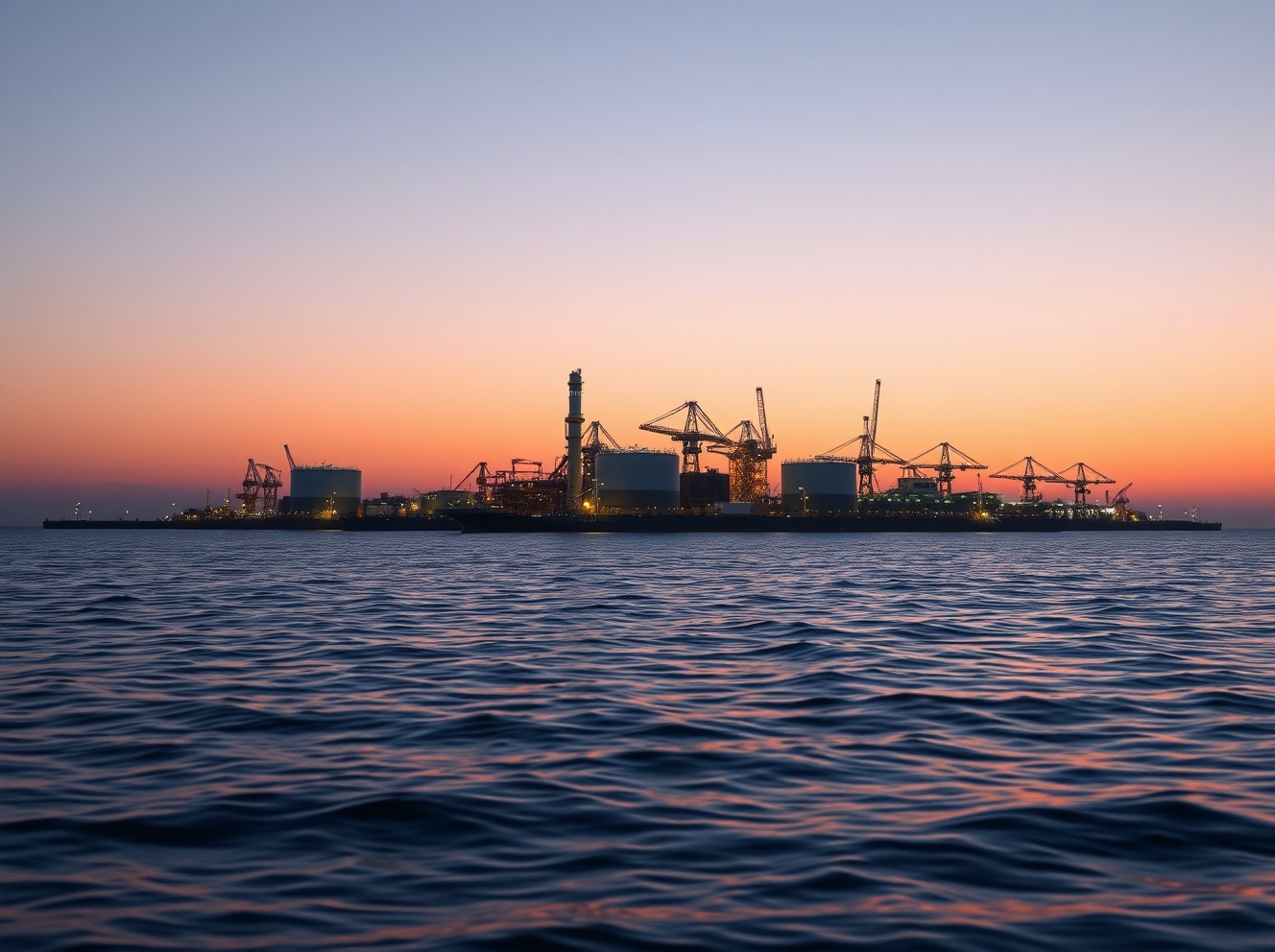
Critical Escalation: US Military Strikes Iran’s Kharg Island Oil Terminal
WASHINGTON, D.C. – March 2025. The United States military executed precision strikes against strategic targets on Iran’s Kharg Island, according to multiple defense officials and reporting by Axios. This significant escalation marks a direct confrontation with Iranian infrastructure in the Persian Gulf. Consequently, global energy markets reacted immediately to the news. Furthermore, regional tensions have reached their highest point in years.
US Military Strikes Iran’s Critical Kharg Island Facility
The Pentagon confirmed operations against Iran’s Kharg Island on Tuesday. Significantly, this facility represents Iran’s primary oil export terminal. Located in the northern Persian Gulf, Kharg Island handles approximately 90% of Iran’s crude oil exports. Therefore, targeting this infrastructure carries substantial economic and symbolic weight. Defense officials described the strikes as limited and precise. However, they acknowledged the operation’s strategic importance.
Military analysts immediately noted several key factors. First, Kharg Island’s geographical position makes it vulnerable. Second, its economic role for Iran cannot be overstated. Third, previous tensions have focused on shipping lanes rather than fixed infrastructure. The operation reportedly involved multiple aircraft and precision-guided munitions. Importantly, initial assessments indicate damage to loading docks and storage areas. Meanwhile, Iranian state media confirmed the attacks but downplayed their impact.
Strategic Context and Historical Background
Understanding this escalation requires historical context. Kharg Island has served as Iran’s oil lifeline for decades. Originally developed in the 1960s, the facility survived extensive damage during the Iran-Iraq War. Subsequently, Iran invested billions in reconstruction and expansion. Today, the terminal can handle tankers up to 330,000 deadweight tons. Moreover, it connects to mainland pipelines across the Persian Gulf.
Recent years witnessed growing tensions in the region. Specifically, incidents involving commercial shipping and drone attacks increased frequency. Additionally, negotiations regarding Iran’s nuclear program reached stalemate. The United States maintained a substantial naval presence throughout this period. Fifth Fleet headquarters in Bahrain coordinates regional operations. Consequently, military planners long identified Kharg Island as a potential target.
Expert Analysis of Military Implications
Security experts emphasize several critical considerations. Dr. Elena Rodriguez, Middle East security analyst at the Center for Strategic Studies, provided analysis. “Targeting Kharg Island represents a calculated escalation,” Rodriguez stated. “Unlike previous engagements focusing on proxies, this directly impacts Iranian state infrastructure.” She further noted the operation’s timing relative to broader geopolitical developments.
Military strategists point to several possible objectives. Primarily, the strikes aim to demonstrate capability without triggering full-scale conflict. Additionally, they may seek to degrade Iran’s oil revenue temporarily. However, experts caution about potential Iranian responses. Historically, Iran employs asymmetric warfare through regional proxies. Furthermore, Tehran could escalate in the Strait of Hormuz, through which 20% of global oil passes.
Immediate Impacts on Global Energy Markets
Financial markets reacted swiftly to the news. Brent crude futures jumped 8% in early trading. Similarly, West Texas Intermediate saw comparable gains. Energy analysts immediately revised price forecasts upward. “Even temporary disruption at Kharg Island affects global supply,” noted commodities strategist Michael Chen. “The market prices in both actual disruption and risk premium.”
The following table illustrates key energy market movements:
| Commodity | Price Change | Timeframe |
|---|---|---|
| Brent Crude | +8.2% | 24 hours |
| WTI Crude | +7.9% | 24 hours |
| Natural Gas (EU) | +5.1% | 24 hours |
| Shipping Rates (VLCC) | +15% | 24 hours |
Several immediate consequences emerged. First, insurance premiums for Persian Gulf shipping skyrocketed. Second, alternative supply routes gained attention. Third, strategic petroleum reserve releases became discussion topics. Major importers including China, India, and South Korea monitor developments closely. Consequently, diplomatic channels activated emergency communications.
Regional Security Dynamics and Response Patterns
Neighboring Gulf states responded cautiously. Saudi Arabia and the United Arab Emirates issued carefully worded statements. Both emphasized regional stability and freedom of navigation. Meanwhile, Qatar called for de-escalation through dialogue. Oman offered mediation services as it has previously. Regional security forces increased alert levels significantly.
Key regional developments include:
- Naval redeployments: Additional coalition vessels entered the Persian Gulf
- Air defense activation: GCC states activated missile defense systems
- Diplomatic outreach: Multiple foreign ministers initiated crisis communications
- Energy security measures: Alternative export routes received priority attention
Iran’s response involved multiple dimensions. Militarily, forces conducted exercises near the Strait of Hormuz. Politically, officials vowed “severe and decisive” retaliation. Economically, the Central Bank implemented currency stabilization measures. Internationally, Iran appealed to the United Nations Security Council. However, divisions among permanent members complicated coordinated response.
Legal and Diplomatic Considerations
International law experts debate the operation’s legality. The United States cited self-defense under Article 51 of the UN Charter. Officials referenced previous attacks on US forces and allies. Conversely, Iran denounced the strikes as unlawful aggression. The UN Secretary-General called for maximum restraint. Additionally, he emphasized diplomatic conflict resolution mechanisms.
Diplomatic channels experienced intense activity. European powers urged de-escalation while acknowledging security concerns. Russia condemned the strikes as destabilizing. China emphasized energy security and dialogue. Regional organizations including the Arab League scheduled emergency meetings. Consequently, multilateral diplomacy faces significant testing.
Long-Term Implications and Strategic Calculations
Analysts identify several potential long-term consequences. First, Iran’s oil export capabilities may require diversification. Second, regional security architectures could undergo reassessment. Third, global energy transition timelines might accelerate. Fourth, great power competition in the Middle East may intensify. Finally, non-state actor responses remain unpredictable.
Strategic calculations involve complex trade-offs. The United States balances deterrence against escalation risks. Iran weighs response options against economic pressures. Regional states navigate alliance commitments and stability concerns. Global powers consider energy security and geopolitical positioning. Therefore, multiple actors engage in simultaneous risk assessment.
Conclusion
The US military strikes on Iran’s Kharg Island represent a pivotal development in Persian Gulf security dynamics. This operation directly targets Iran’s economic infrastructure rather than proxy forces. Consequently, regional tensions have entered a more dangerous phase. Global energy markets immediately reflected increased risk premiums. Furthermore, diplomatic efforts face unprecedented challenges. The situation requires careful monitoring as events continue unfolding. Ultimately, the Kharg Island strikes may redefine regional conflict parameters for years ahead.
FAQs
Q1: What is Kharg Island’s strategic importance?
Kharg Island serves as Iran’s primary oil export terminal, handling approximately 90% of the country’s crude exports through extensive storage and loading facilities in the Persian Gulf.
Q2: What prompted the US military strikes?
While official statements reference self-defense against Iranian aggression, analysts cite escalating regional tensions, attacks on shipping, and stalled nuclear negotiations as contributing factors.
Q3: How have oil markets reacted?
Global crude benchmarks surged approximately 8%, with increased volatility expected as markets assess supply disruption risks and geopolitical uncertainty.
Q4: What are potential Iranian responses?
Possible responses include asymmetric attacks through regional proxies, harassment of commercial shipping, missile demonstrations, cyber operations, or diplomatic escalation at international forums.
Q5: How might this affect global energy security?
The situation highlights Persian Gulf vulnerability, potentially accelerating diversification efforts, strategic reserve management, and investment in alternative energy routes and sources.
This post Critical Escalation: US Military Strikes Iran’s Kharg Island Oil Terminal first appeared on BitcoinWorld.
