







Crypto Laundering Case: French National Sentenced Over $470M Scheme
 UTED
UTED
 CHANEL
 SHELL
SHELL
 WHEN
WHEN
 CARTIER
The Crypto Laundering Case featuring French national Maximilien Antoine de Hoop Cartier has sent a ripple effect across the digital asset market, with a US court imposing an eight-year prison sentence. The incident, which involved over $470 million in unlawful financial transactions, raises serious questions regarding the way digital currency is being exploited in worldwide financial crimes. As regulators tighten their scrutiny, the Crypto Laundering Case serves as a stark warning of the risks of uncontrolled cryptocurrency business.
Inside the $470M Crypto Laundering Case
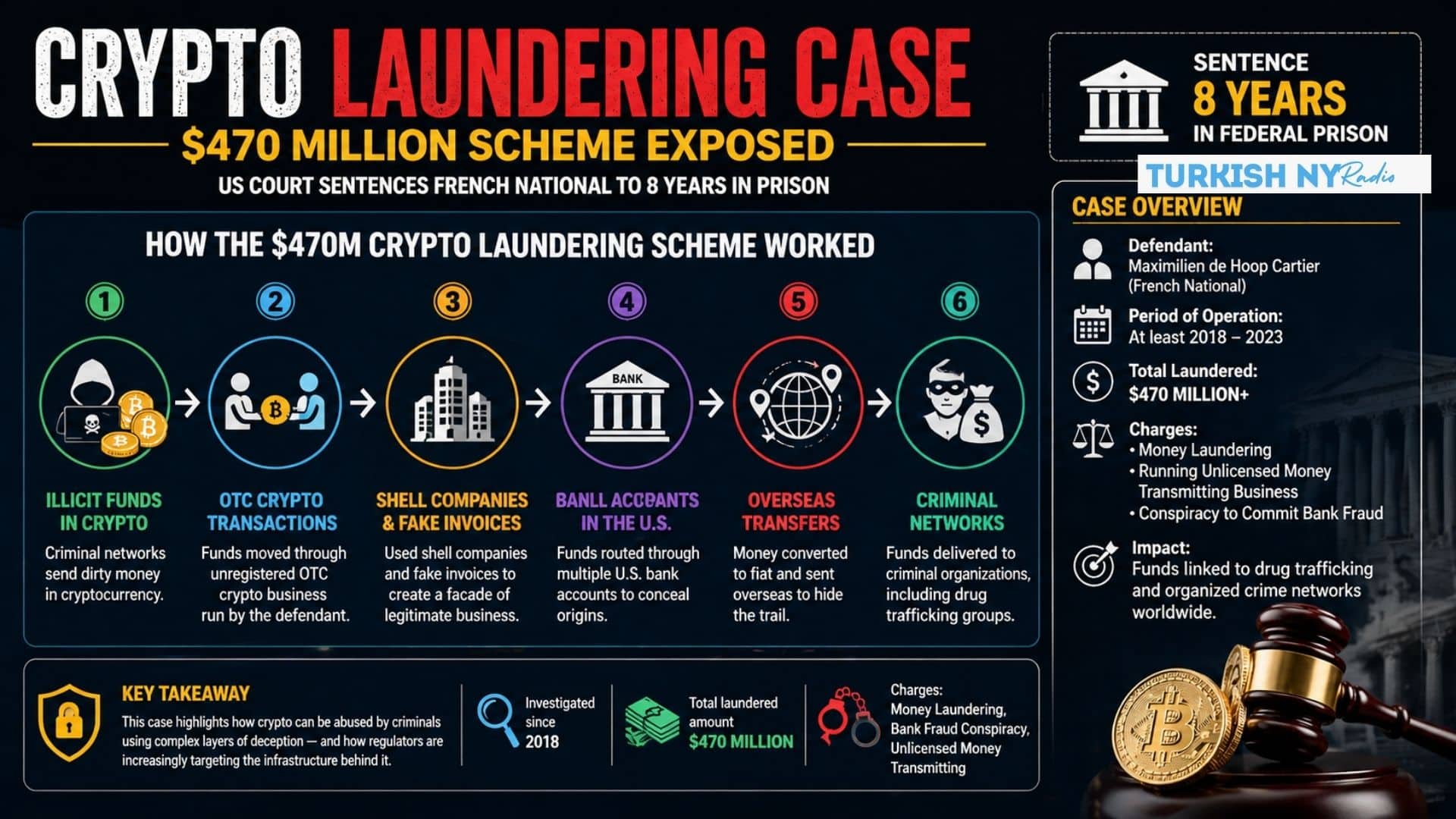
Regulators stated that the Crypto Laundering Case extends back at least to 2018, when Chanel started operating an unlicensed over-the-counter (OTC) cryptocurrency business. Using this technique, he reportedly allowed illicit organizations to convert cryptocurrencies into fiat money while evading discovery.
Investigators said Cartier utilized shell businesses and forged documents to conceal activities. Contributions were funneled via US institutions before being moved overseas, frequently under the guise of genuine company contributions.
“This defendant exploited cryptocurrency systems to facilitate large-scale financial crime,” prosecutors said, emphasizing the seriousness of the Crypto Laundering Case.
The scale of the operation, over $470 million, places this Crypto Laundering Case among the largest of its kind prosecuted in the United States.

How the Scheme Operated
At the core of the Crypto Laundering Case was a sophisticated laundering network designed to obscure the origin of funds. Investigators found that Cartier:
- Used fake business documentation to legitimize transactions
- Processed crypto-to-fiat conversions through OTC trades
- Sent funds to international criminal groups, including drug trafficking organizations
This Crypto Laundering Case illustrates how crypto can be integrated into traditional financial systems, making illicit flows harder to trace.
A law enforcement official noted:
“Disrupting laundering operations like this is critical to cutting off funding for organized crime.”
Judicial Consequences and Governmental Influence
Rouge was sentenced to eight years in federal prison, as well as pecuniary fines and wealth confiscation. The conclusion of this Crypto Laundering Case indicates a robust stance by US officials against cryptocurrency-related money laundering.
Legislators are increasingly concentrating on middlemen like OTC desks and unofficial brokers. This Crypto Laundering Case confirms the premise that enforcement is moving beyond marketplaces to target the larger infrastructure that facilitates criminal transactions.
Specialists believe the case might have an impact on future laws, particularly anti-money laundering (AML) conformity and Know Your Customer (KYC) standards.
Conclusion
The Crypto Laundering Case concerning $470 million is a watershed moment in the global battle against money laundering in the digital era. As institutions strengthen their grip, this case demonstrates that Bitcoin exploitation will not be allowed. For the business, it serves as a gentle reminder and urge to enhance compliance measures in order to retain long-term trust and survival.
Summary
Maximilien Cartier received a sentence to eight years in prison for laundered more than $470 million through cryptocurrency OTC transactions. Analysts discovered a complicated network of shell firms, fraudulent billing practices, and foreign transactions linked to criminal groups. This case underscores the growing regulatory burden on cryptocurrency technology and foresees a global attack on financial offenses involving digital currencies.
Glossary of Key Terms
Crypto Laundering: The practice of making illegally acquired cryptocurrencies look respectable.
Over-the-Counter (OTC): Trade directly among parties without the need for using a public marketplace.
Shell Company: A corporate entity with no actual business activities, sometimes used to conceal monetary transactions.
AML (Anti-Money Laundering): Legislation are aimed to prevent financial offenses.
KYC (Know Your Customer): An identification verification method needed by monetary institutions.
FAQs for Crypto Laundering Case
1. What’s actually the nature of the Crypto Laundering Case?
It includes a French citizen trafficking $470 million via cryptocurrency and shell businesses.
2. How lengthy was the phrase provided?
The accused was given an eight-year jail term.
3. What techniques were utilized in the plan of action?
Illicit monies were concealed via fake invoices, dummy corporations, and over-the-counter cryptocurrency transactions.
4. Why in the world is this case important?
It emphasizes the need for increased regulatory steps against cryptocurrency-related money laundering.
5. How does does this signify for the cryptocurrency market?
It foreshadows higher enforcement and the requirement for greater compliance measures worldwide.
Sources
