



Crypto Law Week: What March 22 Rules Mean for NFTs
 BLUR
BLUR
 2026
2026
 ETF
ETF
 ROY
ROY
 READ
READ
The week of March 22, 2026 brought a wave of crypto regulatory action across three continents, with the UK banning crypto political donations, Australia fining Binance's derivatives arm $6.9 million, and the U.S. CLARITY Act stalling in the Senate over stablecoin yield disputes. For NFT creators, collectors, and marketplace operators, these developments carry direct implications for digital asset classification, compliance obligations, and the future of creator royalty enforcement.
March 22 Crypto Law Roundup: Key Rulings, Bills, and Enforcement Actions
UK Bans Crypto Political Donations Amid Foreign Influence Concerns
The UK government announced an immediate moratorium on cryptocurrency donations to political parties on March 25, 2026. Prime Minister Keir Starmer cited foreign influence risks to democracy as the primary motivation.
Reform UK, which accepted £12 million from donor Christopher Harborne, is among the parties directly affected. The ban signals the UK's willingness to restrict specific categories of crypto transactions when broader policy concerns arise, a precedent that could extend to high-value NFT transfers if regulators apply the same "untraceable foreign capital" logic to digital art sales.
Binance Australia Hit With A$10 Million Court Fine
An Australian federal court fined Binance's derivatives unit A$10 million (~$6.9 million USD) for misclassifying 524 retail investors as wholesale clients between July 2022 and April 2023.
The misclassified clients suffered A$8.7 million in trading losses and paid A$3.9 million in fees. Binance Australia had previously paid A$13.1 million in compensation to affected clients in 2023.
The enforcement action reinforces a pattern across the Asia-Pacific region: regulators are holding platforms accountable for how they classify users. NFT marketplaces offering derivative-like products, such as fractionalized NFTs or leveraged positions on digital collectibles, face similar exposure. The distinction between retail and professional participants is becoming a compliance flashpoint globally, much as recent Bitcoin ETF outflows have highlighted the gap between institutional and retail risk tolerance.
U.S. CLARITY Act Stalled Over Stablecoin Yield Dispute
The Digital Asset Market Clarity Act passed the House but remains stuck in the Senate over a core disagreement: whether stablecoins should be permitted to offer yield or rewards to holders. Traditional banks oppose stablecoin yields, fearing deposit competition, while crypto firms including Coinbase argue yield is essential to the product.
Senator Cynthia Lummis' office offered a more optimistic read following a GOP market structure meeting on March 19, 2026. Fox Business journalist Eleanor Terrett reported the update:
🚨UPDATE: A fresh (and more optimistic) read on where things stand on the yield/rewards issue following today's GOP market structure meeting, via @SenLummis' press team:
— Eleanor Terrett (@EleanorTerrett) March 19, 2026
"We're 99% of the way there on stablecoin yield, and negotiations on the digital asset portions of the bill… https://t.co/a9KKmzQqWM
Source: @EleanorTerrett on X
The CLARITY Act's "digital asset" definitions will directly shape how NFTs are classified under federal law. If the bill ultimately treats certain NFTs as securities, marketplace operators would face registration requirements, and creator royalty structures could be reinterpreted as ongoing financial obligations.
The legislative stall is already affecting institutional confidence. Citigroup lowered its 12-month price targets for both Bitcoin and Ether, citing the CLARITY Act's uncertain timeline as a key risk factor. Kraken also paused its anticipated IPO due to regulatory headwinds and compliance uncertainty in the current U.S. legal environment.
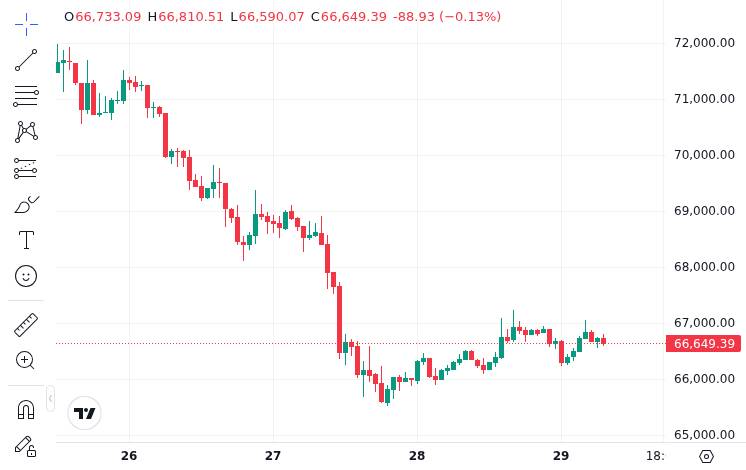
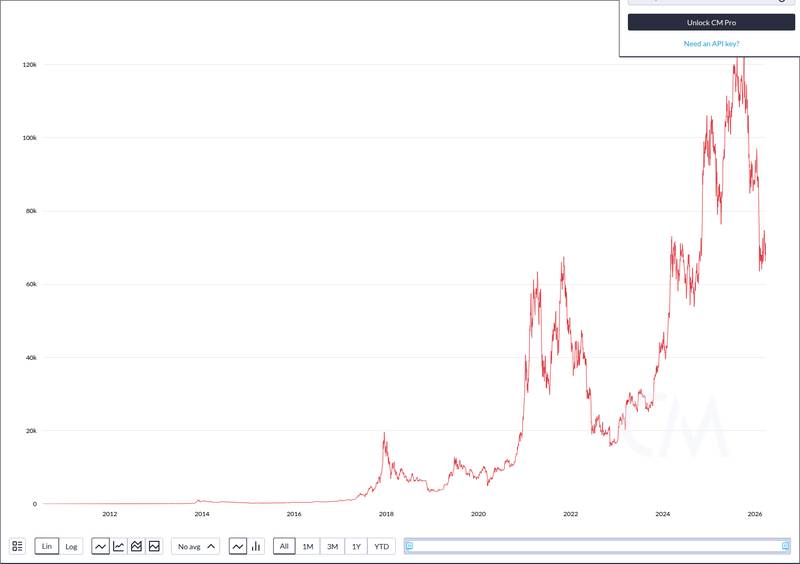
Bitcoin traded at $66,626 at press time, with a market cap of $1.33 trillion. The Fear & Greed Index sat at 9, deep in "Extreme Fear" territory, consistent with the regulatory uncertainty driving institutional caution.
Vietnam Pushes to License Domestic Exchanges
Vietnam is advancing a proposal to legalize domestic cryptocurrency exchanges while restricting access to offshore platforms, with firms competing for local operating licenses. The model represents an emerging-market regulatory pattern of controlled adoption that could fragment market access for NFT collectors worldwide.
What These Crypto Laws Mean for NFT Creators and Digital Art Rights
Creator Royalties Face New Legal Scrutiny
Royalty enforcement, already contentious after platforms like Blur and OpenSea moved to optional royalties, could gain new legal backing if the CLARITY Act's final language explicitly addresses creator compensation in digital asset transactions. The bill's treatment of "ongoing financial obligations" attached to tokens will be the key provision to watch, similar to how blockchain platforms like Tezos have pushed for creator-centric standards.
If NFTs are classified as securities under the CLARITY Act framework, royalty payments could be reinterpreted as a form of ongoing issuer obligation. That would fundamentally change how creators structure on-chain royalties and how marketplaces handle enforcement.
Marketplace Compliance Is Tightening
The convergence of these regulatory actions points in one direction: compliance infrastructure is becoming non-optional. The Binance Australia case demonstrates that regulators will pursue platforms that misclassify users, and NFT marketplaces that blur the line between retail collectors and professional traders face similar exposure.
Marketplace operators should prepare for stricter KYC requirements. The UK's crypto donation ban, the Australian court's emphasis on proper client classification, and the CLARITY Act's pending compliance framework all suggest that "permissionless" marketplace access is narrowing. Platforms facilitating high-value NFT sales may soon need to verify buyer identities at thresholds comparable to traditional art auction houses.
Collectors Face Jurisdictional Fragmentation
For collectors, the immediate risk is jurisdictional fragmentation. Vietnam's model of licensing domestic exchanges while blocking offshore platforms could spread. If adopted more widely, collectors could find that NFTs purchased on one marketplace become inaccessible from certain jurisdictions, a scenario that tokenized real-world assets like crypto-backed mortgages are also navigating.
What NFT Collectors and Creators Should Watch Next
The CLARITY Act's Senate trajectory is the single most important variable for the U.S. NFT market. If the stablecoin yield dispute is resolved in the coming weeks, as Senator Lummis' team suggested, the bill's digital asset classification framework could move to a vote before Q2 ends.
The UK's crypto donation ban took effect March 25, 2026, and its enforcement mechanics will reveal how broadly UK regulators interpret "crypto transactions" in the political finance context. Any expansion of that definition beyond donations would signal risk for NFT marketplace operators serving UK users.
Creators should monitor Australia's ASIC for follow-on enforcement actions. The Binance fine established that misclassification of participants carries real financial penalties, and ASIC has signaled broader interest in digital asset platform compliance. NFT platforms operating in the APAC region may face scrutiny next, particularly those that have followed the shift toward interactive, user-facing blockchain experiences without updating their compliance frameworks.
The regulatory landscape is shifting from "will crypto be regulated" to "how precisely will each asset class be treated." For NFT creators and collectors, the answer will determine whether royalty structures hold legal weight, whether marketplaces must register as exchanges, and whether digital art retains its current classification as property rather than securities.
Disclaimer: This article is for informational purposes only and does not constitute financial or investment advice. Cryptocurrency and digital asset markets carry significant risk. Always do your own research before making decisions.
Read original article on nftenex.com