
DeFi3 min read
AI Agent Payments Expand Across XRP Ledger
XRPL tracked payments reportedly rose from one million to 7.09 million between July and September, showing faster machine activity. The XRPL AI Hub reportedly lists 160 merchants and 2,276 li
Changpeng Zhao (CZ), the founder of Binance, has put forward a controversial proposal to address one of Bitcoin’s most significant long-term challenges: the massive stash of coins linked to i
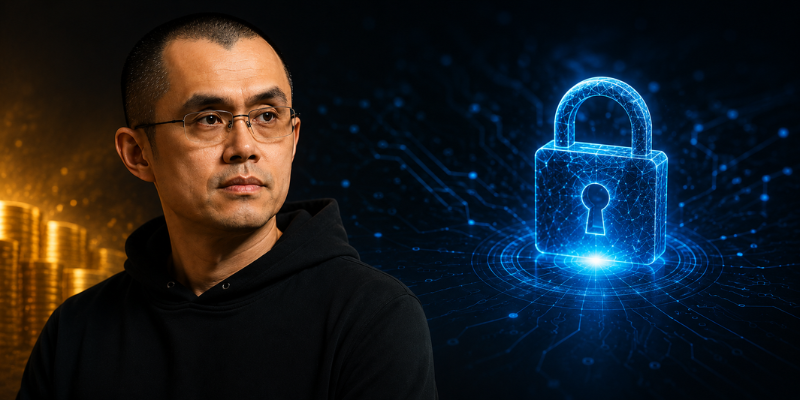
Changpeng Zhao (CZ), the founder of Binance, has put forward a controversial proposal to address one of Bitcoin’s most significant long-term challenges: the massive stash of coins linked to its anonymous creator, Satoshi Nakamoto.
Speaking during the Galaxy Brains podcast hosted by Galaxy Research President Alex Thorn, CZ argued that Bitcoin should begin preparing for the era of quantum computing. He suggested that dormant addresses, particularly those believed to contain approximately 1 million BTC associated with Satoshi, should be given a limited period to move their funds before any unmoved coins are frozen. CZ emphasized that he does not view quantum computing as an existential threat to Bitcoin.
According to CZ, effective quantum-resistant cryptographic algorithms already exist. The primary challenge is coordinating the Bitcoin community and successfully implementing a network-wide upgrade.
He proposed that during a future transition to a quantum-safe protocol, Bitcoin users should be given a grace period of six to twelve months. During this time, holders of older addresses would be required to transfer their Bitcoin to new quantum-resistant addresses. Once the grace period ends, any addresses that remain inactive, especially long-dormant wallets linked to Satoshi, could be frozen under the updated rules and effectively removed from circulation.
CZ argued that inaction would be the worst outcome. He warned that if vulnerable addresses remain unchanged, the first individual or organization to develop a sufficiently powerful quantum computer could potentially break the old encryption and gain access to those funds. In his view, such an event would create an unfair and disruptive redistribution of Bitcoin.
He repeatedly stressed that this idea reflects only his personal opinion. Any decision, he said, should ultimately be made by the Bitcoin community through consensus-driven processes such as signaling and discussions between developers and users.
Satoshi Nakamoto’s estimated holdings are spread across thousands of addresses, many of which contain approximately 50 BTC each. At current market prices, these holdings are worth tens of billions of dollars.
Although the distribution of funds across numerous wallets makes a large-scale attack technically difficult, the potential consequences for market confidence and Bitcoin’s supply dynamics could be significant if quantum computing capabilities advance more quickly than expected.
The discussion aligns with ongoing debates among Bitcoin developers, many of whom are already exploring migration strategies and possible sunset mechanisms for older address types that may be vulnerable to future quantum attacks.
The proposal has already generated criticism from parts of the Bitcoin community. Many supporters, including podcast host Alex Thorn, argue that freezing coins would establish a dangerous precedent. Critics contend that such a move could undermine Bitcoin’s principles of immutability, private property rights, and censorship resistance. A widely held view among Bitcoin advocates is that Satoshi’s coins should remain untouched, even if doing so means accepting potential future risks.
Beyond the discussion surrounding quantum computing and Satoshi’s holdings, CZ shared several other observations during the interview:
Given CZ’s continued influence across the industry, his views on Bitcoin’s long-term security carry significant weight, even as he emphasizes that any major protocol change should ultimately be decided by community consensus. CZ concluded that he expects increasing convergence between the cryptocurrency sector and traditional finance in the years ahead.