The European Central Bank has opened its digital euro pilot project to applications, and two dates in October 2026 are now fixed. Merchants selling online can express their interest in taking
The European Central Bank has opened its digital euro pilot project to applications, and two dates in October 2026 are now fixed. Merchants selling online can express their interest in taking part until October 27, 2026. Before that, on Tuesday, October 6, 2026 at 3:00 p.m. CET, an online information session on the pilot takes place. The ECB has deliberately opened this session to anyone interested, consumers included.
Both dates appear on the English-language version of the ECB pilot page. The German version of the same page does not list them at the time of writing, and carries a note at the top directing readers to the English version for current information. Anyone informing themselves in German walks straight past both dates.
One point for context: the pilot is a test, and it is not a launch. The ECB is examining a beta version, and by its own account it will decide whether to issue a digital euro at all only once the digital euro regulation has been adopted.
What the ECB is testing in the digital euro pilot project
The digital euro is central bank digital money, known in English as a central bank digital currency, or CBDC. The definition in one sentence: electronic money issued by the central bank itself, as opposed to the balance in your current account, which is a claim on your commercial bank.
In the pilot, the ECB says it wants to examine a beta version of the digital euro under real conditions. The underlying infrastructure is to be tested in everyday situations, such as payments in shops or between private individuals. The central bank names its three test questions itself: is the system robust, is it user-friendly, is it scalable. The results are meant to feed into the further preparations.
The pilot is due to begin in the second half of 2027 and to run for twelve months. The application window in October 2026 therefore sits roughly a year ahead of the actual start. The gap is the usual lead time: payment service providers and merchants have to connect their systems before anyone pays with it.
One term that comes up often here is the digital euro rulebook. It sets out the technical and contractual rules under which banks, payment service providers and merchants would process the digital euro. In July 2026 the ECB published a new draft of this rulebook, version 0.91, which took up feedback from a large market consultation. A version number below 1.0 is an honest signal: the rulebook is a draft.
Digital euro, Bitcoin and stablecoins: why the pilot matters to crypto investors
For readers who hold crypto assets, the digital euro is no competing investment product. The ECB intends it as a means of payment; it is not designed as a store of value, and that is precisely why it touches the crypto side at all. It targets the same use case as euro stablecoins, namely digital payment in a stable unit of account.
Three things can be kept cleanly apart. Bitcoin is a scarce, volatile asset with no issuer that you can hold yourself. A euro stablecoin is a privately issued token pegged to the euro that falls under the Markets in Crypto-Assets Regulation inside the EU. The digital euro would be central bank money, a claim on the Eurosystem. We have set out the differences between the digital euro and stablecoins in detail elsewhere.
In practice this means that if the digital euro arrives, you get a state-issued alternative for payments that today run over cards, payment service providers or stablecoins. The ECB is open about its reasoning, pointing to Europe's dependence on international card schemes and citing a concrete figure: 13 of the 20 euro area countries rely on international card schemes for card payments. Anyone buying crypto assets through an exchange and moving euros in and out notices little of that dependence day to day, but still pays for it through the payment rails. Which trading venues in Europe operate under supervision is set out in our comparison of regulated crypto exchanges.
The two dates differ in what they ask of you.
October 6, 2026, 3:00 p.m. CET, online information session. The ECB calls it a focus session. According to its announcement, it covers the aims of the pilot, the timetable and the selection procedure for merchants. The decisive sentence on the page: the session is open to everyone who wants to learn more about the pilot, and the ECB explicitly lists merchants, payment service providers, technical service providers and consumers. Registration via the ECB page is required to attend.
October 27, 2026, close of the merchant call for expressions of interest. It is aimed at merchants in e-commerce and mobile commerce. Those merchants are to help design and test the digital euro payment flows for online and mobile platforms. This is a call for expressions of interest, not a binding sign-up for the pilot itself: the ECB makes the selection afterwards.

Two deadlines in the same month: first the information session on October 6, then the merchant application deadline on October 27, 2026.
Who takes part in the digital euro pilot: 36 payment service providers, merchants and central bank staff
The participant side is already partly filled. Following the call for expressions of interest aimed at payment service providers in March 2026, more than 50 providers applied, according to the ECB. Of those, 36 payment service providers authorised in the euro area were selected. The central bank justifies its choice with broad coverage by business model, size and geographical spread.
Added to them are selected merchants, now being sought, along with staff of the ECB and of the 19 national central banks. This group is to try out the beta version in everyday use, in the ECB's own examples when paying in the staff canteen. The figure 19 is no typo and no contradiction of the 20 euro area countries: in this list the ECB counts itself separately from the national central banks.
What is missing from the list is the general public. Going by the ECB's description, there is no general sign-up for private individuals wanting to join the pilot.
Can you take part in the digital euro pilot as a consumer?
The honest answer has two parts. You can attend the information session on October 6, because the ECB names consumers explicitly as a target group. You cannot apply for the pilot itself as the announcement currently stands: the participant groups are payment service providers, selected merchants and central bank staff.
This distinction is easily lost in the coverage, because the whole process runs as a merchant story. For you it means that the October date is a chance to hear first hand how the central bank presents its timetable and its selection, and to put questions where they can be answered. It amounts to no more than that, and anyone expecting an early issuance of digital euro to private individuals will be disappointed.
Why the German version of the ECB page leaves out the two dates
A detail that matters more in practice than it sounds for German-speaking readers: the ECB maintains its pilot page in every official language, but keeps only the English version up to date. The German page carries a note at the top saying that current information is to be taken from the English language version.
The result is that the German version does carry the timeframe of the pilot and the description of the beta version, while its news section still shows the March 2026 call to payment service providers. The call to merchants and the focus session on October 6 are absent there. The description of the participants is also less precise: the German version speaks generally of selected payment service providers, while the English one names the figure 36.
So anyone wanting to check the state of the project reads the English page. That is more than a technicality: it explains why these two dates have barely surfaced in German-speaking countries so far.
The ECB names three milestones, and each one comes with a caveat.
- 2026: adoption of the digital euro regulation. The ECB frames its entire timetable as an assumption rather than a fact: the central bank assumes the regulation will be adopted in 2026.
- Second half of 2027: start of the twelve-month pilot project.
- 2029: possible first issuance of the digital euro. The central bank wants to be ready for it, but will decide whether it actually issues only once the regulation has been adopted.
The legislative process runs in parallel and lies with the European legislators rather than with the ECB. Where the procedure stands and which points remain contested, above all the question of a cap on your balance, we have set out in our piece on the digital euro holding limit. That cap is the point at which the project becomes concrete for your current account.
What the beta version of the digital euro is and what it is not
A beta version is a working pre-release tested under real conditions before any go-live. In the pilot that means real behaviour in real situations feeds in, while the scope stays limited to the group of participants.
From that follows what the pilot explicitly is not. It is no launch of the digital euro, no preliminary stage conferring a legal entitlement and no decision on issuance. The ECB states in its own account that the preparatory work remains flexible so that it can be aligned with the legislative process. As long as the regulation has not been adopted, the legal framework is not settled either, including any obligations for merchants.
For your financial planning that means, soberly: nothing changes for your account this year or next. What can change is the framework in which payment service providers and merchants build their systems, and that will later shape the routes over which you move money.
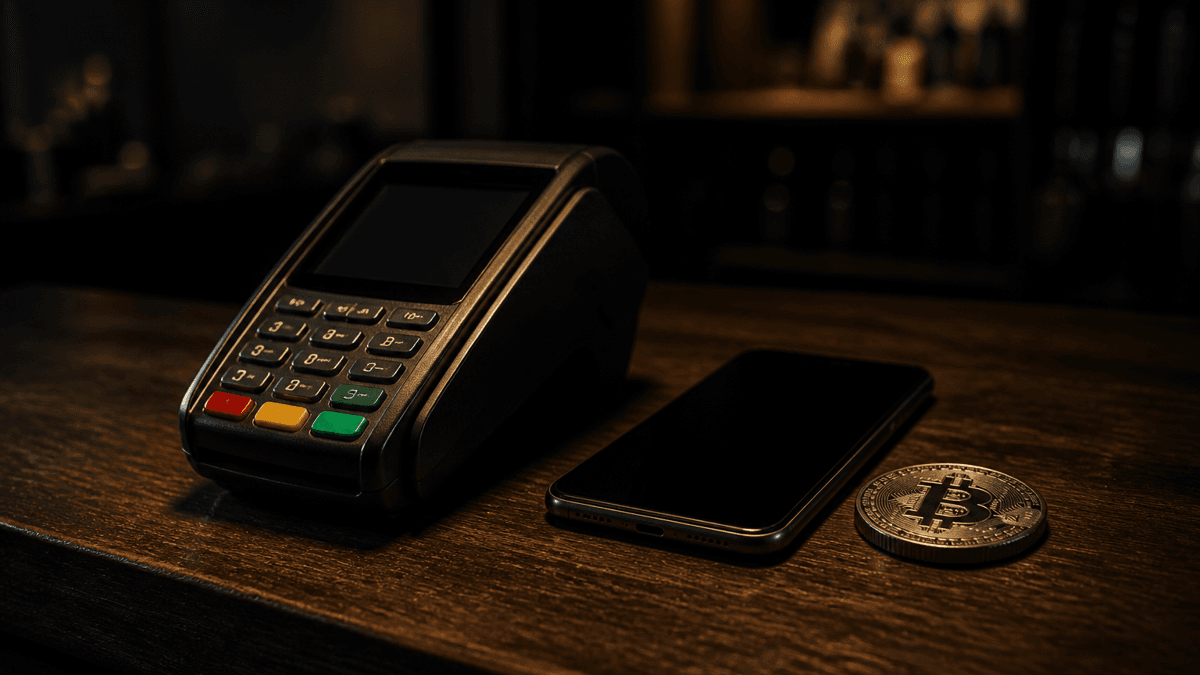
The digital euro is to be tested where payments happen: in shops, in online retail and between private individuals.
What merchants with an online shop should weigh up now
If you run an online business yourself, the expression of interest by October 27 is a genuine decision. Three points speak for it, all of them named by the ECB: you can help shape the payment flows, you see the technical requirements earlier than your competitors, and you test against an infrastructure that, if it succeeds, works the same way in every euro area country.
Against that stands the effort. A beta integration ties up development time in a project whose legal basis has yet to be agreed, and the pilot only starts in the second half of 2027. Anyone with scarce development resources is pushing back work on things that bring in revenue tomorrow.
A sober middle course: the information session on October 6 costs an hour and supplies the basis for the decision that falls due three weeks later. Anyone accepting crypto assets in their own shop knows the trade-off from practice anyway, because the same questions of settlement, chargebacks and costs have to be answered there.
Digital euro and self-custody: what changes for your wallet
The short answer: the digital euro changes nothing about your self-custody. Going by the ECB's description it will sit in an account with your bank or with a public intermediary, so with an intermediary in either case. A wallet whose keys only you hold therefore remains the only way to move digital assets without anyone else's consent.
Two points are still worth keeping an eye on. First the offline function: the ECB holds out the prospect of payments without a network connection, which comes closer to cash than any card payment does. Second the planned cap on your balance, which has no equivalent for self-custodied crypto assets and which marks the digital euro clearly as a means of payment rather than a form of saving.
Anyone holding crypto assets today takes a separate decision about how to secure the keys. The choice between custody with a provider and your own hardware is a topic in itself, and our hardware wallet comparison shows what matters in practice for self-custody.
Timetables in this project have slipped before, so it is worth looking at the points where slippage shows up early. Three observation points are enough.
- The regulation. The legal act is the condition the ECB places ahead of its entire timetable. If the legislative process runs beyond 2026, everything behind it moves back.
- The rulebook. As long as the draft stays below version 1.0, the technical and contractual rules are not final. A jump to a first full version would be the signal that the pilot is getting concrete.
- The selection of merchants. After October 27 the ECB has to choose from the expressions of interest. A participant field that drags on is an early hint of a later start.
None of these points works as a signal for crypto price moves. The digital euro is a payments project with a horizon out to 2029, and anyone deriving a price call for the coming weeks from it is overstretching the evidence.
Digital euro and the ECB pilot project: what to take away
- Put October 6, 2026, 3:00 p.m. CET, in your diary if you want the state of play first hand. Registration runs via the ECB pilot page, and the session is open to consumers as well. If you also want to know how European supervision applies to trading venues, you will find that context in our comparison of regulated crypto exchanges.
- Check the expression of interest by October 27, 2026 if you work in online retail. It is a non-binding expression, with the ECB making the selection afterwards. For the payments side of your shop it is also worth looking at settlement via crypto credit cards, which raise the same questions of cost and chargebacks.
- Change nothing about your custody because of the pilot project. Until a possible issuance in 2029 the digital euro remains a plan under reservation. If you wanted to review how your keys are secured anyway, our hardware wallet comparison will help you choose.
The two primary sources to read up on: the English ECB page on the pilot project carrying both dates, and the German version of the same page, which describes the framework but leaves the dates out.
(As of September 17, 2026. This article is not investment advice. Prices and fee structures change; check the terms with the provider before you buy.)