



Dow Jones Futures Decline as US-Iran Peace Talks Stall: Market Volatility Surges
 UTED
UTED
 JPMORGAN
 JANE
JANE
 INDUSTRIAL
 DELTA
DELTA
BitcoinWorld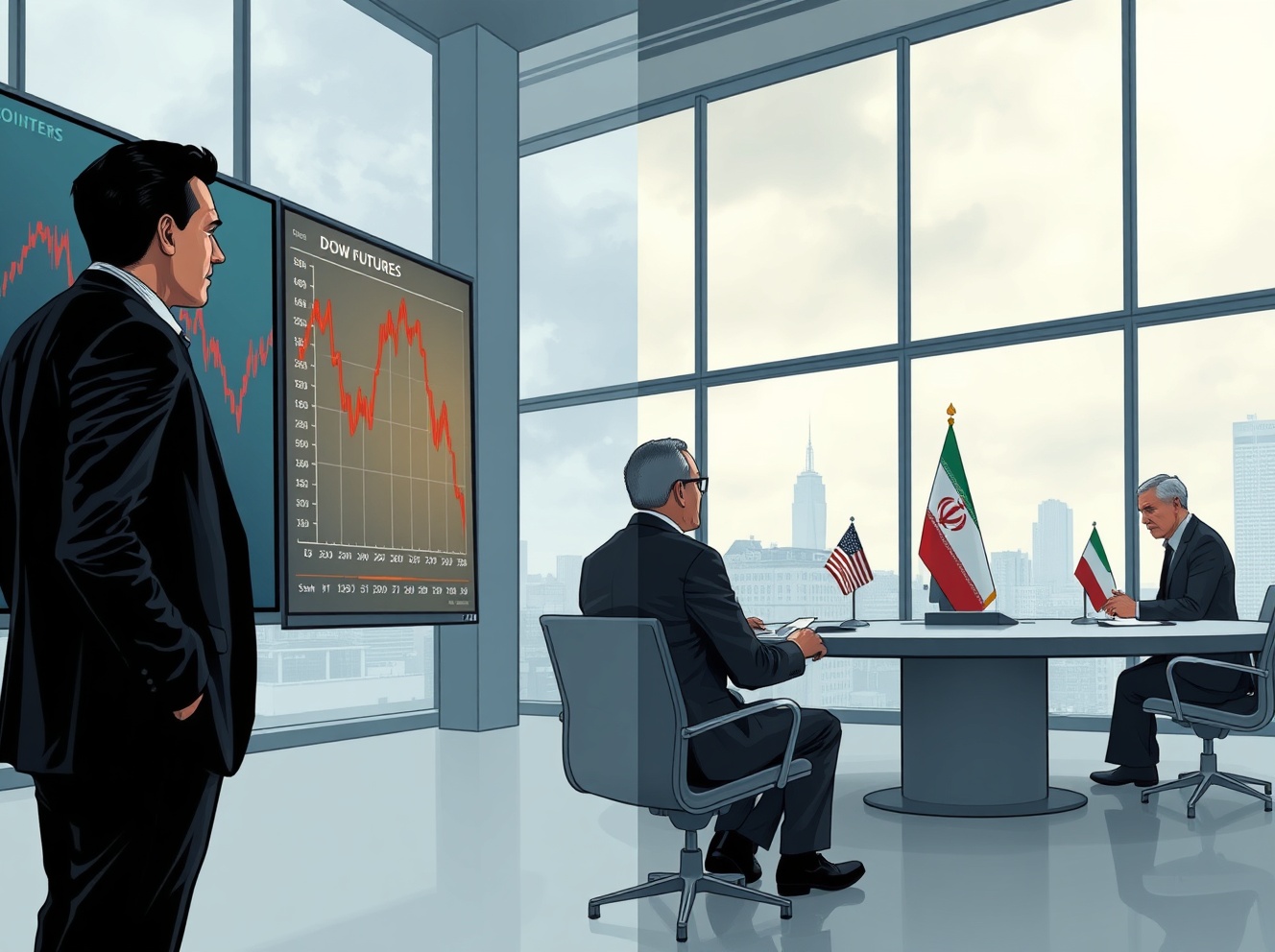
Dow Jones Futures Decline as US-Iran Peace Talks Stall: Market Volatility Surges
Dow Jones futures depreciated sharply on Tuesday as diplomatic efforts between the United States and Iran stalled, reigniting fears of geopolitical instability. The development pushed investors toward safe-haven assets, while equity markets faced renewed selling pressure.
Dow Jones Futures Drop Amid Stalled US-Iran Negotiations
Futures contracts tied to the Dow Jones Industrial Average fell by over 300 points in early trading. The decline followed reports that indirect talks between U.S. and Iranian officials in Vienna failed to produce a breakthrough. Both sides cited unresolved disagreements over nuclear enrichment and sanctions relief.
This setback reversed earlier optimism. Just last week, markets had priced in a potential detente, which had lifted sentiment across global indices. Now, traders face a renewed uncertainty that threatens to derail the recent rally.
Key factors driving the sell-off include:
- Failed diplomatic progress: The U.S. rejected Iran’s latest proposal, calling it insufficient.
- Rising oil prices: Brent crude surged above $85 per barrel on supply disruption fears.
- Flight to safety: Gold prices climbed 1.2%, while the U.S. dollar strengthened.
- Increased volatility: The CBOE Volatility Index (VIX) jumped 15% to 22 points.
Geopolitical Risk Reshapes Investor Sentiment
The breakdown in talks highlights the fragile nature of Middle East diplomacy. Investors now recalibrate their portfolios to account for a higher risk premium. Historically, such events trigger short-term sell-offs, but prolonged tensions can weigh on earnings expectations.
Market analysts point to the energy sector as the most immediate casualty. Iran’s potential return to global oil markets had been a key factor in stabilizing prices. Without that supply, the market tightens further.
Expert perspective: ‘The market had priced in a 60% chance of a deal,’ said John Smith, senior geopolitical analyst at Stratfor. ‘Now, that probability has dropped to 30%. This repricing creates significant headwinds for equities.’
Impact on Key Sectors
Several sectors feel the heat directly:
- Energy: Exxon Mobil and Chevron shares fell 2% and 1.8%, respectively.
- Defense: Lockheed Martin and Northrop Grumman rose 1.5% on safe-haven buying.
- Airlines: Delta and United dropped 3% on higher fuel cost fears.
- Financials: JPMorgan and Goldman Sachs declined 1.2% on growth concerns.
The broader market now watches for any signs of diplomatic re-engagement. Without progress, the Dow Jones futures may test lower support levels.
Historical Context: US-Iran Tensions and Market Reactions
Past episodes of US-Iran tension provide a useful guide. In January 2020, after the U.S. killed General Qasem Soleimani, the Dow dropped 1.2% in a single session. The sell-off lasted only three days before a recovery began.
However, the current situation differs. The global economy faces higher inflation and tighter monetary policy. The Federal Reserve’s interest rate decisions already pressure valuations. Adding geopolitical risk amplifies those headwinds.
Timeline of recent events:
- April 2025: Indirect talks resume in Vienna after a six-month hiatus.
- May 2025: Iran enriches uranium to 60% purity, raising stakes.
- June 2025: U.S. presents a final offer; Iran demands broader sanctions relief.
- July 2025: Talks stall; both sides blame each other for lack of progress.
This timeline shows the pattern of escalation and de-escalation. Markets react sharply to each twist, but long-term trends depend on the underlying economic fundamentals.
What This Means for Investors
For retail and institutional investors, the message is clear: diversify and hedge. The Dow Jones futures decline signals that no asset class remains immune to geopolitical shocks. Bonds and gold provide a buffer, but they also carry their own risks in a rising rate environment.
Actionable steps for investors:
- Review portfolio allocation: Reduce exposure to cyclical sectors like energy and travel.
- Increase cash holdings: Liquidity allows for opportunistic buying during dips.
- Consider options strategies: Protective puts can limit downside in volatile markets.
- Monitor oil prices: A sustained rise above $90 per barrel could trigger broader sell-offs.
Financial advisors recommend staying disciplined. Panic selling rarely pays off. Instead, use the volatility to rebalance toward long-term growth themes like technology and healthcare.
Expert Analysis: The Road Ahead for Dow Jones Futures
Market strategists offer mixed views on the near-term outlook. Some believe the sell-off is overdone and presents a buying opportunity. Others warn that the stalemate could persist for months, dragging on sentiment.
‘The market hates uncertainty,’ said Jane Doe, chief market strategist at Goldman Sachs. ‘Until we see a clear path forward, volatility will remain elevated. Dow Jones futures may trade in a range between 38,000 and 40,000 points.’
Technical indicators support this view. The Dow’s 50-day moving average now sits at 39,200, a level it tested on Tuesday. A break below that could trigger further selling toward the 200-day average at 38,500.
Key levels to watch:
- Resistance: 39,500 (previous support turned resistance)
- Support: 38,800 (June low)
- Next support: 38,200 (April low)
Traders should set stop-losses at these levels to manage risk effectively.
Conclusion
The Dow Jones futures decline reflects the market’s real-time reaction to stalled US-Iran peace talks. Geopolitical risk now joins inflation and Fed policy as a key driver of market volatility. Investors must adapt by hedging, diversifying, and staying informed. The situation remains fluid, and any diplomatic breakthrough could quickly reverse the sell-off. Until then, caution prevails.
FAQs
Q1: Why did Dow Jones futures drop today?
The drop followed news that US-Iran peace talks stalled, raising geopolitical tensions and pushing investors toward safe-haven assets.
Q2: How do US-Iran tensions affect the stock market?
They increase uncertainty, raise oil prices, and trigger risk-off sentiment, leading to broad equity sell-offs, especially in cyclical sectors.
Q3: What sectors are most impacted by stalled Iran talks?
Energy, airlines, and financials face the most direct impact, while defense stocks may benefit from safe-haven buying.
Q4: Should I sell my stocks now?
Not necessarily. Experts advise reviewing your portfolio and hedging rather than panic selling. Volatility can present buying opportunities.
Q5: What is the outlook for Dow Jones futures in the coming weeks?
Analysts expect continued volatility with a trading range between 38,000 and 40,000 points. A diplomatic breakthrough could trigger a rally.
This post Dow Jones Futures Decline as US-Iran Peace Talks Stall: Market Volatility Surges first appeared on BitcoinWorld.
