



EUR/USD Plummets Below 1.1800 as Crucial US-Iran Ceasefire Talks Fortify US Dollar
 DOLLAR
 UTED
UTED
 IMX
IMX
 WOULD
WOULD
 DIVER
DIVER
BitcoinWorld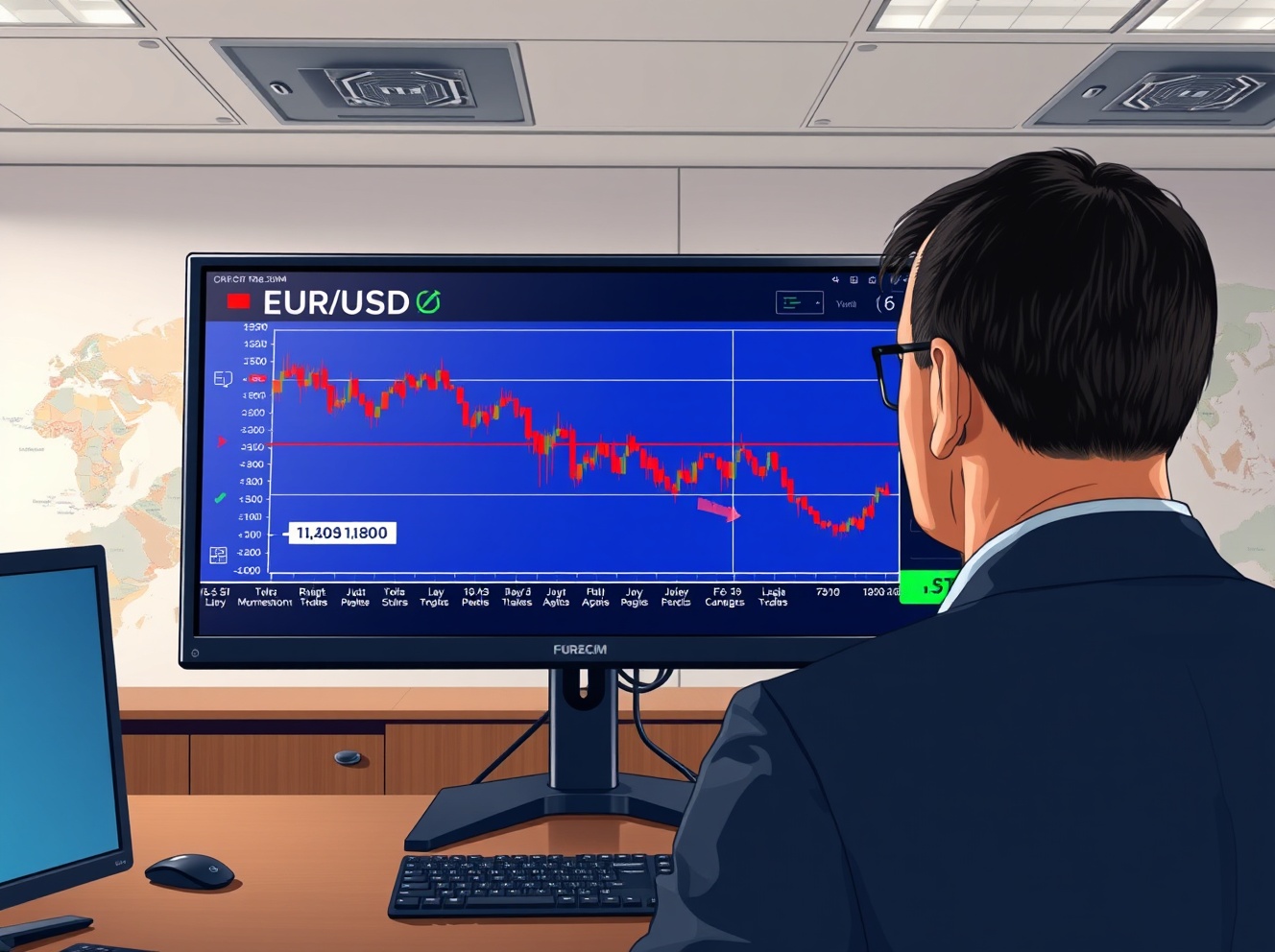
EUR/USD Plummets Below 1.1800 as Crucial US-Iran Ceasefire Talks Fortify US Dollar
The EUR/USD currency pair, a key benchmark for global financial sentiment, has breached the critical 1.1800 support level. This significant move lower, observed in early European trading on Tuesday, March 18, 2025, directly correlates with emerging reports of substantive ceasefire negotiations between the United States and Iran. Consequently, market participants are rapidly repositioning, fueling a broad-based rally in the US Dollar as a traditional safe-haven asset.
EUR/USD Technical Breakdown and Market Reaction
Market data from major trading platforms shows the EUR/USD pair trading as low as 1.1785, marking its weakest point in three weeks. This decline represents a decisive break below a consolidation zone that had held for the prior ten sessions. Furthermore, the move triggered a cascade of stop-loss orders, accelerating the downward momentum. Trading volume spiked by approximately 40% above the 30-day average, indicating strong institutional participation in the sell-off.
The US Dollar Index (DXY), which tracks the dollar against a basket of six major currencies, conversely surged by 0.8% to 104.50. This inverse relationship highlights the pair’s sensitivity to dollar-specific flows. Analysts point to several immediate technical levels now in focus:
- Immediate Support: The 1.1750 handle, last tested in February.
- Key Resistance: The former support at 1.1800 now acts as the first hurdle for any recovery.
- Moving Averages: The pair has crossed below its 50-day and 100-day simple moving averages, a bearish technical signal.
Meanwhile, the Euro faced broad selling pressure. For instance, the GBP/EUR cross rose, indicating relative Euro weakness beyond just dollar strength.
Geopolitical Catalyst: Anatomy of the US-Iran Talks
The primary driver of this forex volatility stems from diplomatic developments in the Middle East. According to statements from officials in Geneva, where indirect talks are hosted, negotiations have entered a new, more serious phase. The discussions reportedly center on a mutual de-escalation framework, which would include guarantees on Iran’s nuclear program and a reduction of regional militia activities.
Historically, geopolitical tension in the Middle East boosts demand for the US Dollar. The potential for a ceasefire, therefore, reduces the perceived global risk premium. This dynamic prompts investors to unwind hedges built on dollar strength. A timeline of key events clarifies the market’s reaction:
| Date | Event | Market Impact |
|---|---|---|
| Early March 2025 | Rumors of backchannel communications surface. | Minor EUR/USD volatility, DXY steady. |
| March 17, 2025 | US State Department confirms ‘working-level discussions’. | DXY begins ascent, EUR/USD tests 1.1850. |
| March 18, 2025 (Pre-Market) | Leaked memo suggests a draft framework is complete. | Aggressive dollar buying commences in Asia session. |
| March 18, 2025 (European Open) | Confirmed envoy meeting scheduled for later this week. | EUR/USD breaks 1.1800, triggering algorithmic selling. |
This sequence demonstrates how forex markets discount future stability. The prospect of reduced conflict lowers oil price volatility, which often supports the Euro. However, the dominant flow has been into the dollar, overshadowing other factors.
Expert Analysis on Central Bank Policy Divergence
Beyond geopolitics, monetary policy expectations reinforce the move. The European Central Bank (ECB) maintains a cautious stance on inflation, with recent minutes showing division over the pace of future rate cuts. Conversely, the Federal Reserve’s messaging has turned more hawkish amid resilient US economic data.
“The geopolitical news acts as an accelerant on an existing trend,” noted a senior strategist at a major European bank, who spoke on background. “The fundamental divergence between a patient ECB and a Fed on hold was already a weight on EUR/USD. The talks provide a clear narrative for funds to increase dollar exposure, compressing the timeline for this move.” This analysis suggests the break below 1.1800 has both technical and fundamental justification.
Broader Market Impacts and Correlated Assets
The EUR/USD shift reverberated across other asset classes. US Treasury yields edged higher, reflecting the dollar’s strength and a slight reduction in safe-haven bond demand. European equity markets, however, opened mixed. The potential for regional stability boosted energy-sensitive sectors, but exporters worried about a stronger dollar impacting earnings.
In commodity markets, gold prices dipped slightly as the dollar rallied. More significantly, Brent crude oil futures fell by over 2%. This drop directly links to the potential for increased Iranian oil exports and a more stable supply corridor from the region. The correlation between oil, geopolitical risk, and the dollar is a critical triad for currency traders to monitor.
Market sentiment gauges, like the FX Volatility Index, spiked for Euro pairs. This indicates traders expect continued turbulence as the situation develops. Options pricing shows increased demand for protection against further euro declines, with risk reversals skewing bearish.
Conclusion
The EUR/USD pair’s decline below the 1.1800 level marks a pivotal moment driven by a potent mix of geopolitics and monetary policy. The progress in US-Iran ceasefire talks has provided a catalyst for a robust US Dollar rally, overwhelming other market factors. Traders will now scrutinize every development from Geneva, while also monitoring upcoming ECB and Fed communications for further directional cues. The breach of this key technical level suggests the path of least resistance for the EUR/USD pair remains lower in the near term, unless the diplomatic process stalls or fundamental economic data shifts dramatically.
FAQs
Q1: Why does a US-Iran ceasefire talk strengthen the US Dollar?
The US Dollar is considered a primary global safe-haven currency. Geopolitical tensions typically increase demand for it. Progress toward peace reduces the global risk premium, but it also signals potential US diplomatic success and stability, which can attract investment flows into dollar-denominated assets, thereby strengthening the currency.
Q2: What is the significance of the 1.1800 level for EUR/USD?
The 1.1800 level was a major psychological and technical support zone. A sustained break below it often triggers automated selling from algorithmic trading systems and signifies a bearish shift in market structure, potentially opening the path toward lower support levels like 1.1750 or 1.1700.
Q3: How does this affect the European Central Bank’s policy?
A weaker Euro could complicate the ECB’s inflation outlook by making imports more expensive. However, the ECB’s primary focus remains on domestic wage growth and core inflation. While a falling EUR/USD is a factor, it is unlikely to derail their planned policy path unless the move becomes extreme and disorderly.
Q4: Are other currency pairs affected by this development?
Yes. The broad US Dollar strength impacts all major pairs. USD/JPY typically rises as the dollar strengthens, while commodity-linked currencies like the Australian Dollar (AUD/USD) may also weaken due to the drop in oil prices and reduced risk sentiment.
Q5: What should traders watch next following this move?
Traders should monitor: 1) Official statements from US and Iranian diplomats, 2) The next US Non-Farm Payrolls and CPI data for Fed policy clues, 3) Speeches from ECB officials regarding their reaction to the currency move, and 4) Whether the EUR/USD can reclaim the 1.1800 level as support or if it confirms the breakdown.
This post EUR/USD Plummets Below 1.1800 as Crucial US-Iran Ceasefire Talks Fortify US Dollar first appeared on BitcoinWorld.
