





Futures Liquidated: Staggering $100 Million Wiped Out in One Hour as Crypto Market Sees Massive Volatility
 FTR
FTR
 ALT
ALT
 MM
MM
 ALT
ALT
 GMIX
GMIX
BitcoinWorld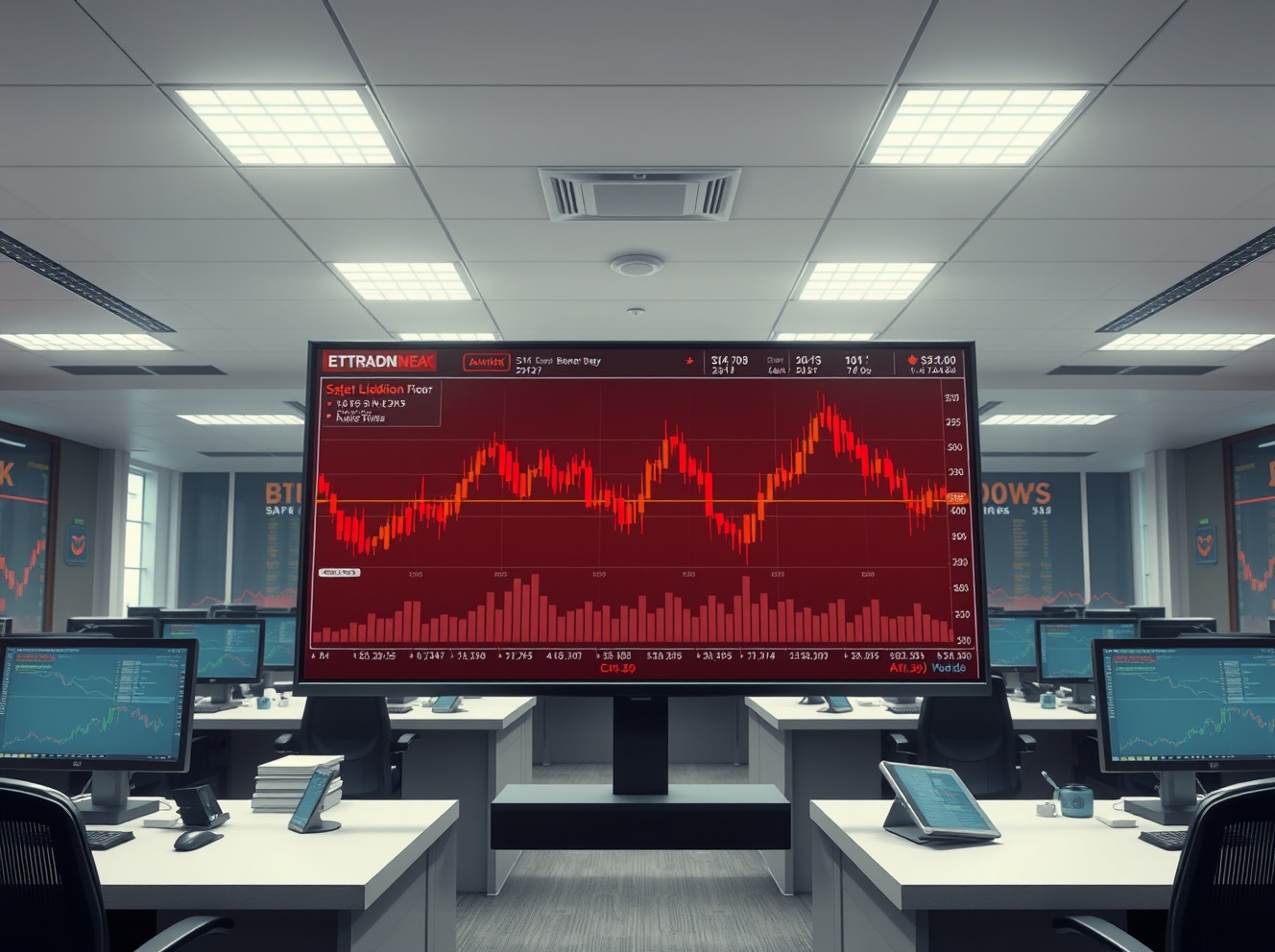
Futures Liquidated: Staggering $100 Million Wiped Out in One Hour as Crypto Market Sees Massive Volatility
Global cryptocurrency markets experienced significant turbulence today as major exchanges reported a staggering $100 million worth of futures contracts liquidated within a single hour, signaling intense volatility and shifting trader sentiment across digital asset platforms.
Futures Liquidated in Rapid Market Movement
According to real-time data from leading derivatives tracking platforms, the cryptocurrency derivatives market witnessed substantial forced position closures during a concentrated period of price movement. Consequently, this liquidation event represents one of the most significant hourly clearing activities in recent weeks. Major exchanges including Binance, Bybit, and OKX reported the highest volumes of liquidated positions. Traders faced automatic position closures when their collateral fell below required maintenance margins. The market quickly absorbed these forced sales, creating additional downward pressure on spot prices.
Market analysts immediately noted the correlation between Bitcoin’s price movement and the liquidation cascade. Specifically, Bitcoin’s price dropped approximately 3.5% during the same hour, triggering numerous leveraged long positions. The $100 million liquidation figure includes both long and short positions, though preliminary data suggests long positions comprised the majority. This pattern frequently occurs during rapid price declines in volatile markets.
Understanding Cryptocurrency Liquidation Mechanics
Futures liquidation represents a critical risk management mechanism in cryptocurrency trading. Exchanges automatically close leveraged positions when traders’ equity cannot cover potential losses. This process protects both the exchange and the broader market from cascading failures. The recent $100 million event highlights the substantial leverage currently deployed in crypto markets. Many traders utilize leverage multipliers ranging from 5x to 125x on various platforms.
The following table illustrates typical liquidation thresholds across major exchanges:
| Exchange | Typical Maintenance Margin | Common Leverage Offered |
|---|---|---|
| Binance Futures | 0.5% – 2.5% | Up to 125x |
| Bybit | 0.5% | Up to 100x |
| OKX | 0.5% – 1.5% | Up to 100x |
| Deribit | 1.0% – 3.0% | Up to 100x |
These relatively low margin requirements mean even small price movements can trigger widespread liquidations. Market participants must constantly monitor their positions during periods of high volatility. Advanced traders often employ sophisticated risk management tools to avoid automatic closures.
Expert Analysis of Market Conditions
Financial analysts specializing in cryptocurrency derivatives have identified several contributing factors to the liquidation event. First, increased institutional participation has brought larger positions to the market. Second, recent macroeconomic announcements created uncertainty across all risk assets. Third, technical indicators showed overextended positions before the correction began.
“The $100 million liquidation represents a market clearing event,” noted derivatives analyst Michael Chen of CryptoMetrics Research. “While significant in absolute terms, this represents a relatively small percentage of the total open interest across major exchanges. The market efficiently processed these forced closures without major systemic issues.” Chen further explained that liquidations often create temporary buying opportunities as oversold conditions develop.
Historical data reveals similar patterns during previous market cycles. For instance, March 2023 saw approximately $300 million in hourly liquidations during the Silicon Valley Bank crisis. June 2022 witnessed over $500 million in hourly liquidations during the Celsius Network collapse. Today’s event, while substantial, remains within expected parameters for current market conditions.
The 24-Hour Liquidation Context
Expanding the timeframe provides crucial context for understanding market dynamics. Over the past 24 hours, total futures liquidations reached $285 million across all cryptocurrency exchanges. This broader figure includes:
- Long position liquidations: Approximately $215 million (75% of total)
- Short position liquidations: Approximately $70 million (25% of total)
- Bitcoin-dominated activity: 65% of total liquidations
- Ethereum-related activity: 22% of total liquidations
- Altcoin derivatives: 13% of total liquidations
The disproportionate impact on long positions suggests most traders anticipated continued price appreciation before the correction. Market sentiment indicators showed excessive bullishness in the days preceding the liquidation event. Funding rates on perpetual swap contracts turned significantly positive across major trading pairs.
Exchange data reveals interesting geographical patterns in liquidation distribution. Asian trading sessions typically experience higher liquidation volumes during local market hours. European and North American sessions often see different volatility patterns. The recent $100 million event occurred during overlapping trading hours, maximizing its impact across global markets.
Market Impact and Future Implications
The immediate market impact included increased volatility across all major cryptocurrency pairs. Bitcoin’s price experienced a sharper decline than the broader crypto market index. Altcoins with high leverage availability showed amplified movements. Trading volumes spiked approximately 40% above daily averages during the liquidation hour.
Market structure analysis reveals several important implications. First, liquidation events often precede short-term market bottoms as weak hands exit positions. Second, the forced selling creates liquidity for new buyers entering the market. Third, volatility indices typically rise following significant liquidation events. Fourth, open interest usually declines temporarily before rebuilding.
Regulatory observers note increasing attention on cryptocurrency leverage practices. Several jurisdictions have proposed leverage limits for retail cryptocurrency traders. The European Union’s Markets in Crypto-Assets (MiCA) regulations include specific provisions regarding derivatives trading. United States regulators continue examining appropriate leverage caps for crypto products.
Risk Management Lessons for Traders
Professional traders emphasize several risk management strategies in volatile markets. Position sizing remains the most critical consideration during high-leverage trading. Diversification across different cryptocurrency assets can reduce correlation risk. Stop-loss orders, while not guaranteeing execution during extreme volatility, provide essential discipline. Regular portfolio rebalancing helps maintain target risk exposure.
Advanced traders often employ hedging strategies using options or inverse perpetual contracts. These techniques can protect against adverse price movements while maintaining directional exposure. However, hedging introduces additional complexity and cost considerations. Most retail traders benefit from simpler approaches emphasizing capital preservation.
Market education initiatives have increased focus on derivatives risks following previous liquidation events. Exchanges now provide more detailed educational resources about leverage and margin requirements. Third-party platforms offer simulated trading environments for practice without financial risk. Industry associations have developed standardized risk disclosure documents.
Conclusion
The $100 million futures liquidation event highlights the inherent volatility and risk in cryptocurrency derivatives markets. While substantial in absolute terms, the market efficiently processed these forced position closures without systemic disruption. The broader $285 million 24-hour liquidation total provides important context for understanding current market dynamics. Traders must maintain disciplined risk management practices during periods of increased volatility. Market infrastructure continues evolving to handle larger liquidation events as cryptocurrency adoption expands globally. Future developments in regulation, product design, and risk management will shape how markets respond to similar events.
FAQs
Q1: What causes futures liquidations in cryptocurrency markets?
Futures liquidations occur automatically when a trader’s position loses enough value that their remaining collateral cannot cover potential losses. Exchanges close these positions to prevent negative balances that could affect other users.
Q2: How does the $100 million liquidation compare to historical events?
While significant, this event remains smaller than major historical liquidations. During March 2020, Bitcoin saw over $1 billion in liquidations within 24 hours. The current event represents normal market clearing during volatility.
Q3: Do liquidations primarily affect retail or institutional traders?
Both trader types experience liquidations, but retail traders typically use higher leverage percentages. Institutional traders generally employ more sophisticated risk management, though they can still face forced position closures.
Q4: Can traders prevent automatic liquidations?
Traders can add additional collateral (margin) to positions before reaching liquidation thresholds. Many platforms offer margin call warnings, giving traders time to take action before automatic closure occurs.
Q5: How do liquidations impact overall market prices?
Liquidations create forced selling pressure, which can accelerate price movements in the direction causing the liquidations. This sometimes creates temporary oversold conditions that experienced traders watch for potential reversal opportunities.
This post Futures Liquidated: Staggering $100 Million Wiped Out in One Hour as Crypto Market Sees Massive Volatility first appeared on BitcoinWorld.
