



G. Love Loses Nearly 6 BTC to Fake Ledger Wallet App
 LOVE
LOVE
 LOVE
LOVE
 ZACH
ZACH
 AMB
AMB
 READ
READ
Philadelphia Musician G. Love Loses Nearly 6 BTC to Fake Ledger Wallet App on Apple’s App Store
Philadelphia musician G. Love says he lost nearly six BTC after downloading what he believed was a Ledger app from Apple’s App Store while moving his wallet setup to a new computer, a case that shows how a trusted marketplace listing can still turn into a self-custody disaster.
- G. Love wrote on April 11, 2026 that he had downloaded a malicious Ledger app from Apple’s store and that all of his BTC was gone immediately.
- On April 12, 2026, ZachXBT said he traced the stolen bitcoin to KuCoin deposit addresses.
- Ledger says on its official Ledger Live page that new users should download the app from Ledger’s own website rather than rely on marketplace search results.
What happened in the G. Love fake Ledger wallet app incident
In an April 11, 2026 post on X, G. Love said he lost his retirement fund after switching his Ledger setup to a new computer and accidentally downloading a malicious Ledger app from Apple’s store. He wrote that all of his BTC was gone in an instant.
A Bitcoin.com report said the mistake happened when he searched Apple’s App Store for Ledger Live while setting up a new Apple computer, which is the clearest reported explanation of how the fake listing entered the flow.
I had a really tough day today I lost my retirement fund in a hack/Scam when I switched my @Ledger over to my new computer and by accident downloaded a malicious ledger app from the @Apple store. All my BTC gone in an instant.
— G. Love (@glove) April 11, 2026
On April 12, 2026, on-chain investigator ZachXBT said he traced the stolen bitcoin and that the coins were laundered through KuCoin deposit addresses. That account broadly matched secondary reporting on the case, but the exact App Store listing URL, developer name, and any Apple removal notice were not independently fetched in the material supplied for this phase.
No public statement from Apple or KuCoin appeared in the provided source set, and no regulator or law-enforcement filing was cited in that material either.
Hi I traced out your 5.92 BTC stolen and it was all laundered via @kucoincom deposit addresses in the following transactions:
— ZachXBT (@zachxbt) April 12, 2026
6f5c8eb6b01774626f33527e0cb03c0d1860447acacd6079e69bf41b459bcf1f
9ee1288f941b2c3775ebd125eefeebdc713aa160bf2cf9d18661fd07f84ce891…
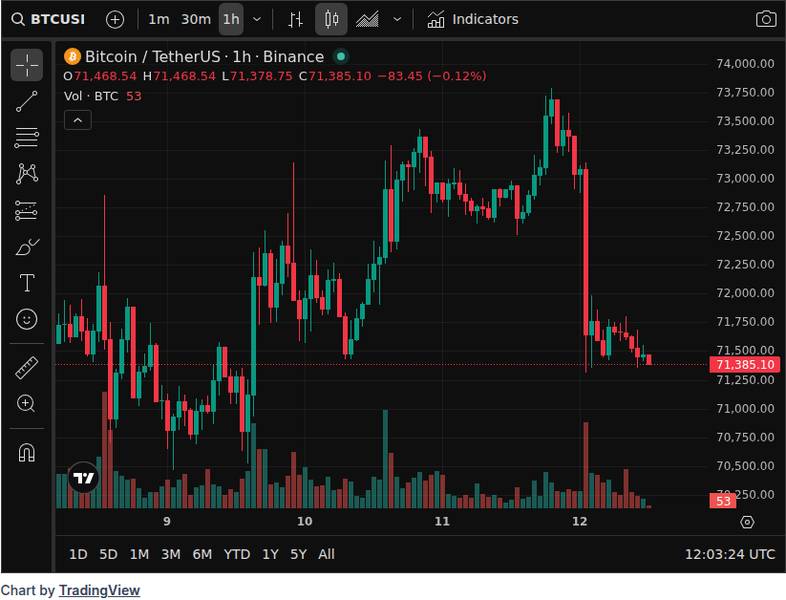
Bitcoin traded near $71,483 when this story was prepared, which helps explain why the theft drew attention beyond a celebrity anecdote: the loss landed during a defensive market backdrop rather than a euphoric one. That broader macro caution overlaps with the risk-sensitive tone in Federal Reserve Recession Signals: Why Zandi Warns, where recession fears were already shaping bitcoin sentiment.
How fake wallet apps exploit trust in major app marketplaces
Ledger’s official Ledger Live page says users who do not already have the app should download it from Ledger’s own website. That detail matters here because the reported compromise started with a marketplace search result that appeared trustworthy enough to stand in for the official path.
Scam workflow
Fake wallet apps typically borrow real branding, copy familiar interface cues, and then push users into a setup flow that captures seed phrases or other wallet access data. Once that information is handed over, the attacker can empty the wallet without needing continued access to the victim’s device.
Why marketplace placement lowers defenses
Moonlock wrote in May 2025 that malicious Ledger Live clones were stealing seed phrases and draining wallets, which closely matches the attack pattern described in G. Love’s post. The practical lesson is that marketplace availability is not proof of authenticity, even when the branding matches a well-known hardware-wallet company.
That distinction matters well beyond this one theft. Stories about broader adoption, from Morgan Stanley Bitcoin ETF Access Could Unlock Multi-Billion Advisor Demand to Argentina Recognizes Crypto as Qualified Investors' Net Worth, can expand crypto access and legitimacy without reducing the operational burden on users who hold assets directly.
What crypto users should verify before downloading any wallet app
The first check is the download path itself: if the wallet provider tells users to start from its official site, that instruction should override whatever appears in a search result inside a phone or desktop app store. In this case, Ledger’s own guidance pointed to its website, not to a marketplace lookup as the trust anchor.
The second check is the recovery-phrase workflow. Users should not type a seed phrase into an unverified app, and they should only follow recovery steps that are confirmed through the provider’s official support materials because a single bad prompt can turn a routine setup into an irreversible drain.
Self-custody failures usually do not come with chargebacks, and the material reviewed for this story did not include any public Apple enforcement notice, KuCoin response, or disclosed legal action that would suggest an easy recovery path. That is why incidents like this one should be treated as operational-security failures first and market stories second.
Disclaimer: This article is for informational purposes only and does not constitute financial or investment advice. Cryptocurrency and digital asset markets carry significant risk. Always do your own research before making decisions.
Read original article on nftenex.com