If you hold G tokens on Gravity Alpha Mainnet, your way out now runs through an exchange that accepts deposits from that network. The official Gravity bridge, which until recently carried two
If you hold G tokens on Gravity Alpha Mainnet, your way out now runs through an exchange that accepts deposits from that network. The official Gravity bridge, which until recently carried two routes, has been switched off since October 26, 2026 at 03:00 UTC. Galxe names that moment in its own help pages and sets November 1 as the day Gravity Alpha ceases operation. Whatever is still sitting on the network after that is, according to the provider, no longer transferable.
That changes the position for G holders in Germany fundamentally. Two weeks ago the question was which of the three exits was the most convenient. Today it is whether you can still reach the one remaining exit in the next few days. Our guide to withdrawing Gravity Alpha balances from October 12 describes the routes over the bridge; those are precisely the routes that have now fallen away.
What has applied to the Gravity bridge since October 26
Gravity Alpha Mainnet was the first version of the Gravity network and ran as a layer 2, a chain of its own that draws its security from Ethereum and anchors its data there. It is being replaced by Gravity L1 Mainnet, a standalone chain with its own consensus. For a holder the difference is simple: your G tokens have to move from the old chain to the new one, and for that you need a crossing.
The official bridge was that crossing, and it offered two variants. Fast Withdraw sent G to Ethereum without a waiting period and took about ten minutes according to Galxe. The canonical route, the standard exit built into the rollup, took seven days, because a layer 2 has to let a challenge period elapse before a withdrawal. Both hang on the same interface, and both went offline on October 26 at 03:00 UTC. The help page puts it as a condition: anyone wanting to use the fast route or start the seven-day route had to do so before that hour.
Galxe's three dates, and which one still counts
Galxe spread the wind-down of Gravity Alpha across three dates, and two of them have passed. For USDT, USDC, Ether and the other tokens that are not G, the route via Stargate ended on October 23. Stargate is a bridging service that works with liquidity pools instead of the chain's built-in exit, and for those three assets it was the only exit on Gravity Alpha at all. On October 26 at 03:00 UTC the official bridge followed. What remains is November 1, and that is not another exit but the end: on that day Gravity Alpha ceases operation, according to the provider.
In practice that means the question of which token you hold no longer decides the route, only the chance. For G there is the exchange route. For USDT, USDC and Ether left behind on Gravity Alpha, Galxe's current guide names no exit at all, because the service that issued them is no longer being served and the canonical exit could never process them technically.
For tokens other than G the project's own statements diverge, and the outcome is the same under either reading. The help page counts DAI and WBTC among the assets that had to leave via Stargate, so by October 23. Gravity's developer documentation instead assigns both to the official bridge, with a seven-day runtime, and that has been switched off since October 26. Which statement you follow changes nothing today: for everything that is not G, the project names no open route out of Gravity Alpha.
Out via an exchange: the last exit for G on Gravity Alpha
Galxe lists the remaining route as the third option in its own guide, and it runs through three stations. You send your G tokens from Gravity Alpha to an exchange account at a venue that accepts deposits from that network. The ones named there are OKX and Bitget. From there you withdraw the tokens over the Ethereum network to your own wallet. In the third step you bridge them from Ethereum to Gravity L1, and that step runs through the Gravity interface again, which still works in that direction.
This route has a weak point you should know about before you send anything. An exchange has to offer the Alpha network in its deposit screen, and it has to offer it at the moment you trigger the transfer. Venues regularly suspend deposits for a chain before it is shut down, and they do not always announce it in advance. A deposit to a network the exchange no longer carries may well end up nowhere. Which venues operate under European supervision and what proof they ask for is shown in our comparison of regulated crypto exchanges; OKX and Bitget are not German providers, and the mention in the Galxe help is a technical statement, not a recommendation.
Why you need Ether in your wallet before you start
The last step of the exchange route takes place on Ethereum, and there every transaction pays a fee in the chain's own currency. So you need Ether in the same wallet into which you pull your G tokens from the exchange. Galxe points this out explicitly in the help. Miss it and you end up with G tokens on Ethereum and no way to move them on until you top up with Ether. That is not fatal, but it costs another transfer and therefore time, which is in short supply in this case.
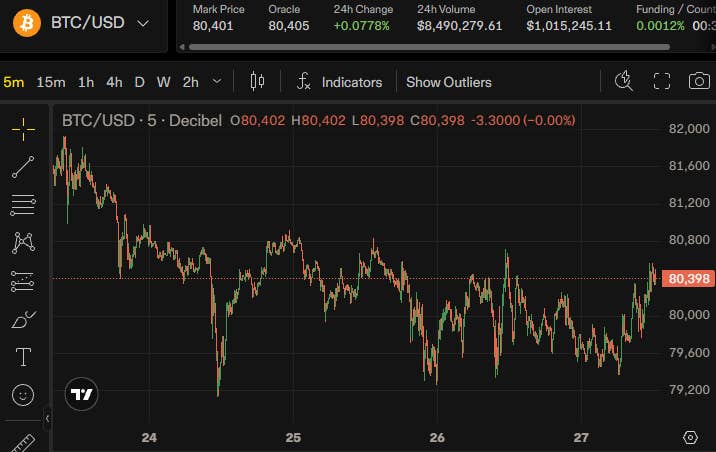
The sums involved are modest for many holders. One G cost around $0.0036 at Tuesday midday, putting the project at a market value of about $26 million on daily turnover of a good $5 million. Hold a few thousand G and you are moving a two-figure euro amount. The gas fee on Ethereum can come close to that value on small holdings, and that is a calculation to run before the first transfer rather than after the third.
Staked G: the staking window closed in the same hour
G in staking has a deadline of its own, and it is the same hour. Galxe has discontinued its G staking and writes in the G staking help that the staking interface goes offline on October 26, 2026 at 03:00 UTC and is no longer reachable through the Galxe site afterwards. Affected, according to the provider, are all stakers, whether their G sat on Ethereum, on BNB Chain or on Gravity Alpha. The third group is hit hardest, because there the chain itself ends.
Add to that a detail easily missed when unstaking: the payout from staking has its own lock-up of seven days, and the released G returns to the same network it was staked on. Stake your G on Gravity Alpha and you get it back on Gravity Alpha, where November 1 applies.
For stakers who did not make it in time the position is therefore unambiguous: without the interface there is no way to release bound G. Those who did make it keep two things in view. The seven-day lock-up is running, and unstaking ends the bonus that staking granted on certain platform activities; anyone who joined before May 8, 2024 additionally loses the early-staker premium, which Galxe puts at 20 percent. Unstaking itself costs a gas fee on the network the G sat on, so on Ethereum, BNB Chain or Gravity Alpha.
The seven-day arithmetic that closes the window for many G holders
These two deadlines interlock, and the result is uncomfortable. Work it through with an example: unstake your G on October 25, one day before the interface closed, and the lock-up returns it on November 1. It lands on Gravity Alpha on exactly the day the network ceases operation. The bridge it would have to move on through has been offline for five days by then.
All that remains in this case is the exchange route, and it comes with two conditions. The Alpha network must still be offered in the exchange's deposit screen, and the transfer must go through before the chain stops on November 1. Both lie outside your control. Anyone in this position should therefore check the deposit screen of their exchange account now, rather than when the G comes back out of the lock-up.

Whether the route via an exchange account is open is decided by the network selection in the deposit screen, not by a guide from last week.
What happens to a withdrawal already started
One piece of news in this situation is good. Submit a withdrawal over the canonical bridge before October 26 and you do not lose it. Galxe writes that withdrawals already submitted continue under the old procedure and cannot be sped up after the fact. The seven-day period therefore runs out, and the payout is then ready for collection on Ethereum.
What the help does not say at this point is how long that collection remains possible. The statement covers the running of the procedure, not the duration of collectability. If you have such a withdrawal open, it is worth checking it daily and collecting it in the hour it is released, rather than coming back to it after November 1.
Which exchange accepts G from Gravity Alpha is shown by the deposit screen
The check takes a minute and is the only reliable route. Open the deposit for G in your exchange account and look at the network selection. If Gravity Alpha is there as a selectable network, the venue accepts the deposit at that moment. If it is not there, the route via that exchange is closed, and no guide from the week before last changes that. In that case never take the deposit address from an older note, always fresh from the screen.
A second point concerns custody. As long as your G tokens sit in an exchange account, the exchange holds the keys and you do not. For a move lasting a few hours that is defensible. As a permanent state after the move it is a decision to take deliberately, not one to drift into because the tokens happen to sit there after the transfer.

Gravity Alpha ceases operation on November 1; balances left there afterwards are, according to the provider, no longer transferable.
Smart Balance: the route Galxe recommends for rewards
Alongside the move into your own wallet, Galxe names a second route, and it addresses a different question. Smart Balance is a managed balance inside the Galxe platform from which fees can be paid across several networks. For users who mainly want to collect rewards from Galxe quests, the provider recommends this route, because the contracts for loyalty points and token rewards now run on Gravity L1.
The difference from your own wallet is one of custody, and it is not small. With Smart Balance the holding sits in the platform's care. If you want to keep control of the keys, take the route via your own wallet, even though it costs more steps. If you only want to collect quests and do not treat the balance as an investment, the managed balance gets you there faster.
The chain move is not a sale, the detour via the exchange can be one
For tax purposes, moving your own tokens from one chain to another is not a sale in Germany, as long as you only change the chain and keep the same amount of the same token. No disposal takes place, and the holding period under the Income Tax Act keeps running. What matters is that you can document it later, and for that you need the records from the transfers.
It looks different if you swap something along the way. Sell your G tokens on the exchange for euros or a stablecoin instead of withdrawing them again, and that is a disposal, falling under private disposal transactions at a holding period of less than a year. Unstaking also belongs in the records, because rewards from staking raise questions of their own. Note the date, the amount and the addresses involved for every step and file the confirmations while the chain is still reachable. After November 1 the records from Gravity Alpha are, according to the provider, out of reach.
G tokens on Gravity Alpha: from November 1 no route helps
The position fits in one sentence: of three exits one remains, and it hangs on an exchange's willingness to accept deposits from an expiring network. These are your next steps.
- Establish the holding and the network. Connect your wallet to Gravity Alpha and check how much G sits there and whether any of it is bound in staking. In the same pass, check whether a withdrawal over the bridge is still open.
- Check the deposit screen and send. Open the G deposit at your exchange account and see whether Gravity Alpha is offered as a network. If you lack a suitable account, the comparison of crypto exchanges helps with the choice. Have Ether ready for the fee on Ethereum before you trigger the first transfer.
- Settle custody and secure the records. Decide where the tokens should sit after the move; with a hardware wallet the keys stay with you. Save the date, amount and addresses of every transfer for your tax file, for which a portfolio tracker is well suited.
A residual risk remains in this case, and it is not a small one: if no exchange accepts the Alpha network any more and the bridge is switched off, there is no exit for tokens on Gravity Alpha. After November 1 they are, according to the provider, no longer transferable, and that amounts to a total loss of the holding sitting there. Anyone with staked G inside the lock-up should therefore settle the matter today rather than at the weekend.
(As of October 27, 2026. This article is not investment advice. Prices and fee structures change; check the terms with the provider before you buy.)