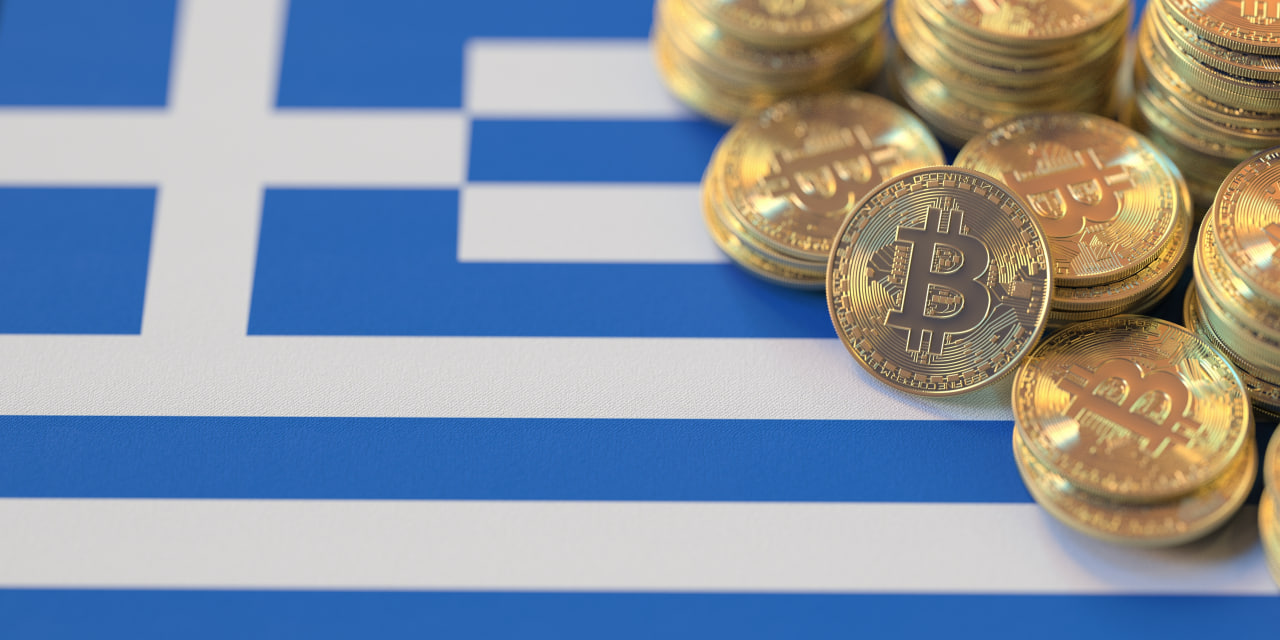
Greece has proposed a 10% tax on gains from selling cryptoassets. Swapping one cryptocurrency for another would not trigger the tax. Staking, lending and liquidity returns would be taxed as i
- Greece has proposed a 10% tax on gains from selling cryptoassets.
- Swapping one cryptocurrency for another would not trigger the tax.
- Staking, lending and liquidity returns would be taxed as interest.
- The bill is in public consultation and is not yet law.
Greece’s Ministry of National Economy and Finance published a draft bill on October 7 that would tax gains from the disposal of cryptoassets at 10%, with the first €500 of annual gains exempt. Reuters reported on October 8 that the government expects to submit the text to parliament in November, once public consultation closes. The rate is lower than the 15% that two government officials described in June The proposal gives Greek investors and accountants their first explicit rulebook for digital assets, and it reaches well beyond trading profits into staking income, employee pay, inheritance and gains from earlier years that were never declared.
Swaps escape the 10% levy, staking income does not
The provision that active traders will read first concerns swaps. Exchanging Bitcoin for Ethereum, or moving into a stablecoin, would not create a taxable gain at the moment of the exchange. Tax arises only on disposal, calculated from acquisition and sale prices, with an average-cost rule for investors who bought the same asset in several tranches.
Returns from staking, lending and liquidity provision fall into a separate category. The ministry treats them as interest and applies the same 10% rate.
How the draft treats each type of crypto activity
Selling crypto at a profit
10% on the gain
TAXED
Staking, lending, liquidity provision
Treated as interest, 10%
TAXED
Crypto-to-crypto swaps
No taxable gain at the time of exchange
DEFERRED
First €500 of annual gains
Outside the tax
EXEMPT
Digital Transaction Duty
Crypto sales excluded
EXEMPT
Losses
Carried forward for five years, per Greek media reports
OFFSET
Crypto received as salary
Valued in euros when received
DEFINED
Undeclared gains from past years
Voluntary declaration, no penalties or interest
12 MONTHS
Buying crypto could draw source-of-funds questions before any sale
Public broadcaster ERT reported two further elements that the short ministry summary only touches on. Cryptoassets would be classified explicitly for inheritance, gift and parental-transfer tax, valued in euros on the day before the obligation arises. Purchases of crypto would also count toward the Greek system of presumed expenditure, under which the tax authority compares what a person spends on acquiring assets with the income that person has declared. A buyer could therefore face questions about the source of funds long before selling anything.
Why Athens is taxing a market it cannot measure
Greece has regulated crypto businesses since April 2025, when Law 5193/2025 implemented the EU’s Markets in Crypto-Assets Regulation (MiCA) and divided supervision between the Hellenic Capital Market Commission and the Bank of Greece. MiCA governs service providers and stablecoin issuers. It says nothing about how individuals pay tax on their profits, and that part remained undefined in Greek law.
The tax bill was scheduled well in advance. A Finance Ministry working group has been drafting it since November 2024, and the 2026 Draft Budgetary Plan sent to Brussels listed a crypto tax framework among the measures for this year.
Greek officials have conceded that they cannot estimate the size of the domestic market, because many residents trade on platforms based abroad. The government has published no revenue forecast for the same reason.
DAC8 data on Greek residents arrives by September 2027
That blind spot is starting to close. The EU’s DAC8 directive, in force since January 1, obliges crypto service providers to collect identification details and aggregated transaction values for their users and pass them to tax authorities, which then share the data across member states. The first exchange, covering 2026 activity, is due by September 30, 2027. Seen in that sequence, the 12-month voluntary declaration window works as an offer to investors with undeclared gains to come forward before the data starts arriving.
Belgium charges the same 10% but shields twenty times more
Rates on private investors’ crypto gains
Country
Rate
Tax-free amount or condition
Greece (proposed)
10%
€500 annual exemption
Belgium
10%
€10,000 annual allowance
Portugal
28%
Short-term gains only, holdings of 365 days or more can be exempt
Italy
33%
Raised from 26% in 2026, €2,000 threshold removed
Germany
Income tax scale
One-year exemption still in force, but a bill to end it is pending
Simplified figures. Residency, holding periods and income classification change the effective burden in each country.
Belgium is the closest match on rate and the furthest on allowance. Its capital gains regime, applicable since January 1, shields €10,000 of annual gains, twenty times the Greek figure, so a small retail investor pays nothing in Brussels and something in Athens. Italy moved the other way this year, raising its rate to 33% after an initial proposal of 42%. Greece sits at the low end on rate while offering small holders very little shelter.
Deferred swaps shift the burden to record-keeping
Because swaps are deferred rather than exempt, the cost of the original purchase has to follow the asset through every later exchange until a taxable disposal occurs. The draft accepts records from service providers, intermediaries and blockchain ledgers as proof of price.
For the industry, the bill adds a tax layer to a jurisdiction that Binance picked in January as its route to an EU-wide MiCA licence. Reuters reported in February that Greece had not issued a single such licence, against 45 in Germany and 22 in the Netherlands. Binance withdrew the application on June 24, days before the EU deadline, and said it would seek authorization in another member state.
Consultation closes October 22, with a vote planned for early November
Comments on the draft are open until 10:00 on October 22, and the ministry wants the bill voted in the first week of November. Two points deserve attention in the final text. Greek reports on the draft describe the €500 as a test applied to the net result for the whole year, which would mean an investor slightly above it is taxed on the full gain, and the ministry’s summary does not confirm or rule that out. The summary also gives no start date for the regime and does not explain how the purchase cost carries over after a swap.
The post Greece Crypto Tax Matches Belgium’s 10% but Exempts Only €500 appeared first on ETHNews.