Harvest Finance: The $24M Lesson in DeFi Risk and Admin Keys
Harvest Finance: The $24M Lesson in DeFi Risk and Admin Keys Yield farming is the Wild West of crypto. Harvest Finance rode that wave to a billion-dollar peak, only to crash hard. We’re peeli
A
AnonymousCryptoCompass newsroom
June 7, 2026
3 min read
NEWS
CryptoCompass editorial visual for defi coverage.
Harvest Finance: The $24M Lesson in DeFi Risk and Admin KeysYield farming is the Wild West of crypto. Harvest Finance rode that wave to a billion-dollar peak, only to crash hard. We’re peeling back the layers on a protocol that promised “Bread for the People” but delivered a stark warning about centralization in decentralized finance.Launched in September 2020, Harvest Finance automated the hunt for the highest yields across DeFi protocols. Its native token, $FARM, fueled a community-governed farming cooperative. By October 2020, the total value locked (TVL) exceeded $1 billion. It was a rocket ship. Then, the engines failed.The $24 Million ExploitOn October 26, 2020, an attacker drained $24 million from Harvest’s stablecoin and BTC pools. How? By manipulating prices on a Curve pool—a classic “money lego” attack. The hacker swapped funds for renBTC and exited to Bitcoin, mixing some through Tornado Cash. The aftermath was brutal: $FARM dropped 65% in an hour, and TVL collapsed from $1 billion to $290 million.Harvest’s team scrambled. They offered a $100,000 bounty, later upped to $1 million, for information leading to the return of funds. The attacker returned $2.5 million, but the damage was done. Trust evaporated.The Admin Key ProblemThe real controversy, however, predated the hack. Auditors PeckShield and Haechi flagged a critical flaw: an admin key held by anonymous developers. This key could mint unlimited $FARM tokens and change vault functionality at will. In theory, it allowed the holders to steal all $1.05 billion in committed assets.DeFi investor Tetranode demanded a 12-hour time lock. Harvest implemented it, but the community had to stay vigilant. The message was clear: admin keys are a single point of failure in a system built on trustlessness.Tokenomics and Distribution$FARM has a fixed supply of 690,420 tokens, distributed over four years. The allocation was 70% to liquidity providers, 10% to operational treasury, and 20% to the team. This structure aimed to incentivize participation, but the hack exposed the fragility of relying on a governance token with centralized control.The Bigger PictureHarvest Finance is a case study in DeFi’s growing pains. It automated yield farming brilliantly, but its architecture had a hidden trapdoor. The hack wasn’t just a technical failure—it was a governance failure. Anonymous developers with admin keys are a red flag, no matter how good the yields look.Crynet’s Executive TakeFor crypto projects, the Harvest Finance saga underscores a non-negotiable truth: admin keys are a liability. Investors now demand transparency and time locks as standard. Any project that skips these safeguards risks not just a hack, but a permanent loss of market confidence. In the current climate, security audits and decentralized governance aren’t optional—they’re the price of entry.So, what’s your take? Would you stake assets in a protocol with anonymous developers and admin keys? We’d love to hear your thoughts.Disclaimer: This article is for informational purposes only and does not constitute financial advice. Always conduct your own research before investing in any cryptocurrency or DeFi protocol.
Bitcoin, temmuz ayında hazirandaki sert satışların ardından yeniden toparlanmayı başardı. Yaklaşık %9 değer kazanan lider kripto para, yatırımcılara kısa süreli de olsa nefes aldırdı. Ancak t
August is off to a decent start. The whole crypto market is up a little over half a percent in the last day, now at $2.18 trillion. What turned things around is that Trump called off those pl
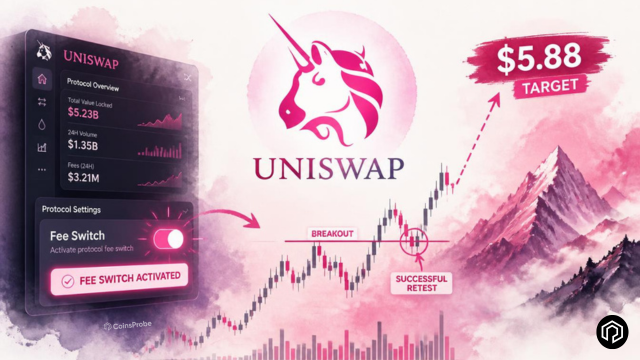
Key Highlights UNI trades at $4.23, up 32.3% over the past month following the activation of the v4 fee switch and buy-and-burn mechanism. 106,000 UNI was burned on July 29, marking the third