The U.S. Securities and Exchange Commission is weighing whether transfer agents, the regulated entities that maintain official records of who owns a company's securities, may keep those owner
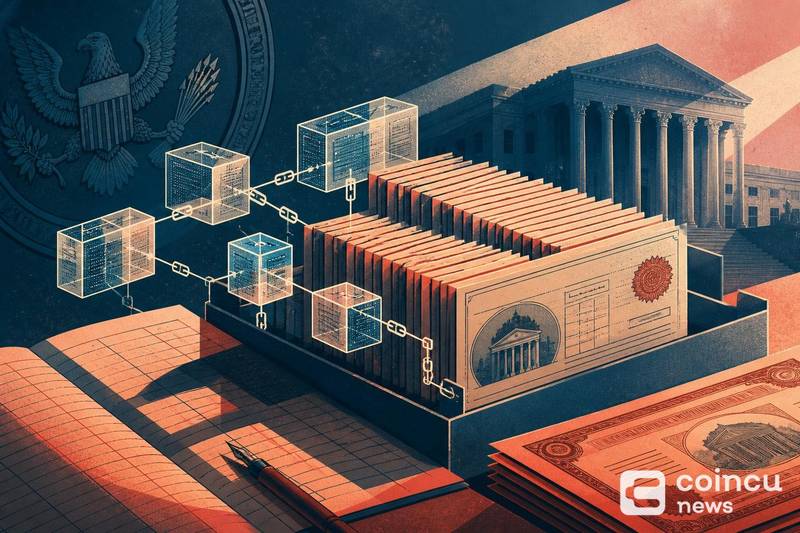
The U.S. Securities and Exchange Commission is weighing whether transfer agents, the regulated entities that maintain official records of who owns a company's securities, may keep those ownership records on a blockchain, a recordkeeping shift that would embed distributed-ledger technology directly into regulated securities infrastructure rather than speculative token markets.
The direction is signaled in a September 1, 2026 statement from Acting Chairman Mark Uyeda accompanying proposed amendments to the SEC's transfer agent rules, which frames blockchain as a potential medium for the ownership ledgers transfer agents are required to maintain. The development is a proposal, not an in-force rule, and its scope is limited to transfer agents rather than the broader universe of securities market participants. For related coverage, see BlackRock Bitcoin ETF Outperforms Vanguard S&P 500 Fund Since Listing.
What a transfer agent does, and what would change
Transfer agents sit between issuers and shareholders, keeping the master securityholder list, processing transfers of ownership, and supporting functions such as dividend distribution and proxy voting. Traditionally those records live in centralized databases and paper or book-entry systems maintained by the agent. For related coverage, see Bitcoin Defies Oil Spike and Fed Hike Bets After Best August Since 2017.
The question the SEC is examining is whether that same authoritative ledger could be maintained on a blockchain, an approach the agency has separately addressed in its staff FAQs on crypto-asset activities and distributed ledger technology. The distinction matters: this concerns official recordkeeping for regulated securities, not generic token trading. For related coverage, see Aster and World Liberty Financial Launch USD1 RWA Boost: Phase 1, Offering 125M $WLFI + 6.25M USD1 in Rewards.
Why recordkeeping is where blockchain meets securities law
Ownership records are foundational to shareholder verification, dividend payments, and proxy voting, so accuracy in the master ledger is not administrative housekeeping but a legal obligation. A shared, append-only ledger is being positioned here as operational infrastructure, offering auditability and reconciliation properties, rather than as a public-market asset layer.
A regulator treating a permissioned or distributed ledger as an acceptable system of record signals growing institutional comfort with the technology's back-office use cases, a theme also visible in the market's push toward tokenised equity issuance and broader real-world-asset infrastructure.
Because transfer agents connect issuers to shareholders, any change to how the record is kept ripples across multiple layers of market administration. Issuers would face decisions about vendor systems and disclosure workflows if their agent adopts a ledger-based record.
For transfer agents and connected intermediaries, permission to use blockchain would trigger compliance review, system integration, and workflow changes rather than an automatic switch. End investors would most likely feel the effect indirectly, through servicing, ownership verification, and record access, an adjacent dynamic to the way tokenization is reshaping investor-facing products across the TradFi-crypto boundary.
What remains conditional
A proposed rule is not a rollout. Securities ownership systems demand reliability, legal clarity, and interoperability with existing infrastructure, and permission to use a blockchain leaves open questions on governance, data standards, and supervision that Commissioner Hester Peirce's earlier statement on the Trading and Markets FAQs flagged as areas still being worked through.
Allowance does not guarantee adoption: even if the amendments are finalized, individual transfer agents would decide whether the compliance and integration cost is worth it. Readers should watch the formal comment period and any final text published on the SEC's site for the specific conditions attached to blockchain recordkeeping.
FAQ
Is the rule already in effect? No. It is a proposed amendment to the SEC's transfer agent rules as of September 1, 2026.
What is a transfer agent? A regulated entity that maintains the official record of a security's owners and processes transfers, dividends, and related functions.
Does this mean stocks move fully on-chain? No. The proposal concerns the ownership record maintained by transfer agents, not full on-chain trading of equities.
Disclaimer: This article is for informational purposes only and does not constitute financial or investment advice. Cryptocurrency and digital asset markets carry significant risk. Always do your own research before making decisions.
The post SEC May Let Transfer Agents Use Blockchain for Securities Ownership Records was initially published on Coincu.