Solana has become one of the busiest homes for stablecoins, with the value of these tokens on the network climbing sharply over the past three years. Solana is a blockchain built for fast, lo
Solana has become one of the busiest homes for stablecoins, with the value of these tokens on the network climbing sharply over the past three years.
Solana is a blockchain built for fast, low-cost transactions, qualities that make it well suited to stablecoins, digital tokens pegged to a currency like the U.S. dollar and used to move money or trade without the swings of other crypto.
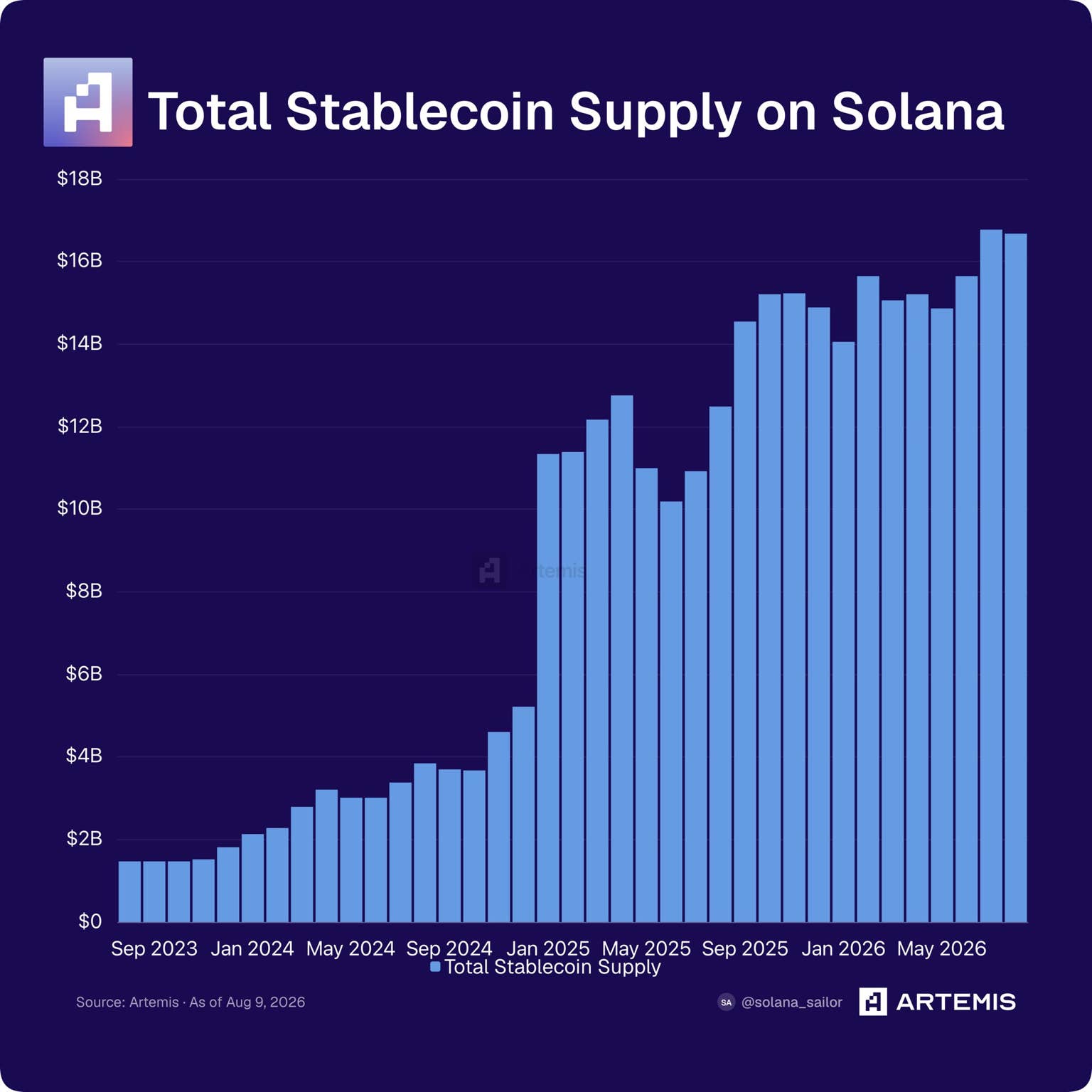
According to data from analytics firm Artemis, the total stablecoin supply on Solana grew from about $1.5 billion three years ago to roughly $16.7 billion today.
Related: Cathie Wood has strong words about Cloudflare's earnings call
Outpacing the wider market
That is an 11-fold increase. Over the same stretch, the overall stablecoin market grew about 2.5 times, meaning Solana expanded several times faster than the sector as a whole.
The network now ranks third among all blockchains by stablecoin supply, behind only Ethereum and Tron, according to Artemis. Its data shows Solana handled more than $500 billion in gross transfer volume in July alone, a sign the tokens are not just sitting on the network but actively moving through it.
On-chain analysis shared on X by blockchain researcher @solana_sailor citing Artemis data.
A market still early in its growth
Solana's surge comes as stablecoins draw growing attention as a payments technology. Investment research firm Morningstar estimates the global stablecoin market could swell to $1.45 trillion by 2035, up from around $300 billion today.
Most Popular on TheStreet Roundtable:
It points to crypto trading, business-to-business payments, deposits in emerging markets, and cross-border remittances as the uses most likely to drive that growth.
If that forecast holds, the networks that can move stablecoins cheaply and quickly stand to benefit most, and Solana's low fees and fast settlement have positioned it as one of the venues capturing that demand. Its rise up the rankings suggests issuers and users are increasingly choosing it as a place to hold and transfer dollar-pegged tokens, even as far larger growth in the overall market may still lie ahead.
Related: Explained: What is a smart contract?