



Strait of Hormuz Reopening Faces Critical Conditions as Iran Demands Ceasefire
 SXP
SXP
 UTED
UTED
 HOPE
HOPE
 HOPE
HOPE
 SECURITY
BitcoinWorld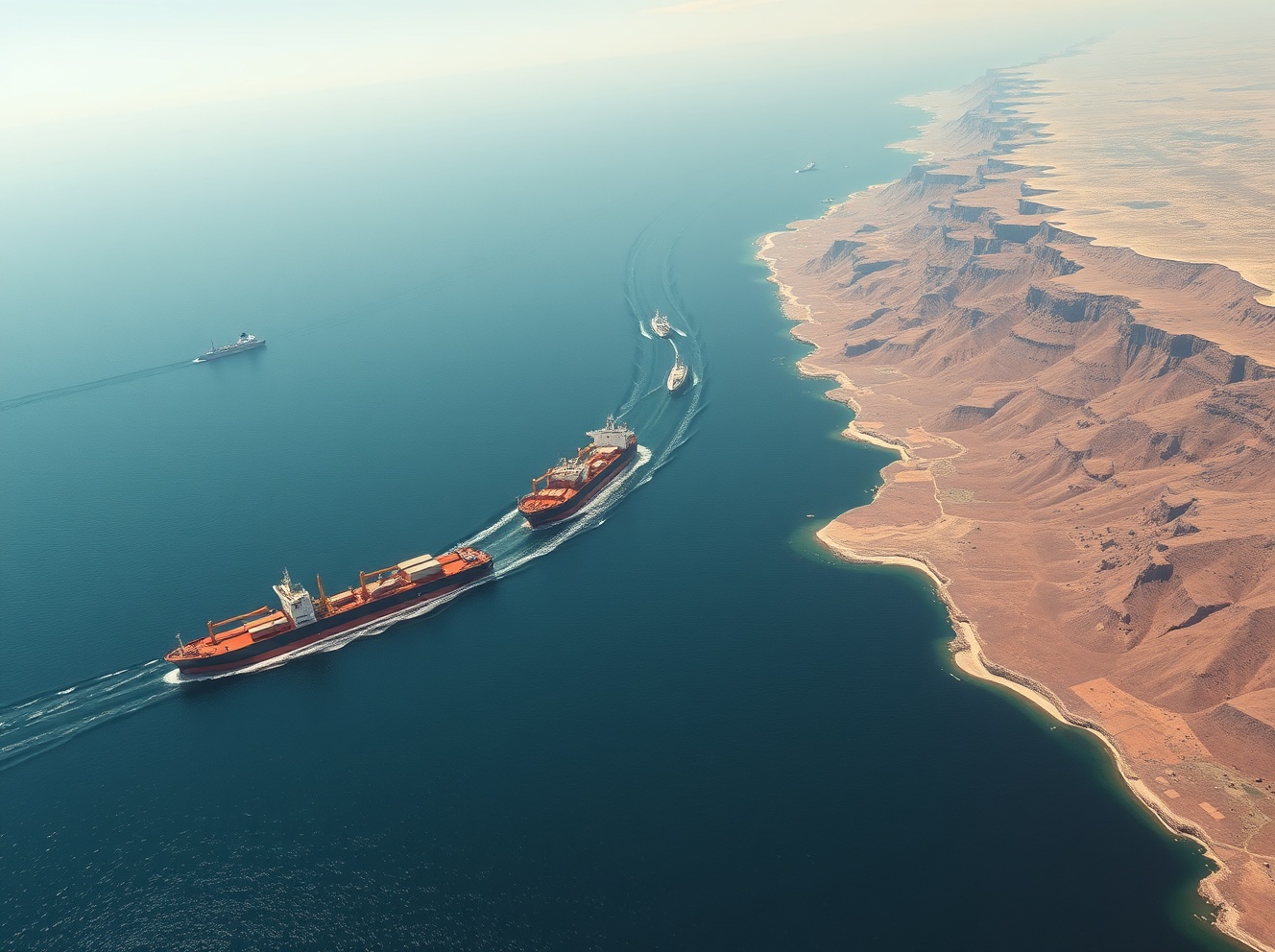
Strait of Hormuz Reopening Faces Critical Conditions as Iran Demands Ceasefire
TEHRAN, Iran – March 15, 2025 – Iran’s Defense Ministry has declared that the reopening of the strategically vital Strait of Hormuz remains conditional on specific security demands, including an immediate ceasefire in regional conflicts. Brigadier General Reza Talaeinik, the ministry’s spokesperson, explicitly stated that warships and vessels associated with hostile forces face permanent prohibition from transiting the narrow waterway. This announcement immediately impacts global energy markets and international shipping routes through one of the world’s most critical maritime chokepoints.
Strait of Hormuz Reopening Hinges on Security Demands
Iranian officials have framed the current maritime restrictions as a temporary security measure. However, General Talaeinik emphasized that normalization depends entirely on external factors. The spokesperson specifically linked the strait’s operational status to developments in Lebanon, suggesting that renewed hostilities could trigger another closure. This conditional approach represents a significant escalation in Iran’s use of geographic leverage during regional tensions. Consequently, shipping companies worldwide now face unprecedented uncertainty regarding Middle Eastern transit routes.
Maritime analysts immediately noted the strategic implications. The Strait of Hormuz serves as the exclusive transit route for approximately 21 million barrels of oil daily. This volume represents nearly 21% of global petroleum consumption and 30% of all seaborne traded oil. Furthermore, liquefied natural gas shipments from Qatar, representing 20% of global LNG trade, must pass through this narrow channel. Therefore, any prolonged restriction directly threatens global energy security and economic stability.
Geopolitical Context and Historical Precedents
Iran’s latest announcement follows a pattern of leveraging the strait during periods of international pressure. Historically, Iranian officials have repeatedly threatened closure in response to sanctions or military threats. For instance, similar rhetoric emerged during the 2019 tanker attacks and the 2020 escalation following the U.S. drone strike that killed General Qasem Soleimani. However, the current conditional framework represents a more formalized and explicit linkage between maritime access and specific political demands.
Regional powers have responded cautiously. Saudi Arabia and the United Arab Emirates, whose oil exports depend heavily on Hormuz transit, have maintained operational alternative pipelines. The UAE’s Habshan-Fujairah pipeline can redirect approximately 1.5 million barrels daily, while Saudi Arabia’s East-West Pipeline carries 5 million barrels daily to Red Sea ports. Nevertheless, these alternatives cannot fully compensate for Hormuz closure, particularly for LNG shipments and non-Gulf producers like Iraq and Kuwait.
Military and Economic Implications Analysis
Security experts highlight several critical dimensions of Iran’s announcement. First, the explicit ban on “hostile forces” creates ambiguous legal territory for naval vessels from nations like the United States, United Kingdom, and France. Second, the conditional nature establishes a precedent where maritime access becomes a bargaining chip in unrelated regional conflicts. Third, insurance premiums for vessels transiting the region have already increased by 15-20% following the announcement, according to Lloyd’s Market Association data.
The economic impact extends beyond immediate shipping costs. Global benchmark Brent crude prices increased 3.2% within hours of the announcement. Asian markets, which import 65% of their oil from the Middle East, face particular vulnerability. Japan, South Korea, and India have all initiated emergency consultations regarding strategic petroleum reserve releases and alternative supply routes. Meanwhile, European energy markets, already strained by previous supply disruptions, face additional pressure on natural gas prices.
International Law and Navigation Rights
Legal scholars emphasize that the Strait of Hormuz qualifies as an international strait under the United Nations Convention on the Law of the Sea (UNCLOS). This designation guarantees transit passage rights to all vessels, including warships, regardless of coastal state relations. Iran, while not a UNCLOS signatory, has traditionally acknowledged these customary international law principles. The current conditional approach therefore challenges established maritime legal frameworks and could set concerning precedents for other strategic chokepoints worldwide.
International responses have emphasized legal principles. The United States Fifth Fleet, based in Bahrain, immediately reaffirmed its commitment to freedom of navigation operations. Similarly, the International Maritime Organization issued a statement expressing concern about any restrictions on vital shipping lanes. However, diplomatic efforts continue behind the scenes, with several European nations engaging in shuttle diplomacy between Tehran and regional capitals to de-escalate tensions.
Regional Stability and Conflict Dynamics
The explicit linkage to Lebanon’s situation reveals Iran’s broader strategic calculus. Iranian-backed Hezbollah maintains significant influence in Lebanese politics and military affairs. Consequently, any escalation between Hezbollah and Israel could trigger the strait’s closure according to Iran’s stated conditions. This connection effectively weaponizes global energy security within the complex Levant conflict landscape. Regional analysts note that this represents a dangerous expansion of conflict boundaries, potentially drawing global economic interests directly into localized hostilities.
Simultaneously, ongoing diplomatic efforts continue on multiple tracks. Indirect negotiations between Iran and the United States regarding nuclear program limitations reportedly include maritime security discussions. Additionally, China, as Iran’s largest oil customer, has substantial leverage in encouraging stability. Chinese officials have privately emphasized the importance of uninterrupted energy flows to both Tehran and other regional capitals, according to diplomatic sources familiar with the discussions.
Energy Market Adaptations and Alternatives
Global energy companies have accelerated contingency planning in response to the conditional restrictions. Major oil traders report increased interest in West African and North American crude alternatives. Meanwhile, shipping companies are evaluating longer routes around Africa’s Cape of Good Hope, despite adding 15-20 days to transit times and significantly increasing fuel costs. The following table illustrates key Hormuz alternatives and their limitations:
| Alternative Route | Additional Transit Time | Cost Increase | Capacity Limitations |
|---|---|---|---|
| Cape of Good Hope | 15-20 days | 40-50% | No physical constraints |
| UAE Pipelines | N/A | Pipeline fees | 1.5 million bpd maximum |
| Saudi Pipelines | N/A | Pipeline fees | 5 million bpd maximum |
| Russian Pipeline Network | Variable | Political constraints | Limited spare capacity |
Renewable energy advocates note that volatility in fossil fuel markets strengthens the economic case for accelerated energy transition. Solar and wind installation rates have increased 18% year-over-year in energy-import-dependent nations following previous Hormuz tensions. However, analysts caution that renewable infrastructure requires years to develop, leaving global economies vulnerable to immediate disruptions in conventional energy supplies.
Conclusion
Iran’s conditional framework for Strait of Hormuz reopening establishes a dangerous precedent linking global maritime access to regional political demands. The immediate impacts on energy markets and shipping routes demonstrate the waterway’s indispensable role in global economic stability. Furthermore, the explicit connection to Lebanon’s security situation expands conflict boundaries in concerning ways. Ultimately, diplomatic resolution remains essential, as alternative routes cannot fully compensate for Hormuz restrictions. The international community now faces the complex challenge of addressing legitimate security concerns while preserving fundamental principles of maritime law and global commerce.
FAQs
Q1: Why is the Strait of Hormuz so important globally?
The Strait of Hormuz is the world’s most critical oil transit chokepoint. Approximately 21 million barrels of oil pass through daily, representing 21% of global petroleum consumption and 30% of seaborne traded oil. Additionally, 20% of global LNG trade transits the strait.
Q2: What specific conditions has Iran set for reopening?
Iran demands an immediate ceasefire in regional conflicts and prohibits transit by warships and vessels associated with hostile forces. The reopening remains temporary and could reverse if circumstances in Lebanon change.
Q3: How are global oil markets responding to these conditions?
Brent crude prices increased 3.2% following the announcement. Insurance premiums for vessels transiting the region rose 15-20%. Asian markets are particularly concerned as they import 65% of their oil from the Middle East.
Q4: What are the main alternative routes if Hormuz closes?
Primary alternatives include: rerouting around Africa’s Cape of Good Hope (adding 15-20 days transit), using UAE pipelines (1.5 million bpd capacity), or utilizing Saudi pipelines (5 million bpd capacity). None can fully replace Hormuz capacity.
Q5: Is Iran legally allowed to restrict transit through the strait?
The Strait of Hormuz qualifies as an international strait under international law, guaranteeing transit passage to all vessels. While Iran isn’t a UNCLOS signatory, it has traditionally acknowledged these principles, making restrictions legally contentious.
This post Strait of Hormuz Reopening Faces Critical Conditions as Iran Demands Ceasefire first appeared on BitcoinWorld.
