DeFi6 min read
TownSquare (TOWN) Nedir?
Merkeziyetsiz finans (DeFi) ekosistemi büyümeye devam ederken, zincirler arasındaki likidite parçalanması ve kurumsal yatırım stratejilerine erişimin sınırlı olması sektörün çözmeye çalıştığı
#SuperEx #EducationalSeries #Guide Before, cross-chain felt like driving a long-distance route by yourself: you had to check the route, gas cost, tolls, traffic, and hope you did not take the
#SuperEx #EducationalSeries #Guide
Before, cross-chain felt like driving a long-distance route by yourself: you had to check the route, gas cost, tolls, traffic, and hope you did not take the wrong exit.
But users do not want all that drama. They do not want to study bridges, DEXs, gas, slippage, destination liquidity, and message verification. They just want to say: I have USDC on Chain A, I want ETH on Chain B, make it reasonable, fast, and safe.
Intent-based Cross-chain is about this shift: users no longer specify every step. They express the outcome they want. Solvers, routers, liquidity networks, and settlement systems figure out how to make it happen.
In plain English: stop making users become cross-chain project managers. They just want the funds to arrive.
Press enter or click to view image in full size
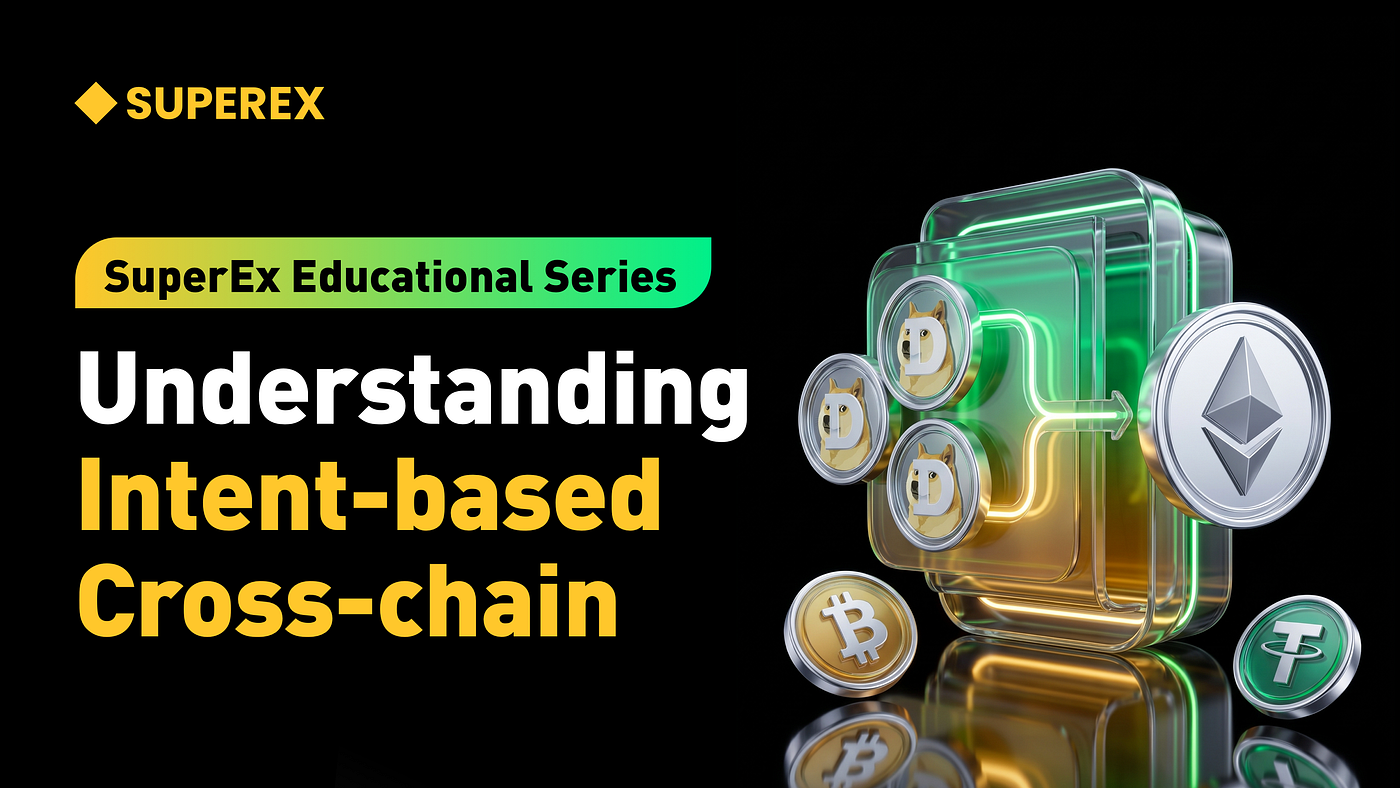
Intent-based Cross-chain is a cross-chain interaction model where users sign an order or intent that expresses the desired outcome, instead of manually executing every step.
Traditional cross-chain is more like command-based execution:
Intent-based Cross-chain is more outcome-based:
In one sentence: Intent-based Cross-chain means users do not find the route themselves. They publish the request, and specialized executors fill it.
Think of an intent as an order ticket.
The user writes: “I have 1,000 USDC on Ethereum. I want to receive at least 995 USDC on Base within 10 minutes.”Solvers or fillers then evaluate it: can I fill this? Do I have liquidity on Base? What fee do I need? Is source-chain settlement risky? Is this order profitable?
If a solver accepts the order, it may first send funds to the user on Base, then settle through the protocol and recover the user’s payment plus fees from Ethereum.
It sounds like “someone fronts the money,” and yes, that is basically it. Solvers use their own capital, routing ability, and risk management in exchange for fees or spreads.
ERC-7683 is an important standardization effort in this direction. It aims to provide a more unified order and solver-facing interface for cross-chain intents, making it easier for different intent systems, solver networks, and order dissemination services to interoperate.
In plain words: stop inventing a new menu format every time. At least standardize the menu, or the kitchen will suffer.
Intent-based Cross-chain matters because multi-chain operations have become too complex for users to handle manually.
Users need to consider:
That is not user experience. That is a cross-chain final exam.
The intent model moves complexity away from users and toward specialized execution networks. Users express the result, while the system finds routes, matches liquidity, manages risk, and settles.
This is why intents often appear together with chain abstraction, path optimization, liquidity networks, and gas abstraction. They are all trying to do the same thing: stop interrupting users with low-level execution details.
This is the request signed by the user. It defines input assets, destination chain, output assets, minimum received amount, deadline, recipient, and execution conditions.
These are the actors that fill the order. They find routes, provide liquidity, take execution risk, and earn fees, spreads, or incentives. Do not misunderstand: solvers are not doing charity. The spreadsheet always shows up.
Solvers need to see the user’s intent before they can compete to fill it. If the order sits quietly in a corner, nobody is coming.
After a solver completes execution on the destination chain, it needs to recover funds from the source chain or protocol contracts. Settlement must protect both users and solvers.
The system must confirm that the solver actually delivered the result. “Trust me, I did it” is not enough. Message verification, state proofs, signatures, order hashes, nonce, and deadlines all matter.
Of course, intents do not eliminate bridges. Many intent systems may still use bridges, DEXs, liquidity pools, messaging protocols, and settlement contracts behind the scenes. The difference is that this complexity is no longer dumped on the user.
In plain words, users do not need to know how many pans the kitchen used. They just need the dish to arrive correctly.
Suppose Alice wants to turn 1,000 USDC on Ethereum into ETH on Base.
The traditional flow may look like this:
The intent-based flow looks more like this:
Alice signs an order:“I am willing to spend 1,000 USDC on Ethereum, and I want to receive at least a certain amount of ETH on Base.”
Finally, one solver fills the order and sends ETH to Alice on Base. Then it settles through the protocol and recovers Alice’s USDC and fees from Ethereum.
Alice sees one action.Behind the scenes, there is quoting, competition, routing, fronting liquidity, verification, settlement, and risk control.
That is the appeal of intents: the user states the goal, and the system competes on execution.
Not exactly. It may use bridges, solvers, liquidity networks, DEXs, and messaging protocols together. It is not merely a bridge speed boost; it is a higher-level interaction model.
Wrong. An intent expresses the desired outcome. Execution still involves solver risk, settlement risk, price movement, liquidity shortage, contract risk, and failure recovery.
Not necessarily. Competition can improve pricing, but only if there are enough solvers, fair order distribution, transparent rules, and limited concentration. Otherwise, “competition” may just mean a few large players dominate.
Not always. Too much abstraction makes it unclear what the user authorized. A good intent should be simple, but still clearly define input, output, minimum received amount, deadline, and failure handling. Do not ask users to sign a black-box “do stuff for me” permission.
If a few solvers control most execution, the experience may be fast, but the market becomes dependent on a small number of actors. If they go offline, quote poorly, or reduce risk appetite, the whole system feels it.
The quote may look one way when shown, but market conditions may change before execution. Price, gas, liquidity, and congestion can affect the final result. Deadlines and minimum received amounts matter, or users may get hurt by quotes that looked good.
What happens if intent execution fails? Which chain gets the refund? Who pays gas? What if the solver fronted funds but source-chain settlement fails? These rules must be designed early, not improvised during the incident.
Users do not need every technical detail, but they should not know nothing. Wallets and apps should at least show what the user spends, what they receive, the minimum guarantee, estimated fees, who executes, and what happens if it fails.
If every intent protocol uses its own order format, solver interface, and settlement design, the ecosystem fragments. Standards like ERC-7683 matter because they help different systems share solver networks and infrastructure.
The core value of Intent-based Cross-chain is upgrading cross-chain interaction from users specifying steps to users expressing outcomes.
It means users do not manually find bridges, swap tokens, prepare gas, compare routes, or handle failures. They only need to define what they are willing to spend, what they want to receive, the minimum they accept, and the deadline.
But intents are not a cure-all. They move complexity from users to solvers, protocols, and infrastructure. To work well, they need enough solvers, clear standards, reliable settlement, transparent quotes, strong recovery mechanisms, and understandable user authorization.
If Web3 truly moves toward chain abstraction, Intent-based Cross-chain will be a key piece. Users do not want to be routers, bridge experts, or problem-solvers every time they transact. They just want to say: this is the result I want.
Let the system do the hard part.
As the world’s first Web3-powered cryptocurrency exchange, SuperEx has remained committed to building the Web3 ecosystem. Over the years, it has introduced a comprehensive range of products and services, including SuperEx DAO, SuperEx Web3 Wallet, Super Start, SuperEx P2P, SuperEx Stock Markets, SuperEx Copy Trading, SuperEx Earn, and SuperEx DAO Academy, creating a full-spectrum ecosystem that spans every major sector of Web3.
Today, SuperEx serves over 10 million users, with a social media community of more than 600,000 followers across 166 countries and regions worldwide. The platform supports 1,000+ cryptocurrencies for both spot and futures trading. Seamlessly integrated with Super Wallet, SuperEx provides decentralized asset custody while combining the trading efficiency of a centralized exchange (CEX) with the security of a decentralized exchange (DEX).
Press enter or click to view image in full size