



Tesla Robotaxi Service Expands Rapidly: Dallas and Houston Welcome Driverless Rides
 TSLA
TSLA
 TAXI
TAXI
 APRIL
APRIL
 WOULD
WOULD
 SFT
SFT
BitcoinWorld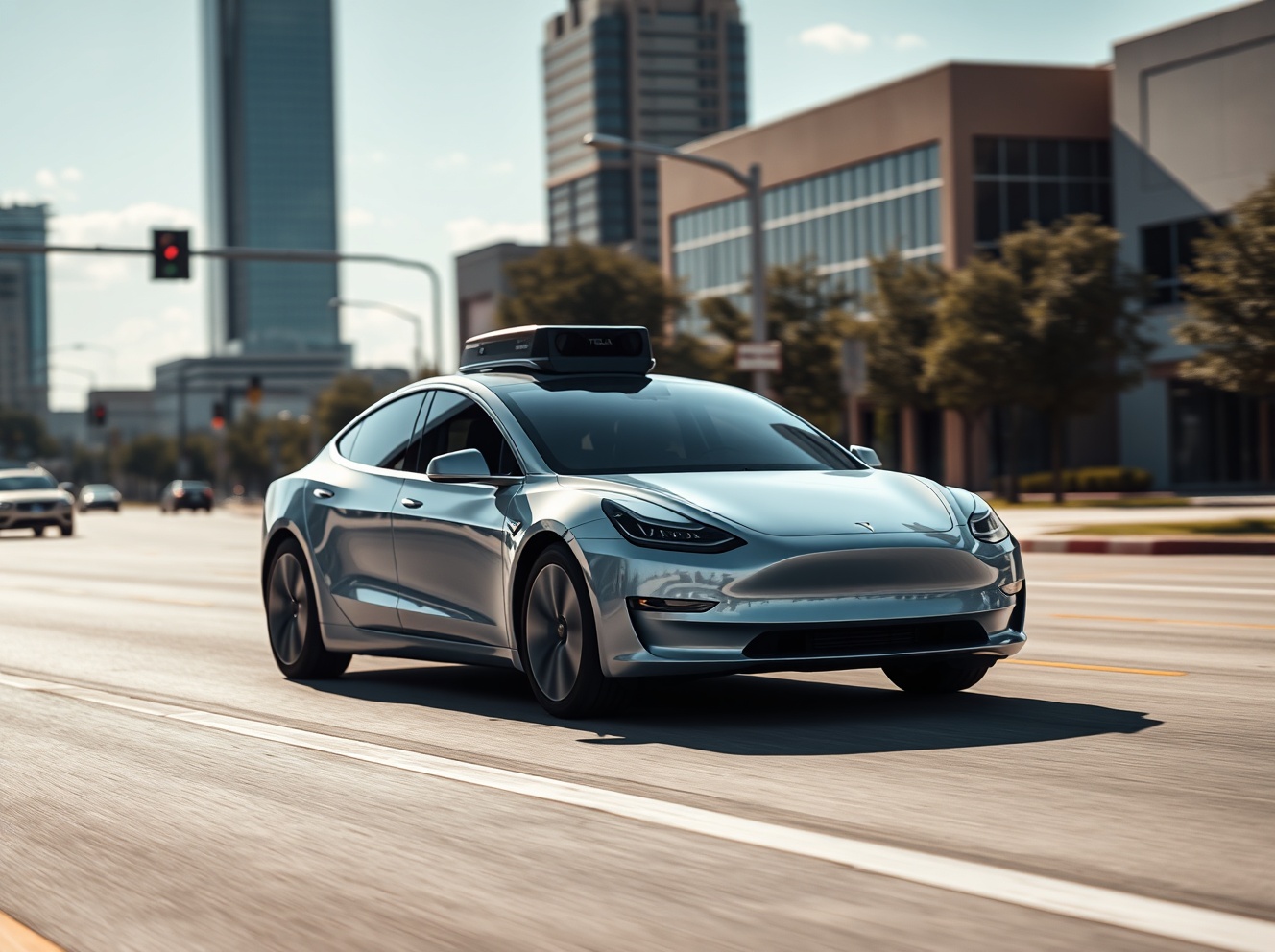
Tesla Robotaxi Service Expands Rapidly: Dallas and Houston Welcome Driverless Rides
In a significant move for autonomous transportation, Tesla has officially launched its driverless robotaxi service in Dallas and Houston, Texas, as of April 18, 2026. This expansion, announced via a company social media post, strategically grows Tesla’s operational footprint to three major Texas metropolitan areas, following its initial launch in Austin. The announcement included a brief video showcasing Tesla vehicles operating without a human driver or safety monitor in the front seat, a visual testament to the company’s progressing confidence in its Full Self-Driving (FSD) technology. This development represents a pivotal step in the commercialization of autonomous ride-hailing services and signals intensifying competition within the mobility sector.
Tesla Robotaxi Service Enters New Texas Markets
Tesla’s methodical expansion of its robotaxi network now connects three of Texas’s largest cities. The company initiated its commercial robotaxi service in Austin last year, subsequently transitioning to fully driverless operations in January 2026. The rollout to Dallas and Houston follows this established playbook, though current operational scale appears modest. According to crowdsourced data from the independent Robotaxi Tracker website, only a single active vehicle was logged in each new city at launch, compared to 46 vehicles in the more mature Austin market. This phased approach allows Tesla to gather critical real-world data across diverse urban environments while managing operational complexity. Furthermore, the company continues to operate a separate, human-driven ride service in the San Francisco Bay Area, indicating a dual-path strategy for its mobility ambitions.
Safety Data and Operational Context
The expansion occurs against the backdrop of publicly disclosed safety metrics. In a February 2026 regulatory filing, Tesla reported that its Austin robotaxis had been involved in 14 crashes since the service’s launch. While the company did not detail severity or fault, such disclosures are becoming standard for autonomous vehicle (AV) operators under increasing regulatory scrutiny. For context, the National Highway Traffic Safety Administration (NHTSA) requires all AV developers to report certain crash incidents. This transparency is crucial for building public trust and informing regulatory frameworks. Comparatively, other AV leaders like Waymo and Cruise have also reported incidents during their testing and commercial phases, highlighting the inherent challenges of deploying complex technology in unpredictable public spaces.
The Competitive and Regulatory Landscape
Tesla’s move places it in direct competition with other well-funded AV developers, albeit with a distinct business model. Unlike companies that use specialized sensor suites, Tesla relies primarily on a camera-based vision system, arguing it can scale more efficiently using its mass-produced consumer vehicles. The regulatory environment in Texas has been notably favorable for AV testing, with state laws preempting local regulations and not requiring a human safety driver. This legal framework has made the state a hub for autonomous vehicle development. However, local authorities in Dallas and Houston will now monitor the service’s impact on traffic patterns, emergency response protocols, and public safety. The expansion will likely prompt renewed discussions at municipal levels about infrastructure readiness and equitable access to new mobility solutions.
Technological and Business Implications
This expansion is more than a geographic milestone; it is a stress test for Tesla’s underlying technology and business thesis. The core proposition of the Tesla robotaxi service is the creation of a scalable, profitable network of autonomous vehicles that can generate recurring revenue. Success in these new, sprawling Sun Belt cities—known for complex highway systems and varied weather—would provide compelling validation. Key technological challenges include:
- Navigation Complexity: Handling intricate interchanges like Houston’s Spaghetti Junction or Dallas’s high-speed mixmaster interstates.
- Weather Adaptation: Managing operations during sudden Texas thunderstorms or intense heat.
- Urban Density Variance: Serving both dense downtown cores and extensive suburban sprawl efficiently.
Moreover, the business model hinges on achieving a high vehicle utilization rate. A sparse fleet in Dallas and Houston at launch suggests a cautious, data-gathering phase before a wider fleet deployment.
Public Perception and Adoption Hurdles
Consumer acceptance remains a critical unknown. While early adopters may eagerly try the service, broader public trust in driverless technology is still evolving. High-profile incidents involving AVs from other companies have made some consumers wary. Tesla’s strategy of using familiar vehicle models (Models 3, Y, S, and X) rather than unique robotaxi pods could ease this transition by presenting a less alien form factor. The company’s announcement video, showing empty front seats, is a powerful marketing tool aimed at normalizing the concept of fully driverless travel. However, real-world rider experiences—encompassing safety, comfort, reliability, and cost—will ultimately determine the service’s long-term viability and growth rate in these new markets.
Conclusion
Tesla’s expansion of its robotaxi service to Dallas and Houston marks a decisive phase in the company’s autonomous driving journey. By establishing a Texas triangle of operational cities, Tesla gains a valuable and diverse proving ground for its technology and business model. The move increases competitive pressure on other mobility providers and accelerates the timeline for mainstream exposure to driverless ride-hailing. While fleet numbers start small and safety performance will be closely watched, this launch represents a tangible step toward a future where autonomous vehicles are an integrated part of urban transportation networks. The success of the Tesla robotaxi in these new markets will provide critical insights into the scalability and societal readiness for widespread autonomous transportation.
FAQs
Q1: How do I hail a Tesla robotaxi in Dallas or Houston?
The service is likely accessed through the Tesla mobile app, similar to the existing functionality in Austin. Users would request a ride, and an available autonomous vehicle would navigate to their location.
Q2: Are the Tesla robotaxis truly driverless?
Yes, according to Tesla’s announcement and video, the vehicles operating in Dallas and Houston do not have a human safety driver or monitor in the front seat. They are designed to operate fully autonomously.
Q3: How does Tesla’s robotaxi technology differ from competitors like Waymo?
Tesla’s system primarily uses a camera-based vision suite and artificial intelligence, arguing this approach is more scalable. Many competitors use a combination of cameras, lidar, and radar sensors.
Q4: What was the safety record of the Austin robotaxi service?
Tesla disclosed in a February 2026 filing that its Austin robotaxis were involved in 14 crashes since launch. Specific details regarding causation or severity were not provided in the initial report.
Q5: Will the robotaxi service expand to cities outside of Texas?
While not officially confirmed, Tesla’s long-term ambition is a widespread robotaxi network. Expansion to other states will depend on regulatory approval, technological validation, and operational success in its initial Texas markets.
This post Tesla Robotaxi Service Expands Rapidly: Dallas and Houston Welcome Driverless Rides first appeared on BitcoinWorld.
