VanEck has launched a diversified exchange-traded fund that combines exposure to equities, fixed income, and Bitcoin within a single product, adding to the firm's expanding lineup of crypto-l
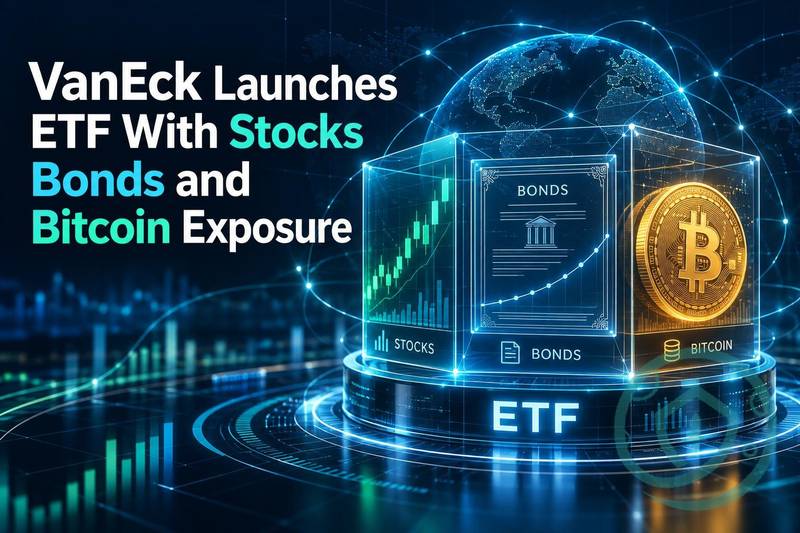
VanEck has launched a diversified exchange-traded fund that combines exposure to equities, fixed income, and Bitcoin within a single product, adding to the firm's expanding lineup of crypto-linked investment vehicles. The multi-asset structure places traditional portfolio building blocks alongside Bitcoin in one wrapper, a configuration that could appeal to investors seeking streamlined access to all three asset classes without managing separate positions.
KEY POINTS
- VanEck has launched a diversified ETF that packages stock, bond, and Bitcoin exposure into a single fund.
- The three-sleeve structure combines conventional portfolio assets with Bitcoin's asymmetric risk profile.
- Investors should consult the fund's prospectus for allocation rules, fees, Bitcoin implementation method, and suitability disclosures before investing.
What VanEck's diversified ETF brings together
The fund represents a notable structural departure from single-asset ETFs. Rather than tracking one benchmark, it bundles equities, bonds, and Bitcoin into a unified product, centralizing three distinct risk and return profiles that investors have historically managed through separate allocations. For related coverage, see Grayscale Warns Bitcoin Could Fall Further if CLARITY Stalls and Fed Tightens.
VanEck has been an active participant in the crypto ETF landscape, having previously filed and updated products tied to digital assets. The firm launched an Onchain Economy ETF targeting exposure to blockchain-adjacent businesses, and it has also updated a BNB ETF with a staking objective, illustrating the breadth of its digital asset product development. This latest fund extends that work into multi-asset territory.
Stocks and bonds as the conventional portfolio sleeves
Equities and bonds are the foundational components of most institutional and retail portfolios. Stocks offer growth exposure tied to corporate earnings; bonds provide income and, in many environments, serve as a counterweight to equity volatility. Packaging them together in an ETF is a well-established model, used by target-date and balanced funds for decades.
The addition of a third sleeve changes the calculus considerably. Bitcoin has no earnings, pays no coupon, and trades continuously across global venues, meaning its correlation to traditional assets can shift sharply depending on macro regime. How the fund weights and rebalances across all three sleeves will determine how these dynamics play out in practice; those mechanics should be confirmed in the fund's prospectus before any allocation decision.
Bitcoin exposure as the crypto component
Bitcoin's inclusion as a named exposure signals that VanEck is positioning the product as a genuine multi-asset fund rather than a thematic equity play. Whether the fund holds spot Bitcoin, Bitcoin futures, or Bitcoin ETF shares is a material distinction: each method carries different costs, tracking characteristics, and tax treatment. Investors should verify the implementation method in the fund documentation rather than assuming direct spot exposure.
VanEck has navigated complex regulatory terrain on Bitcoin products before, including withdrawing an SEC registration for a Lido Staked Ethereum ETF and separately pulling a Lido staking Ethereum ETF filing. That history underscores that the regulatory and structural path for crypto ETFs remains active and subject to change.
What a stocks, bonds, and Bitcoin mix could mean for investors
The primary practical argument for a blended ETF is convenience. Rather than sourcing a broad equity fund, a bond fund, and a Bitcoin vehicle separately, investors can obtain all three exposures through a single trade. For accounts with transaction-cost constraints or for investors who want automatic rebalancing back to a target allocation, the single-wrapper structure reduces operational friction.
Potential convenience and rebalancing considerations
Multi-asset ETFs shift rebalancing responsibility to the fund manager rather than the investor. When Bitcoin appreciates sharply relative to stocks and bonds, a rules-based fund will trim the Bitcoin sleeve and reallocate proceeds, enforcing discipline that individuals managing separate positions might not apply consistently. The specific rebalancing trigger, frequency, and methodology are fund-specific details that the prospectus will define.
The presence of Bitcoin also raises questions about overall portfolio construction for existing holders. An investor who already holds a diversified equity fund, a bond fund, and a separate Bitcoin ETF would be duplicating exposures if they also allocate to this product. The convenience benefit is most direct for investors building a position from scratch or those currently without any Bitcoin allocation.
Risks and details investors should verify in the fund documents
Bitcoin can introduce meaningful volatility to an otherwise conservative blend. In periods of broad risk-off selling, Bitcoin has at times declined in tandem with equities rather than providing the uncorrelated return profile sometimes attributed to it. Diversification across asset classes reduces concentration risk but does not eliminate the possibility of correlated drawdowns, a dynamic that Grayscale has flagged in contexts where macro tightening pressures digital assets alongside equities.
Before investing, readers should locate and review the fund's official prospectus and summary prospectus for: the target allocation to each sleeve, the rebalancing methodology, the expense ratio, the method of Bitcoin exposure (spot, futures, or fund-of-funds), liquidity terms, and risk disclosures specific to digital assets. These documents are the authoritative source; nothing in this article constitutes investment advice or a complete description of the fund's terms.
For investors tracking VanEck's broader digital asset strategy, the multi-asset ETF marks a step beyond single-token products into portfolio construction territory, a direction that other asset managers are likely to watch as they assess demand for packaged crypto exposure within conventional brokerage accounts.
Additional source references: source document 1, source document 2.
Disclaimer: This article is for informational purposes only and does not constitute financial or investment advice. Cryptocurrency and digital asset markets carry significant risk. Always do your own research before making decisions.
Read original article on aicryptocore.com