The plan is off the table. Zcash Community Grants (ZCG) will not redirect around 98,000 ZEC from their funding into the reserve for future mining rewards. The committee withdrew the proposal
The plan is off the table. Zcash Community Grants (ZCG) will not redirect around 98,000 ZEC from their funding into the reserve for future mining rewards. The committee withdrew the proposal on the Zcash forum on November 3. That does not end the dispute over the development money, because three competing proposals are still on the table. For now, eight percent of all newly created ZEC continue to flow to the committee, around 144 coins a day.
The withdrawal coincided with a clear recovery in the market. Zcash is trading firmly higher on Wednesday evening, and in a little over 31 hours the network activates its biggest upgrade, NU7. If you hold ZEC or want to buy it, you should keep the funding dispute, the price and the upgrade apart. This article puts all three into context with figures and shows what matters when buying, storing and declaring ZEC for tax in Germany.
Zcash price at $1,284: up 5.7 percent on Wednesday evening
Zcash (ZEC) traded at $1,283.61 at 7:50 p.m. Central European Time on November 4, 2026, roughly €1,144. According to CoinGecko, that is a gain of 5.7 percent in 24 hours. The daily low was $1,159.27 and the daily high $1,347.03. With a market capitalisation of around $21.9 billion, Zcash ranks tenth among the largest cryptocurrencies. ZEC worth a little over $1.3 billion changed hands in 24 hours.
The broader market also rose once the results of the US congressional election were in. Bitcoin gained 3.5 percent over the same period to a little over $80,300, and Ether 5.6 percent to around $2,420. Monero, the second large privacy coin, added only 0.7 percent. Over seven days ZEC is practically unchanged, and over 30 days it is down 2.6 percent. Over twelve months, however, the price has more than tripled, with a gain of around 231 percent.
There is no single trigger that explains the rise on its own. Three developments that coincide in time are documented: the withdrawal of the ZCG plan, the recovery of the entire crypto market after the election, and positioning ahead of NU7, which the news site crypto.news points to in its market analysis of November 4.
ZCG withdrawal: the plan for 98,000 ZEC is no longer on the table
Zcash Community Grants had presented their proposal on October 29 under the self-critical title that the committee gets too much ZEC. At its core, 36,200 of the roughly 91,500 ZEC the committee held at the time were to flow into the Network Sustainability Mechanism. In addition, the committee would have given up future income. Until the 2028 halving, only 47,000 ZEC instead of around 109,000 ZEC would have gone to the ZCG, with further reductions until 2032. The sum of the transfer and the waiver gives the figure of around 98,000 ZEC reported by CoinDesk and crypto.news. The number therefore combines existing holdings and future inflows and does not describe a single account balance.
The reversal followed on November 3. In a post by the committee on the Zcash forum, it says: “We’ve decided not to take this proposal forward.” The future of the Dev Fund and of the ZCG assets should be decided by the community in Zcash’s usual governance process. This came after a week of sharp criticism of the committee’s spending practices and of individual funded projects.
At the current price, 98,000 ZEC are worth around $126 million. The 36,200 ZEC that were to be transferred immediately are worth about $46 million. That order of magnitude explains why the debate is so heated: it is about who will control a nine-figure sum for the development of Zcash over the coming years.
Dev Fund and Network Sustainability Mechanism: how Zcash funding works
Zcash finances its development through the so-called Dev Fund. The Dev Fund is a fixed share of every new block reward that goes not to the miners but to organisations that develop the protocol further. Zcash Community Grants currently receive eight percent of it. The five-member committee uses it to award grants to developers and projects, without coin holders voting on each individual grant.
The Network Sustainability Mechanism, NSM for short, is the counterpart on the miners’ side. It is a reserve from which future block rewards are topped up. Anyone who transfers ZEC to the NSM takes those coins out of current circulation and returns them to the miners spread over many years. With NU7, according to crypto.news, 60 percent of transaction fees will also flow into this reserve, while miners receive 40 percent directly.
For investors, the mechanism matters for one reason: every ZEC the committee transfers to the NSM is no longer available for grant payments, which recipients often sell on the market. Conversely, selling pressure from grant funds persists as long as the eight percent keep flowing unchanged. How strongly this effect influences the price cannot be quantified with the public data.
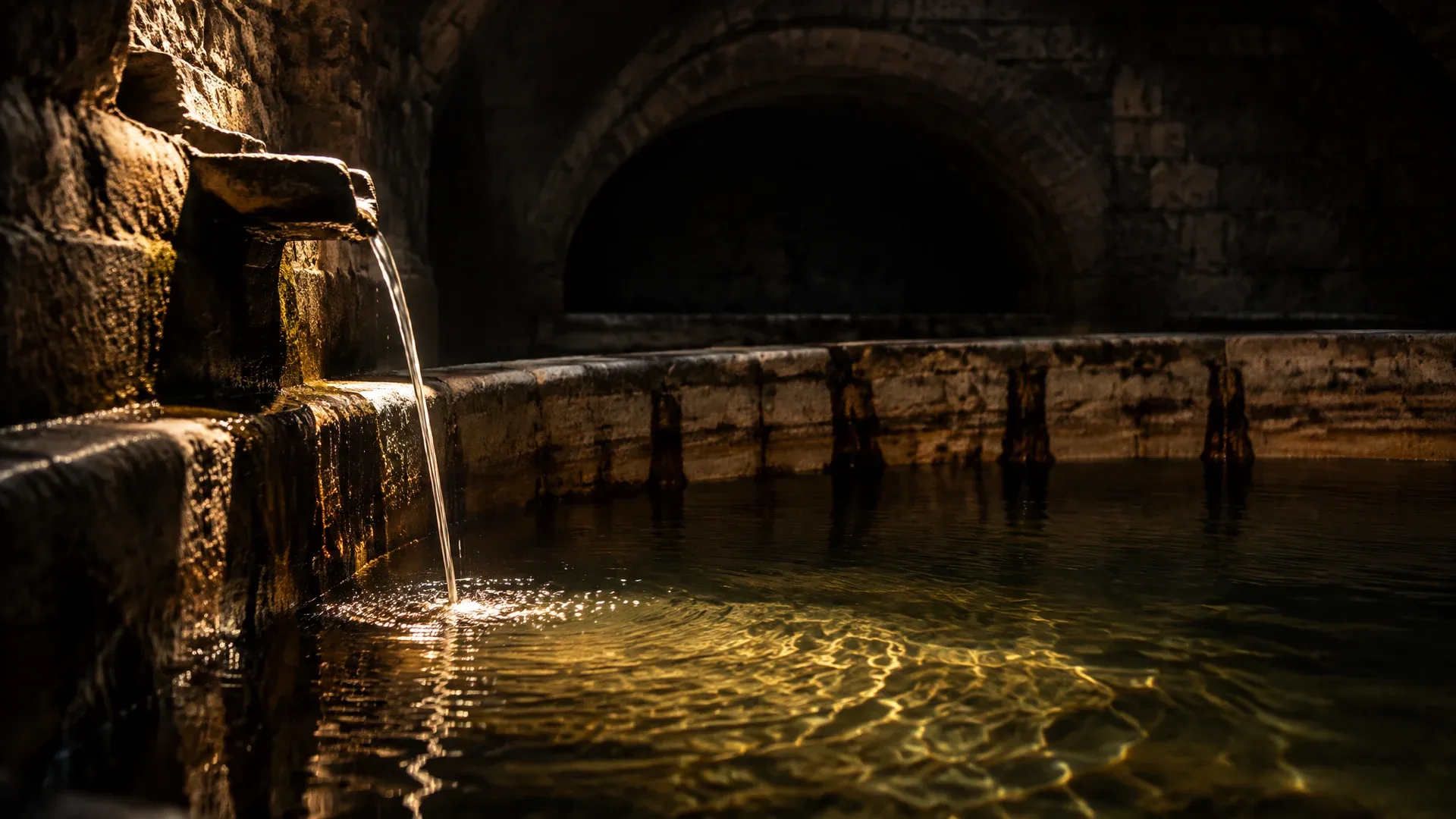
The Network Sustainability Mechanism works like a reservoir that refills mining rewards over the years.
Three counter-proposals: 50,000 ZEC, a funding stop or a new focus
With the ZCG plan withdrawn, only one of four proposals has been settled. The remaining three point in very different directions.
- Funding stop: Zcash co-founder Sean Bowe wants to end the automatic allocation to the ZCG altogether. In his view, the existing assets are enough to finance the committee’s work for years. In October, according to crypto.news, he wrote: “It’s time to turn off the ZCG funding stream.”
- 50,000 ZEC into the reserve: A draft Zcash Improvement Proposal, developed by Tachyon Group and Shielded Labs and backed by Bowe and Zcash founder Zooko Wilcox, requires the ZCG to pay 50,000 ZEC into the NSM within 30 days of adoption. The committee would then be left with around 41,453 ZEC. The eight percent would be redirected into a new pot for development and legal defence.
- New focus: Developer Daira-Emma Hopwood proposes keeping the eight percent but tying funding more closely to the actual use of ZEC.
None of these proposals has been adopted, and none has a date. Changes to the distribution of new coins require a network upgrade on Zcash. NU7 contains none of these changes; they would come with a later upgrade at the earliest.
Price rise since November 3: from $1,135 to $1,284
A comparison with the past 36 hours shows how quickly the situation has turned. On the morning of November 3, ZEC stood at $1,134.67 after a drop of around eleven percent. At the time, the unwinding of a large leveraged position and the escalation of the funding dispute came together. Overnight into November 4, the price climbed to $1,230.91, as we noted in our report on Zebra 7.0.0 and the security flaws ahead of NU7.
Since then it has added a good $50. From the low on Tuesday morning to the level on Wednesday evening, that is around 13 percent. The withdrawal of the ZCG plan fell into this recovery; it was published on the forum on Tuesday morning Central European Time.
NU7 at block 3,543,405: activation due in the night to November 6
Network Upgrade 7, NU7 for short, activates at block height 3,543,405. On Zcash, a network upgrade is a rule change that all nodes apply simultaneously from a fixed block onwards. Anyone who has not installed the new software then follows a different blockchain from the rest of the network.
Many reports cite November 5 as the target date. What counts, however, is the block alone. At 7:50 p.m. Central European Time on Wednesday evening, the Zcash blockchain stood at block 3,541,886, so 1,519 blocks were still missing. With the current target time of 75 seconds per block, that works out at around 31.6 hours. On that calculation, activation falls in the night to Friday, November 6, at around 3:30 a.m. Central European Time. Because individual blocks are found faster or slower, the timing can shift by a few hours. cryptoticker.io collected this data itself on November 4, 2026.
In substance, NU7 changes three things above all. Block time drops from 75 to 25 seconds, so payments are confirmed around three times as fast. The reward per block falls in the same proportion, which is why no more new ZEC are created than before despite the faster blocks. On top of that comes the new split of transaction fees between the reserve and the miners. You will find background on the block time change in our earlier articles on the upgrade.
Sprout pool nearing its end: old balances become immovable with NU7
For most holders, NU7 changes little in everyday use. The exception is very old balances in the Sprout pool. Sprout is the first area for shielded payments, introduced when Zcash launched in 2016. Its addresses start with “zc”. With NU7, transactions in the old version 4 format become invalid, and only this format can move Sprout balances. This is set out in ZIP-2003.
The ZEC are not destroyed in the process. But anyone who does not move them to a newer area before activation cannot spend them until further notice, and whether a later upgrade will restore access is open. Those mainly affected are users who shielded ZEC in their own wallets in the early years and have not moved them since. Balances on an exchange and ZEC on transparent addresses starting with “t” are not affected by the lock.
Anyone running their own node needs Zebra 7.0.0, the Zcash Foundation’s node software, before activation. The older zcashd is no longer supported by NU7. If you only hold ZEC in a wallet app, you should update the app to the latest version.

At block 3,543,405 the Zcash network switches its rules; anyone who has not updated by then ends up on a dead track.
Buying ZEC in Germany: MiCA licence and the 2027 AMLR deadline
If you want to buy after the rise, look at the exchange’s licence first. Since the transition periods ended, providers offering crypto assets in Germany need authorisation under the EU’s MiCA regulation. Whether a platform has it is shown in ESMA’s public register. You will find an overview of licensed providers in our comparison of regulated crypto exchanges. Before buying, also check whether the exchange lists ZEC at all.
There is a reason for this with a fixed date. From July 10, 2027, the EU anti-money laundering regulation AMLR prohibits regulated providers from maintaining accounts with so-called anonymity-enhancing coins. Holding ZEC in your own wallet remains permitted under the interpretations known so far. If you buy ZEC through an exchange, however, you should be prepared for the offering there to shrink by mid-2027.
For tax purposes, Germany applies a one-year holding period to private disposals. If you sell ZEC at a profit within a year of buying, the gain is subject to income tax, provided that all private disposal gains in the year exceed the €1,000 exemption threshold. After more than a year, the sale is tax-free. Anyone buying now and betting on a quick profit around NU7 will therefore almost always be within the holding period.
Leverage and liquidation: the risks around the NU7 upgrade
The price often swings more than usual around network upgrades. The past few days show this clearly: down eleven percent on Tuesday, up 13 percent since then. If you trade ZEC with leverage, for example through perpetual futures, you risk liquidation in phases like this. A liquidation means the exchange closes the position automatically as soon as the posted collateral no longer covers the losses. With ten times leverage, a counter-move of just under ten percent is enough, and ZEC has delivered swings of that size twice this week.
When it comes to storage, it depends on how long you want to hold. If your ZEC sit on an exchange, the provider takes care of the new node software. If you hold them yourself, you keep full control but are responsible for software updates and for backing up the recovery phrase. Especially if you still want to hold ZEC after July 10, 2027, there is hardly a way around a wallet of your own.
There is no staking on Zcash. ZEC continues to be created through proof-of-work mining, and NU7 does not change that. Offers that promise interest on ZEC are therefore lending arrangements with their own counterparty risk, not staking in the proper sense.
Zcash price between $1,159 and $1,347: the day’s range
On the upside, the daily high of $1,347.03 is the first hurdle. According to crypto.news, the analyst Ardi cites $1,370 on X as the threshold above which short sellers could come under pressure. The all-time high of $3,191.93 from October 2016 is far away, at a discount of almost 60 percent.
On the downside, the daily low is $1,159.27. Below that lies the area around $1,135 where Tuesday morning’s slide ended. If ZEC falls below this zone, the recovery since the funding dispute would be completely wiped out. Between the two edges lie just under $190, around 16 percent measured from the low, a range ZEC is currently covering within a single day.
Zcash funding dispute: the Dev Fund stays unchanged until NU7
The withdrawal of the ZCG plan removes one uncertainty from the market but does not resolve the underlying dispute. The eight percent keep flowing, and the community will decide on the counter-proposals only after NU7. Until activation, three steps count for you:
- Check the exchange: Only buy ZEC from a provider with a MiCA licence that intends to support the coin after 2027 as well. Our crypto exchange comparison shows a selection.
- Sort out storage: If you have old Sprout balances, move them before block 3,543,405. For long-term self-custody, you will find devices in the hardware wallet comparison.
- Document for tax: Record the purchase date and price so that you can prove the one-year holding period. The programs in our comparison of crypto tax tools can help.
(As of November 4, 2026. This article is not investment advice. Prices and fee structures change; check the terms with the provider before you buy.)