You are entitled to take part in the Zcash vote on NU7 if, on 24 August 2026 at around 19:00 UTC, you held spendable shielded ZEC in the Ironwood pool of a wallet of your own. Anyone who had
You are entitled to take part in the Zcash vote on NU7 if, on 24 August 2026 at around 19:00 UTC, you held spendable shielded ZEC in the Ironwood pool of a wallet of your own. Anyone who had nothing there at that moment can no longer change it before the voting window closes on 14 September at 19:00 UTC, however much Zcash (ZEC) they buy today. There is a relief in the other direction that many overlook: anyone who was eligible on the cut-off date may move, sell or reallocate their coins afterwards without losing the right to vote. In the words of the organisers: "If you have spendable funds in Ironwood at that height, your ZEC is eligible even if you move your funds after the snapshot."
That is the practical core of a process on which almost nothing has been written in English so far. On 22 August we explained what ZEC holders are voting on. The question that has arisen since is a different one: who is allowed to vote and how it works technically. The text below answers it step by step, names the points where the primary source and the trade press contradict each other, and draws the line beyond which the vote no longer changes anything.
Who may take part in the Zcash vote: the three conditions at the snapshot block
The eligibility rule sits in a single English clause, and that clause contains three conditions that had to be met at the same time: "spendable shielded funds in Ironwood at Mainnet block height 3459350". In plain terms:
Spendable
A shielded note is the protected equivalent of an account entry at Zcash: an encrypted record in the blockchain that only the holder of the matching key can read and spend. "Spendable" means these notes were actually available to spend on the cut-off date, meaning confirmed and not tied up in a transaction still in flight. Funds that were in transit at the snapshot moment do not count.
Shielded
Zcash has two types of address. Transparent addresses work as they do at Bitcoin: amount, sender and recipient sit openly in the blockchain. Shielded addresses hide that information behind a zero-knowledge proof. Only shielded balances count for the vote. Anyone holding ZEC on a transparent address was not eligible to vote on 24 August, not even with six-figure amounts.
In the Ironwood pool
A shielded pool is the technical generation a shielded address belongs to. Zcash has introduced four of them one after another, and only the most recent one counts for the vote. More on that shortly, because this point excluded most holders.
The cut-off date itself can be measured without having to believe any announcement. The public chain statistics from Blockchair showed block height 3,467,063 on 31 August 2026 at 12:37:46 UTC. The snapshot at 3,459,350 is therefore 7,713 blocks back, which at a target block time of 75 seconds works out to roughly 160 hours, just under seven days. It is irrevocably past.
Why ZEC on an exchange has no vote: self-custody as a precondition
This is the point at which most retail investors drop out without knowing it. If your ZEC sits at an exchange, the private key belongs to the exchange rather than to you. Your position there is a claim against the house, not a shielded balance in a Zcash pool. That is precisely why reporting notes that ZEC "kept on exchanges or other networks needs to be transferred into Ironwood's self-custody" in order to be eligible to vote.
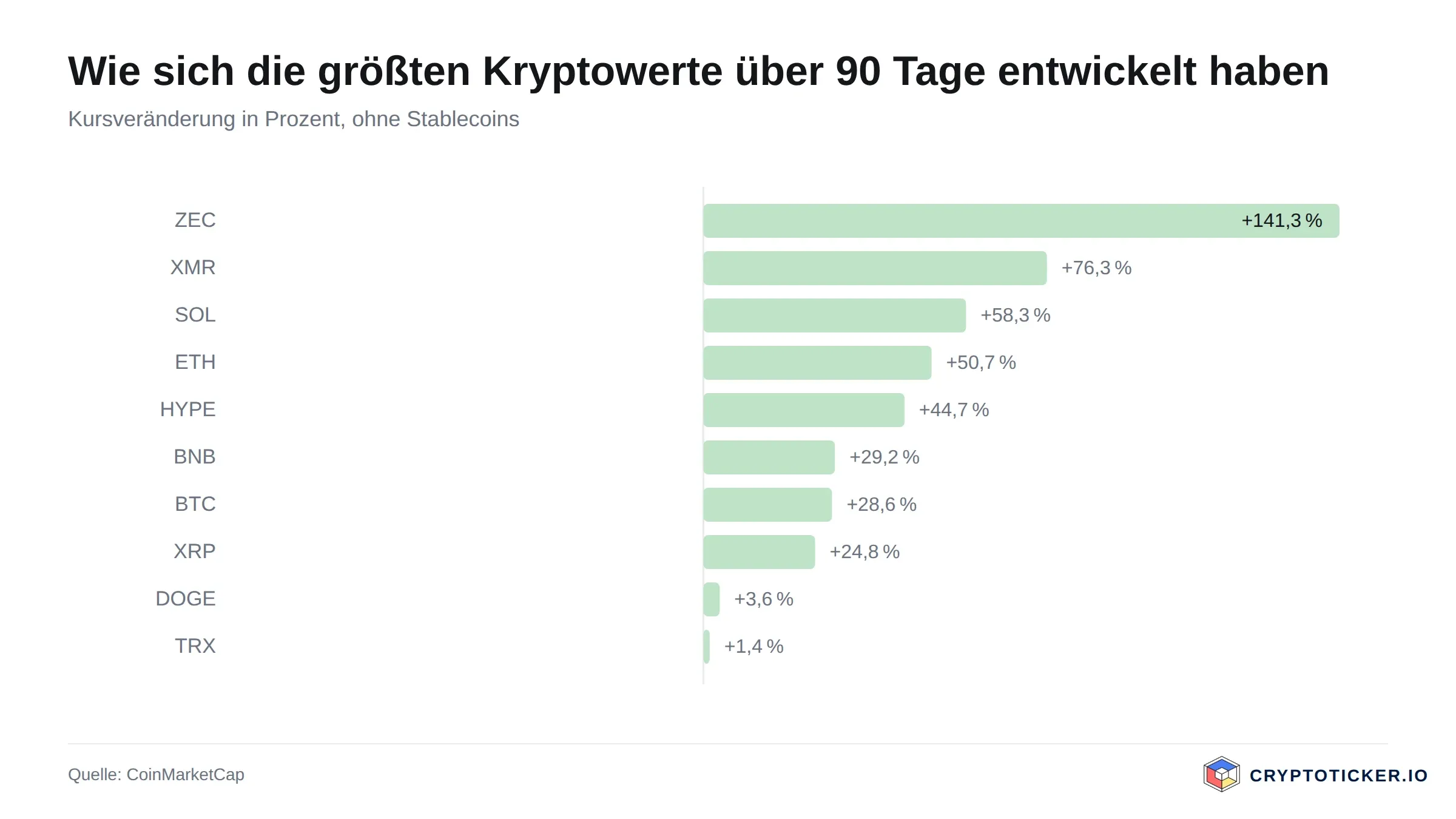
The largest crypto assets over 90 days, based on data from CoinMarketCap
In practice that means governance at Zcash is tied to self-custody. Anyone who wants a say has to withdraw their coins from the custodial account and put them in a wallet whose keys they control themselves. With that they also take on responsibility for the seed phrase, the sequence of words from which a wallet can be restored if it is lost. For newcomers the transition is the real hurdle, rather than the vote itself. If you are taking that step for the first time, our software wallet comparison is worth a look, and for larger holdings the hardware wallet comparison is worthwhile, because the key never leaves the device there.
In the other direction, the note this text opens with applies: after the snapshot the tie is released. You do not have to leave the coins untouched until 14 September; the balance may go back to an exchange, into another wallet or into a sale, and the voting right stays attached to the snapshot moment. So anyone who withdrew their ZEC only for the vote may long since have moved it back. Which trading venues come into question for the return trip is covered in our exchange comparison.
Ironwood, Orchard, Sapling, Sprout: only one shielded pool is eligible to vote
Zcash has developed its shielded addresses across four generations. Sprout was the first, from 2016, Sapling followed in 2018, Orchard in 2022, and Ironwood went live with the upgrade of the same name on 28 July 2026. Each generation is a separate pot with its own cryptography, and funds do not migrate from one to the next on their own.
For the NU7 vote, Ironwood alone counts. Balances in Orchard, Sapling and Sprout were as mute on the cut-off date as transparent addresses. That is no formality, and it has a measurable effect on participation: the migration out of the sealed Orchard pool into Ironwood was only around 85 percent complete at the end of August, with roughly three percent of the total supply still sitting in Orchard. Every one of those balances was worthless for the vote on 24 August, even though it was shielded and belonged to the right person.
So if you read in July or August that you should "shield" your ZEC, that was only half the advice. What mattered was which pool. Anyone who postponed the migration to Ironwood because it costs fees and takes time gave up their voting right unintentionally in doing so.
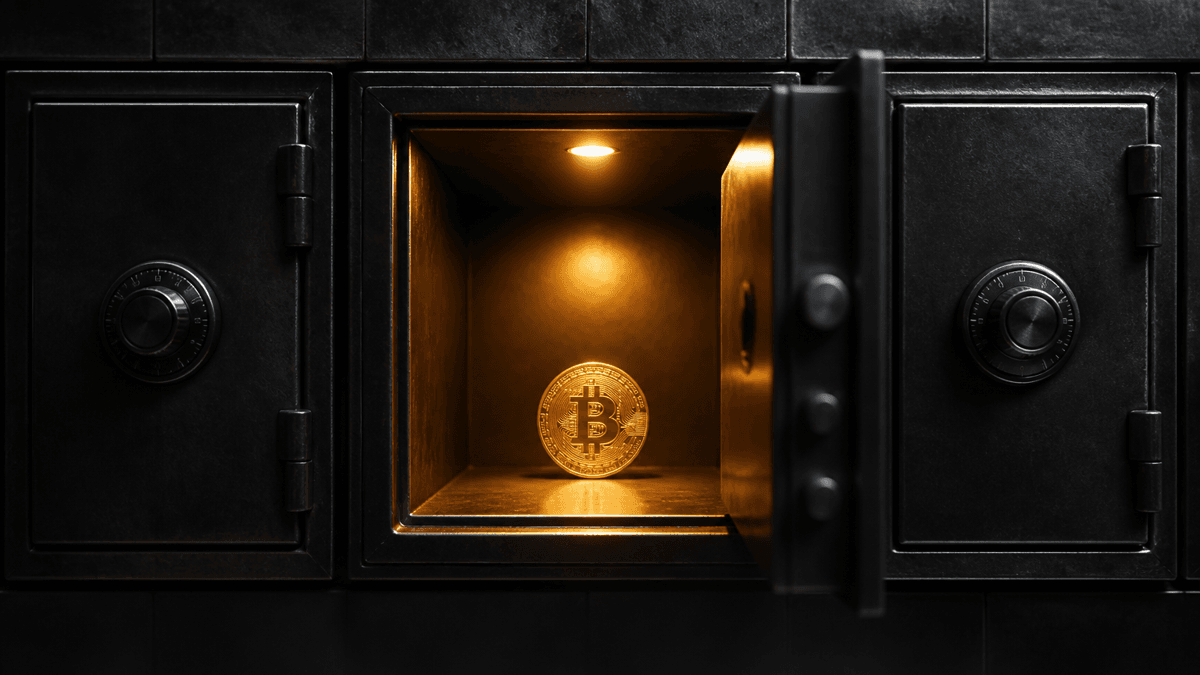
Four shielded pools, a single one eligible to vote: anyone still in Orchard, Sapling or Sprout on 24 August was excluded from the NU7 vote.
Which wallets support the Zcash vote: primary source and press contradict each other
Precision is worth it here, because a mistake costs you your vote. The organisers' announcement names two applications explicitly: "We have confirmed that Vizor and Zodl will support the voting process." Two names, and the primary source confirms no more than that.
The trade press additionally lists Zashi, Zkool and the hardware wallet Keystone as supported, the latter with the note that users can take part "without removing their keys from the device". That divergence deserves naming rather than smoothing over: between "confirmed by the organisers" and "named in the press" lies a practical difference for you. If your wallet does not show the voting function, that is not a fault in your device but possibly simply missing support.
In the Zcash community forum, at least one participant confirms the route via Zodl with the words "Voting with Zodl worked well". That is a user report rather than a vendor commitment, but it matches the primary source.
What to check before you try
Open your wallet and see whether it offers a voting function. If you cannot find one, the detour via one of the confirmed applications is the safe route. Your shielded notes stay where they are; you do not need a transfer to cast your vote.
How to cast your vote with Zodl or Keystone
The procedure is short and works without a transaction to any third-party address. The application describes it in five steps:
- Open settings in Zodl or on the Keystone device.
- Select "Beta: Coinholder Polling" to see the polls under way.
- Read the proposals and the linked ZIPs. A ZIP is a Zcash Improvement Proposal, the formal document in which a protocol change is spelled out technically. Anyone who knows only the headline is voting on a text they have not read.
- Cast your shielded vote. The vendor notes: "Votes are private. Your funds never leave your wallet."
- Track open, completed and closed polls, all in one place.
Two things regularly cause confusion here. First: your wallet has to be fully synchronised with the blockchain, otherwise it does not know the position as at the cut-off date. With shielded addresses that reconciliation takes noticeably longer than with transparent ones, because the wallet has to decrypt every note itself. Second: your vote weighs as much as your shielded balance at the snapshot block, rather than as much as your account balance today. Buying more after 24 August does not increase the weight.
The five questions ZEC holders decide on for the NU7 upgrade
The ballot comprises five separate questions, each with an abstention option. You do not have to answer them all.
Question 1: issuance smoothing under the NSM
The Network Sustainability Mechanism (NSM) is the proposal to govern the issuance of new ZEC via a smooth curve instead of abrupt halvings. The options are the smooth curve, keeping the halvings, dropping this point from NU7, and abstention.
Question 2: start date for reissuance
Reissuance means returning previously burned transaction fees to future block rewards. Options: as early as possible, February 2027, February 2031, abstention.
Question 3: shutting down Sprout
The oldest shielded pool is to be dropped from the protocol. Options: immediately with NU7, one year after the vote, set no date, abstention.
Question 4: shorter block time
Block time is to fall from 75 to 25 seconds, so transactions would be confirmed faster. Options: yes, no, abstention.
Question 5: scope and readiness of NU7
If individual features are not ready by 30 September: ship and drop the unfinished parts, wait until everything is in place, reject the plan, abstention.
Questions 1 and 2 are the economically weightiest, because they concern the future issuance of new coins. Circulating supply stood at around 16.91 million ZEC on 31 August against a cap of 21 million (CoinGecko). The price on the same day was 829.90 US dollars, or 715.72 euros, with a market capitalisation of 14.05 billion US dollars, after a decline of around two percent within 24 hours.
The quorum of 1,000,000 ZEC and the size of the Ironwood pool
For the result to count as representative, at least 1,000,000 ZEC have to take part in at least one of the five questions. That figure sounds abstract until you measure it against the eligible supply.
The Ironwood pool had taken in more than 3.7 million ZEC by the end of August, according to the trade press. The quorum therefore corresponds to a good quarter of the entire eligible holdings. By comparison: measured against the circulating supply of 16.91 million ZEC it would be just under six percent. Both figures describe the same threshold, but only the first describes the actual hurdle, because Ironwood alone counts.
If the quorum is missed, the vote is not invalid in a legal sense. The result then counts as unrepresentative, and for the developers who are meant to evaluate it that is a considerable difference. For you as a holder it means this: an abstention that is cast as a vote also feeds into participation, while doing nothing lowers it.
An advisory signal rather than a protocol change: what the coinholder vote does not do
This is where the text becomes uncomfortable, but without this part it would be wrong. The vote does not change the Zcash protocol. The procedure collects an opinion that developers can subsequently take into account, or not.
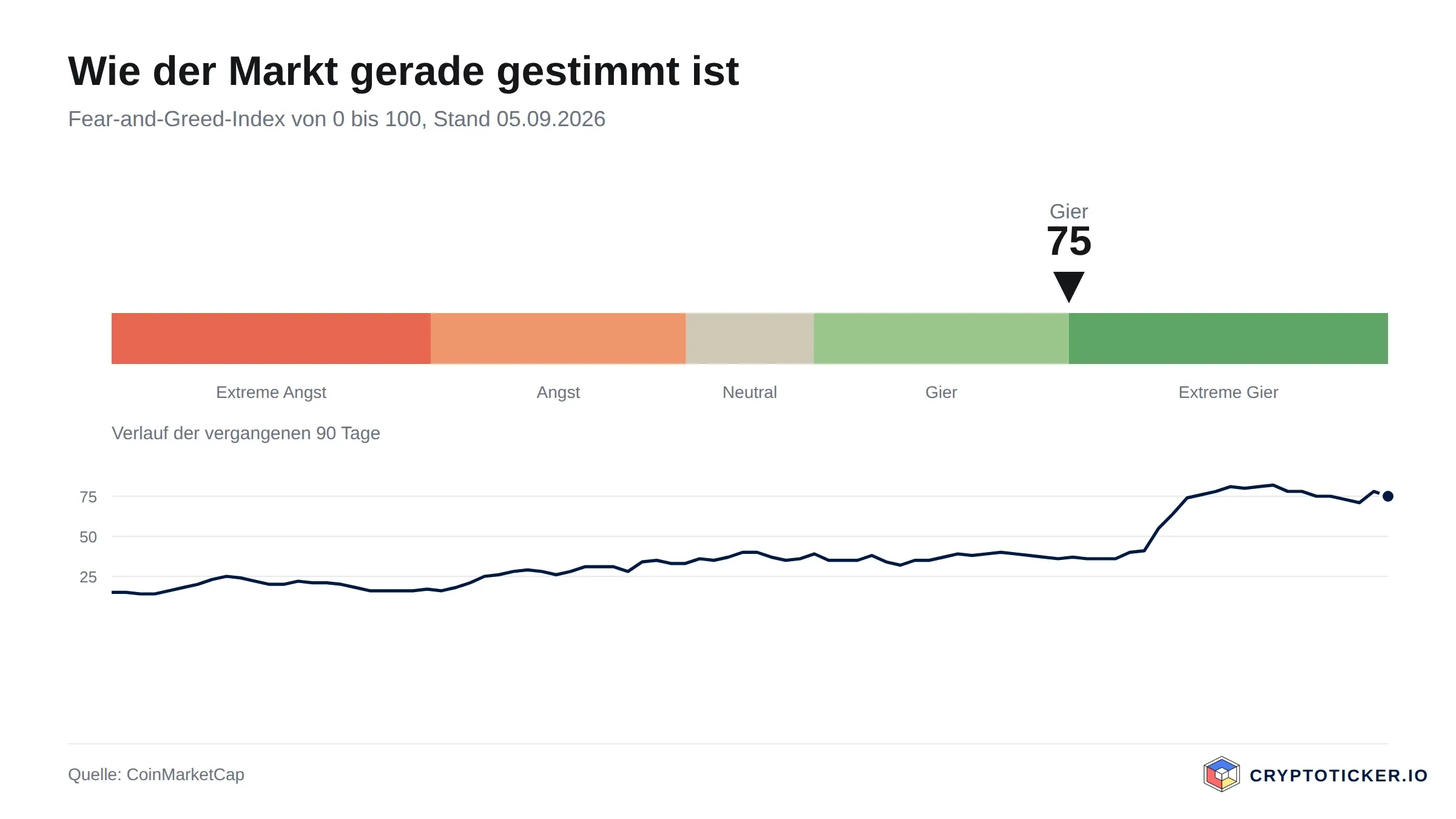
The Fear and Greed Index places market sentiment between extreme fear and extreme greed
In the community forum, one post reduces it to the formula "a poll, not a vote", and the developer Daira notes there: "There is no ZIP that approves making Zcash protocol decisions by vote." So there is no formal document that provides for protocol decisions by vote at all. Several participants have stated that they would need extraordinary grounds to override a clear vote by holders. That is not a binding commitment, but a voluntary undertaking without an enforcement mechanism.
Approved proposals then have to be written up as a ZIP, developed, reviewed and rolled out via a network upgrade. Between the result on 14 September and a visible change to block time or the issuance curve, then, lie months, and in the case of the reissuance options even years.
Anyone who nonetheless takes the process seriously does so for a different reason: a coinholder vote with high participation is the strongest signal that governance without a foundation majority can produce. It is coordinated by the Valar Group and Project Tachyon, which have built their own coinholder voting chain for it. This voting chain is a separate chain purely for the count and takes the place of Zcash's previous governance procedure. Zcash co-founder Sean Bowe has accompanied the launch.
Two votes, one closing date: coinholder vote and the Zcash Foundation's ZCAP poll
Anyone searching for "the Zcash vote" actually finds two procedures running in parallel that end on the same day at the same minute. Confusing the two is the most common source of error.
The coinholder vote is the coin-weighted part this text is about. It runs from 25 August to 14 September, 19:00 UTC, and your weight is your shielded Ironwood balance at the snapshot block.
The ZCAP poll is the Zcash Foundation's survey of the Zcash Community Advisory Panel. It opened on 27 August and likewise closes on 14 September at 19:00 UTC. The Foundation runs it as an SIV poll, in full a single iterative vote; that is its own survey format for panel consultations and has nothing to do with the coin-weighted count of the coinholder vote. Only members of the panel, who receive their instructions by email, may take part there; holding ZEC alone confers no entitlement. The Foundation places the procedure itself: "Though advisory in nature, these votes play a vital role in informing decisions across the ecosystem." Both procedures address the same five substantive questions from different angles, once weighted by capital and once by people. The questions are not new: the Foundation had already surveyed the scope of NU7 earlier in 2026 in a sentiment poll and published its results. The current procedure is meant to settle the points left open after that.
How homomorphic encryption keeps your vote secret
Homomorphic encryption is a technique in which encrypted values can be added together without decrypting them first. For a vote that is the decisive property: the count can run without anyone seeing an individual vote.
In the NU7 vote, both the chosen answer and the associated ZEC amount are processed in encrypted form. All that becomes visible at the end is the total per answer option. In addition, each vote is split into 16 ballots that cannot be linked to one another, so that no conclusion about the size of an individual balance can be drawn from voting behaviour.
The count itself rests with a distributed election authority of at least ten validators, each holding only part of the decryption key. The overall result can be reconstructed only when two thirds of those validators agree. This means no single operator can tap interim results and influence the course of the vote. For a privacy coin this design is less an optional extra than a requirement, because an open list of votes would have put every participant's balance in the shop window.
What this additionally means for European holders
The vote falls in a phase in which European investors have to think about the custody of their privacy coins anyway. What role the planned EU rules play in that, and what happens to holdings on regulated platforms from July 2027, we have written up in a separate article. Anyone moving their ZEC into self-custody in any case settles both questions with the same step.
Zcash vote: what to take away
- First check whether you are eligible to vote at all. Open your wallet, let it synchronise fully and see whether spendable shielded funds sat in the Ironwood pool on 24 August. If they sat at an exchange, in Orchard, Sapling, Sprout or on a transparent address, the vote is out of reach this time round. For the next attempt the choice of wallet is decisive: the hardware wallet comparison shows which devices support shielded Zcash addresses at all.
- Vote while the window is open. Until 14 September, 19:00 UTC, the route runs via settings and "Beta: Coinholder Polling" in a supported application. Read the linked ZIPs before you click, and use the abstention option on questions you have no view on. If you first have to withdraw funds from a custodial account for that, you will find the candidates for the later return trip in the exchange comparison.
- Do not expect an immediate change from the result. The vote is advisory, not a protocol decision. Treat it as a sentiment reading rather than a date for a price reaction, and separate the custody question from the voting question: you need a suitable storage arrangement regardless of how NU7 is scoped in the end. The software wallet comparison offers a way in.
The primary source with the full wording of the announcement, the five questions and the eligibility rule is in the Zcash community forum. The parallel survey of the advisory panel is documented in a separate forum post by the Zcash Foundation.
(As of August 31, 2026. This article is not investment advice. Prices and fee structures change; check the terms with the provider before you buy.)