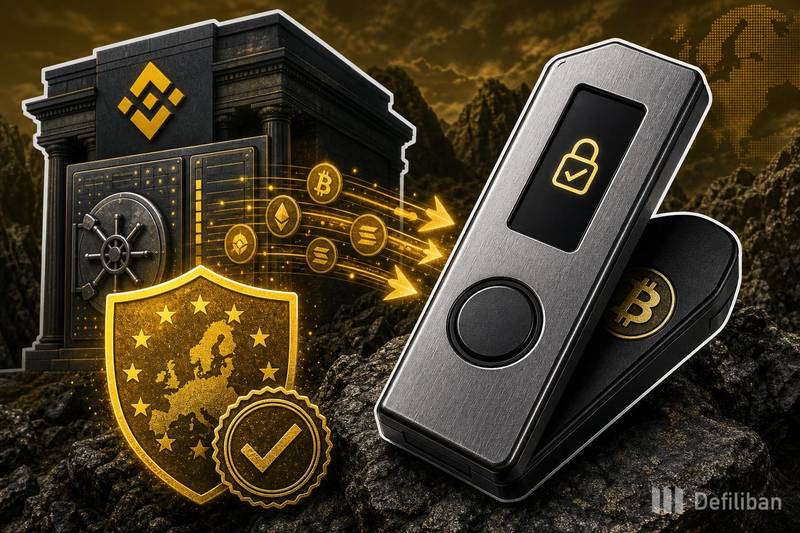
Binance CEO Richard Teng stated that 70% of EU user withdrawals went to self-hosted wallets rather than to MiCA-regulated platforms, highlighting a strong preference for self-custody among Eu
Binance CEO Richard Teng stated that 70% of EU user withdrawals went to self-hosted wallets rather than to MiCA-regulated platforms, highlighting a strong preference for self-custody among European crypto users navigating the new regulatory landscape.
Teng shared the figure in a post on Binance Square, framing the withdrawal pattern as evidence that users chose to hold their own keys rather than migrate to other licensed exchanges operating under the EU's Markets in Crypto-Assets (MiCA) framework. For related coverage, see Binance Alpha token TAC plunges more than 90% in 15 minutes.
The statistic points to a clear custody preference. When EU users pulled funds from Binance, seven out of ten moved assets to self-hosted wallets, meaning wallets where the user alone controls the private keys, with no intermediary holding funds on their behalf. For related coverage, see Royal Government of Bhutan Deposits 700 BTC to Binance.
The remaining withdrawals did not primarily flow to MiCA-regulated competitors. That split suggests users were not simply shopping for a different exchange with a European license; they were opting out of centralized custody altogether, at least for the assets they withdrew. For related coverage, see VanEck Says Bitcoin Could Be Materially Higher in a Year.
This pattern is consistent with broader withdrawal activity tracked across Binance. Recent on-chain data has shown newly created wallets withdrawing hundreds of BTC from the exchange, and large holders moving thousands of ETH off Binance to stake via decentralized protocols.
Why MiCA-Regulated Platforms Were Not the Main Destination
MiCA, the EU's comprehensive crypto regulatory framework, requires exchanges and custodians operating in Europe to obtain specific licenses. The regulation was designed in part to create a supervised marketplace where users could trade on compliant platforms.
Teng's data suggests that outcome has not materialized as regulators may have hoped, at least in the context of these Binance withdrawals. Instead of transferring to a licensed alternative, users chose direct custody.
Binance itself has faced challenges securing MiCA authorization across Europe. The exchange encountered setbacks in obtaining its EU license through Greece, adding context to why some users may have needed to move funds in the first place.
The withdrawal pattern does not necessarily reflect a rejection of regulated platforms broadly. It may instead indicate that users who already held crypto on Binance preferred the flexibility and control of self-custody over the process of onboarding to a new exchange under a different regulatory regime.
TLDR Keypoints
- Binance CEO Richard Teng said 70% of EU user withdrawals went to self-hosted wallets, not to other exchanges.
- MiCA-regulated platforms were not the primary destination for users moving funds off Binance in Europe.
- The data signals a strong self-custody preference among EU crypto holders during the MiCA transition period.
Disclaimer: This article is for informational purposes only and does not constitute financial or investment advice. Cryptocurrency and digital asset markets carry significant risk. Always do your own research before making decisions.
Read original article on defiliban.io