Disclosure: This article is sponsored content about Bron. It is based on a report supplied for this article. The report does not name its author. Coincu did not run the scoring or the support
Disclosure: This article is sponsored content about Bron. It is based on a report supplied for this article. The report does not name its author. Coincu did not run the scoring or the support-desk tests it describes, and the scores below are the report figures, not Coincu ratings.
A wallet for a six-, seven- or eight-digit balance is closer to an operating model than an app. The questions that matter are what happens if a device is lost, who can approve a transfer, what an heir can do, and what the wallet reveals to outsiders.
An Autumn 2026 report scored ten non-custodial wallets on twelve criteria built around those questions. Bron came first with 84 points, ahead of Ledger at 72 and Zengo at 70.

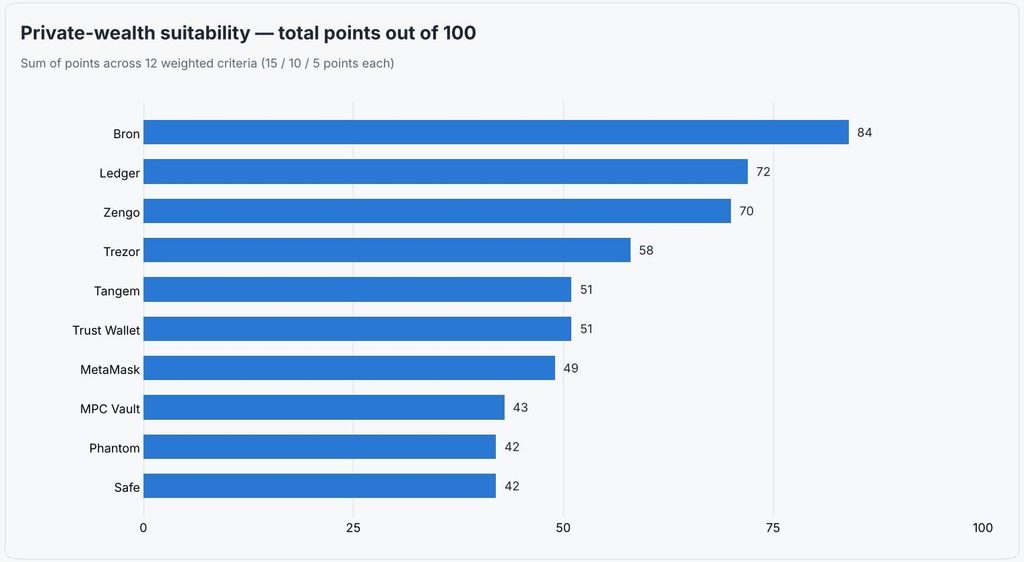
Figure 1 from the supplied report: total points out of 100 across 12 weighted criteria.
The weights favor security (15 points), multi-user management (10) and inheritance (10), which suit a large private holding. A trader would weigh them differently.
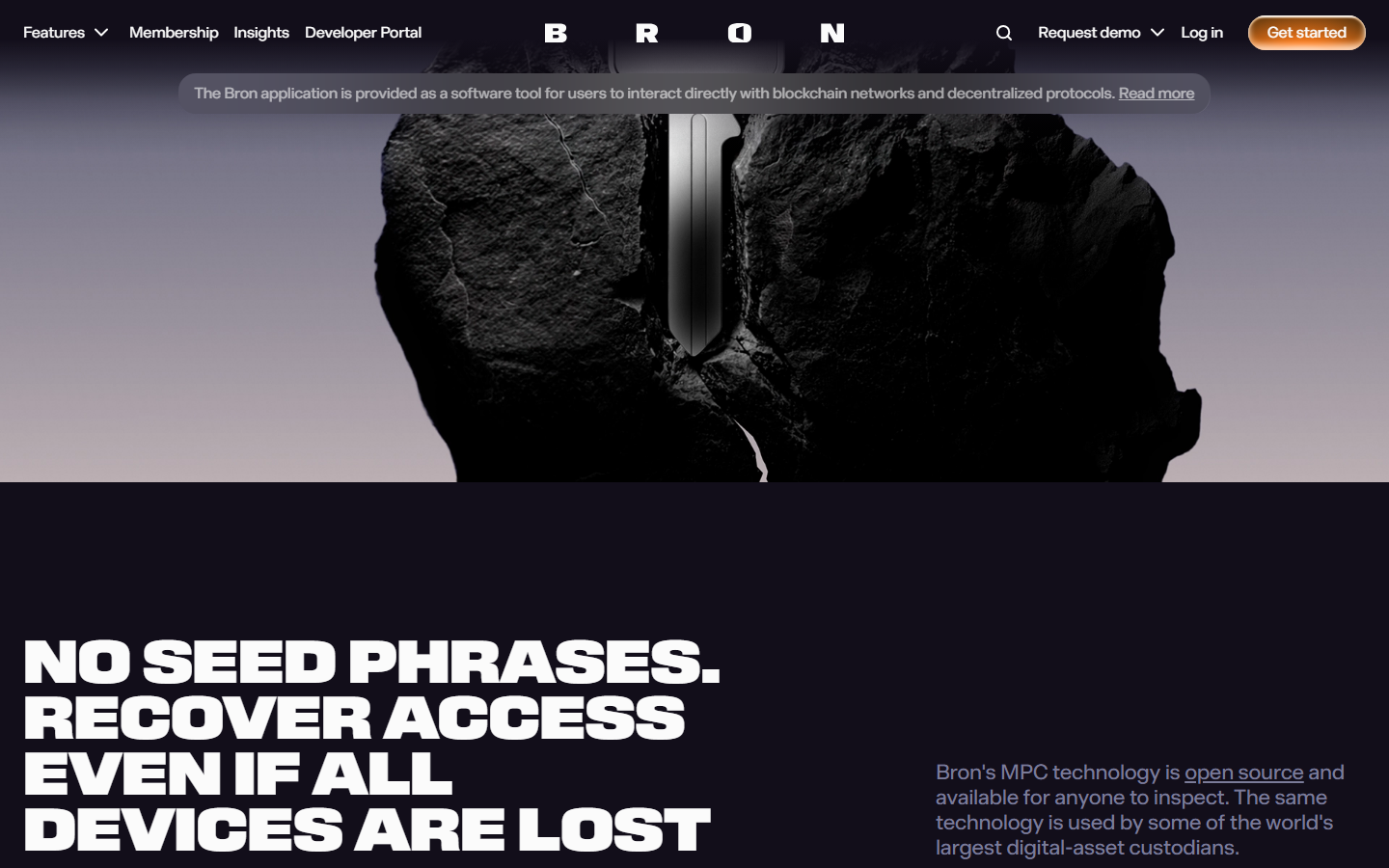
The report separates two failure modes. In seed-phrase wallets, the phrase is a single fatal credential. Bron says there is no seed phrase to write down. Recovery uses guardian codes, a FaceScan or a 30-day self-recovery, per the report, and Bron's recovery setup is where those options are configured.

Bron recovery page, as seen in November 2026.
Bron describes its MPC key architecture as split into three shards, so no single party, including Bron, can sign alone. It says users can recover access through an independent third-party shard holder if Bron shuts down. The shard structure and the shutdown fallback could not be checked from the app. Bron has said it is open to testing of any feature the report describes, and the next section covers what we could check on November 11, 2026.
The report says Bron supports Owner, Member and Viewer roles with per-policy approvals, which the report credits with 10 of 10 on multi-user management. A family can add an accountant or a second approver without sharing a key.
On inheritance, the report says four of the ten wallets have nothing at all. Bron Digital Inheritance works as a claim process: only a designated beneficiary can start a claim, which runs a 12-month delay, or six months with two guardian codes. The owner, a guardian or a beneficiary can cancel it. The report describes Zengo as using an inactivity timer of 3 to 24 months.
For a large holder, a visible balance is a security issue. The report says Bron addresses discretion at two levels. Accounts can be hidden behind a separate PIN through Bron's hidden accounts, and for nine tokens on Ethereum, per the report, amounts can be made confidential through the Zama standard. Sender and receiver addresses stay public.
On November 11, 2026, we installed Bron Desktop 1.0.355.0 for Windows, created a new workspace and went through the onboarding, dashboard and security settings.
Onboarding was quick and light. Sign-up took an email code and a passkey, with no identity document requested, and the screen explains plainly that without the passkey, signing in is not possible even if the email is compromised. That is a clear, security-first message for a new user. The app needs the Windows passkey service, so a Windows Hello PIN has to be set first.
The dashboard is easy to read. A Main account lists BTC, ETH, USDT, BNB and USDC, with Transfer, Deposit, Buy/Sell, Swap and Earn one click away from every screen. A banner prompts new users to set up recovery, and the security page says recovery takes 48 hours once it is configured, with FaceScan powered by iProov or two guardians who cannot see balances.

Security page of a fresh Bron workspace, November 11, 2026.
The security controls the report praises are all there and well organized in Bron's security settings. Transaction limits, an address book lock, working hours, GeoLock, linked devices and hidden-account PINs sit in one menu, and a security policy change rule applies a 48-hour delay before changes take effect. The workspace also shows a security level gauge and a monthly checklist that guide a new owner toward switching these protections on.

Security policies page, November 11, 2026.
Team features are visible from day one. The invite screen offers Team member, Guardian and Beneficiary roles, which map neatly onto the approver, recovery and inheritance needs the report describes, though the labels differ from the Owner, Member and Viewer names used in the report. The Earn page listed twelve staking assets, more than the ten the report counts, with ETH at 2.50%, SOL at 5.08% and ZAMA at 22.61%, plus 3.00% on USDT and USDC. Buy/Sell runs through a partner, Noah, which states that Bron does not process the transactions.
The report itemizes Bron's 16 lost points, and a buyer should read them as closely as the wins. Five of them come from one line: AML screening, where Bron scores zero. The report says that is not unique to Bron, since none of the ten wallets screens incoming transactions for AML risk.
The next largest gap is trading, where Bron loses four points. It offers tokenized US stocks and ETFs inside the wallet, but no perpetual futures at the time of this writing (Bron says perpetual futures will be launched by the end of 2026), so a holder who trades perpetuals would have to connect an outside venue. Fiat costs two points because Bron has no card, although bank rails work in both directions once verification is done.
Five smaller gaps cost one point each. Bron covers 99.0% of market cap but lacks Dogecoin and Monero. Cross-chain swaps worked for six of the seven test pairs, per the report. Fraud tooling has no address risk scoring. Staking is narrower than at Ledger and Trust Wallet. Support runs 24/7 over chat, but the report names Zengo as faster.
Bron is the better fit for a family or team that cares about recovery, shared approvals and succession, and a weaker fit for an active perpetuals trader or anyone who wants a physical device or a card. The report was supplied for this article and its criteria favor MPC products, so treat the ranking as one source and run your own diligence.
Bron: bron.org
This post is commissioned by Bron and does not serve as a testimonial or endorsement by Coincu. Scores and rankings are taken from a supplied report and were not produced by Coincu. This post is for informational purposes only and should not be relied upon as a basis for investment, tax, legal or other advice. Crypto-assets are high risk and can lose value. Features, fees and limits change, so check current terms and conduct your own research before moving funds.