Cardano Founder Charles Hoskinson Makes Exclusive Statements About the Future of ADA
Charles Hoskinson, founder of IOHK and Cardano, highlighted the recent bridge attacks and security vulnerabilities, stating that the cryptocurrency industry needs to mature. Arguing that focu
A
AnonymousCryptoCompass newsroom
July 26, 2026
2 min read
NEWS
Hero article visual / chart / editorial image
CryptoCompass editorial visual for altcoins coverage.
Charles Hoskinson, founder of IOHK and Cardano, highlighted the recent bridge attacks and security vulnerabilities, stating that the cryptocurrency industry needs to mature. Arguing that focusing solely on speed is the wrong approach to addressing security issues, Hoskinson emphasized the necessity of zero-knowledge (ZK) technologies and decentralized insurance systems.
Referring to the recent hack on a third-party bridge used on the Binance-Cardano line, Hoskinson stated that traditional software security models are insufficient against AI-powered cyberattacks.
He stated that instead of relying on people or multi-signature (multisig) structures, there should be a shift to ZK systems (e.g., the Midnight project) that rely on mathematics. He argued that for the sector to reach traditional financial levels, optional insurance pools (RWA-based) that can compensate users for their losses should be established.
Hoskinson announced that the Cardano ecosystem has successfully completed its v11 upgrade, stating that this update is the first major hard fork to be implemented entirely through on-chain community voting. The new update adds the Groth16 ZK proof-of-service verification infrastructure to the system. The next major update, Leios, aims to increase Cardano’s transaction speed by approximately 60 times. Hoskinson also stated that Cardano has completed its legislative and judicial-like governance mechanisms, and that a decentralized “executive authority” will be created to manage marketing, commercial adoption, and growth strategies.
Hoskinson harshly criticized Ethereum’s governance and financing model, drawing attention to Cardano’s treasury system. He stated that Cardano’s development is sustained thanks to its on-chain treasury, arguing that Ethereum’s lack of decentralized governance has led to it falling under the control of large corporations and oligarchic structures.
Hoskinson stated that Layer-2 (L2) solutions in the Ethereum ecosystem are “parasitic” and harm the main chain, adding that Cardano, on the other hand, provides ADA holders with multiple token returns through a “partnered” L2 model.
SMBC Nikko Securities, Nethermind, Uniswap Labs, Base, and Nyx Foundation signed a memorandum of understanding on October 2, 2026 to develop a Japan-focused “DeFi Gateway” The gateway will us
The cryptocurrency market moved lower on October 3, with Bitcoin and Ethereum both declining while Worldcoin gained more than 10%. Midnight posted the strongest gain among the 100 largest cry
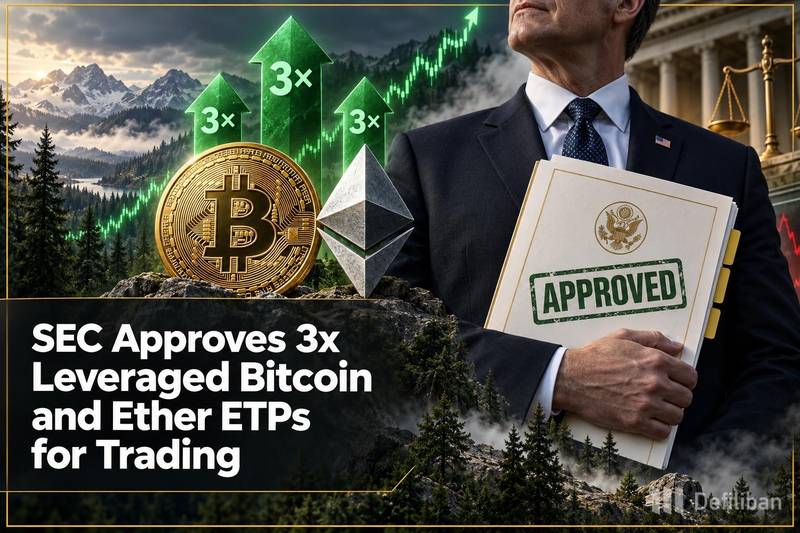
A Bloomberg ETF analyst has reported that the U.S. Securities and Exchange Commission approved 3x leveraged Bitcoin, Ether, and other exchange-traded products for listing and trading, marking