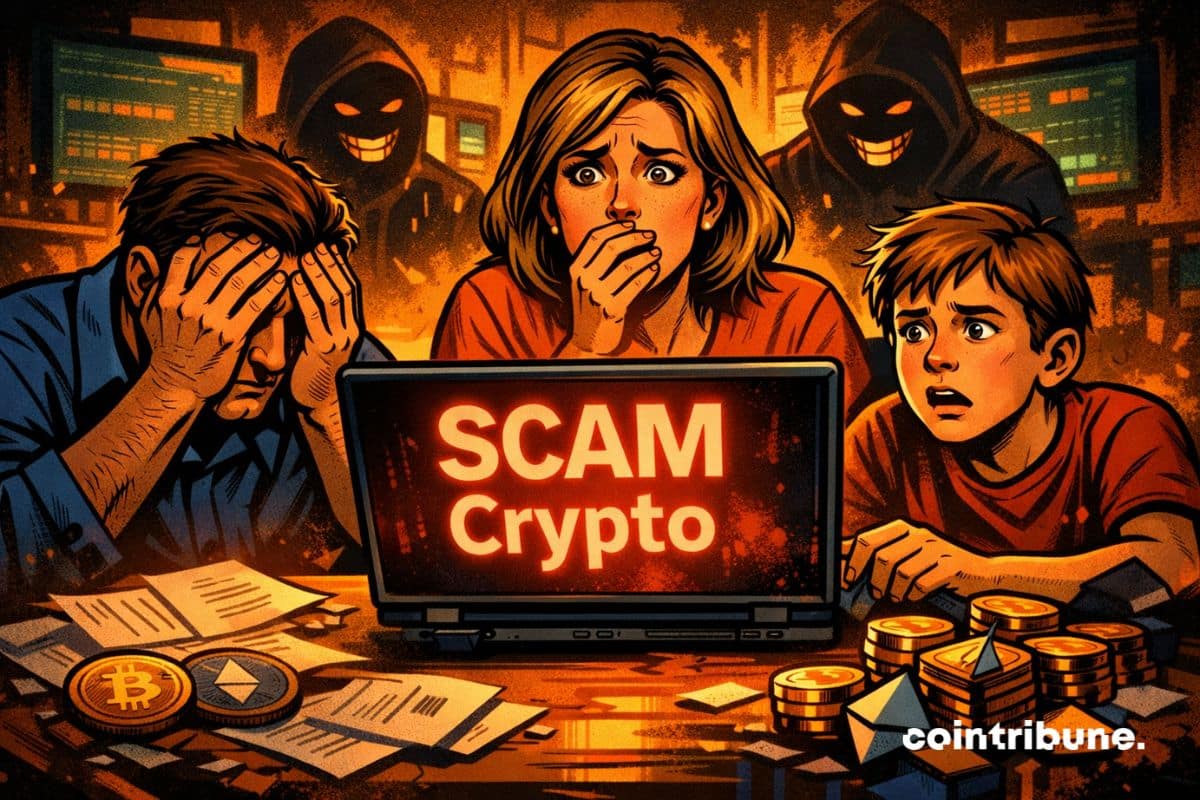
In 2025, the United States lost $11 billion due to crypto scams
In 2025, crypto scams cost Americans 11 billion dollars and the FBI sounds the alarm. Between fake investments, hacked wallets, and sophisticated scams, crypto remains a playground for frauds
A
AnonymousCryptoCompass newsroom
June 20, 2026
2 min read
NEWS
CryptoCompass editorial visual for altcoins coverage.
In 2025, crypto scams cost Americans 11 billion dollars and the FBI sounds the alarm. Between fake investments, hacked wallets, and sophisticated scams, crypto remains a playground for fraudsters. Why is the market struggling to secure itself?
In brief
11 billion dollars, the record cost of crypto scams in the United States in 2025, according to the FBI.
Fake investments and fake DeFi apps, the preferred methods of crypto fraudsters.
Anonymity, lack of regulation, and ignorance, the persistent flaws of the crypto market.
The FBI warns of 11 billion dollars in losses due to crypto scam in 2025!
The FBI numbers are relentless. In 2025, crypto-related scams caused 11 billion dollars in losses in the United States, more than half of the total cybercrime damages. Indeed, fraudsters mainly target investors via fake platforms, liquidity pool scams, or schemes imitating decentralized finance (DeFi) apps.
Moreover, elderly people are particularly vulnerable, sometimes losing their entire savings in a few clicks. The FBI has responded by freezing over 3,000 illicit wallets, saving 500 million dollars. Yet, the anonymity of blockchain transactions and the increasing sophistication of methods (deepfakes, fake technical support) make tracking difficult. Crypto, the land of all promises, is also the land of all scams.
Why is the crypto market still having trouble protecting itself?
Bitcoin, the pioneer of cryptos, symbolizes both innovation and the persistent flaws of the sector. Despite technological advances like smart contracts or verification protocols, the market remains vulnerable. Why?
First, anonymity: bitcoin or ethereum transactions are pseudonymous, which complicates tracking stolen funds;
Then, the lack of uniform regulation: each country has its rules, and fraudsters exploit these gray areas;
Finally, user naivety: many ignore security basics (private keys, 2FA) or fall for emotional scams or promises of quick gains.
With 11 billion dollars lost, crypto scams are certainly the biggest financial threat of 2025. The market will therefore have to professionalize to survive. BTC, ETH, SOL… what means do you use to protect your cryptos?
VICTORIA, Seychelles, September 9, 2026 As Tesla stages one of its sharpest single day moves in months and Nvidia shakes off a volatile session from the day before, Zoomex, the global cryptoc
Top Meme Coin to Buy questions get harder to answer well without actually lining up presale progress, disclosed targets, and what remains unconfirmed for each project. This update does that f
Is GramNetwork Legit or a Scam? Telegram mining apps have earned a mixed reputation. Some, like Notcoin, delivered a real token at launch. Others turned out to be nothing more than a bot coll