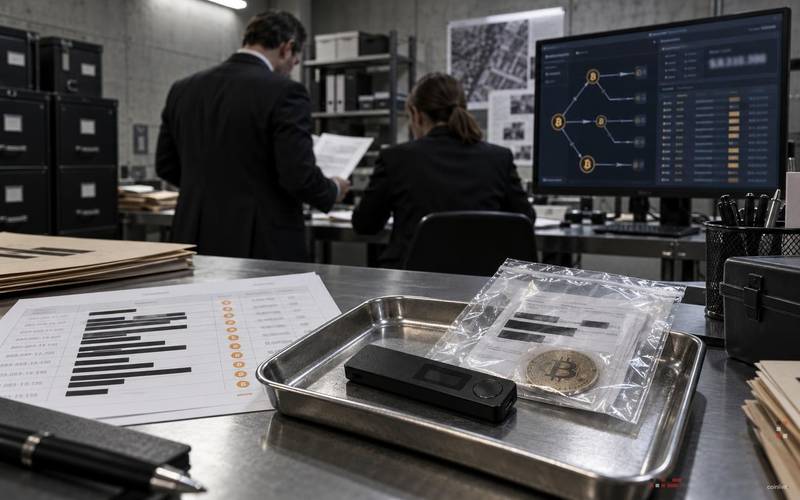
Blockchain analytics firm Chainalysis has identified one of the largest victims of the Ledger hardware-wallet implant theft as a task scam operator, who lost more than 60 BTC, worth about $4.
Blockchain analytics firm Chainalysis has identified one of the largest victims of the Ledger hardware-wallet implant theft as a task scam operator, who lost more than 60 BTC, worth about $4.8 million, to the same attackers their victims never could touch.
Chainalysis said the stolen bitcoin originated from a task scam, in which people were paid to fake product sales and reviews. Once participants built up an apparent balance, a purported negative balance was shown and they were told to deposit money before their supposed earnings could be released, according to CoinDesk reporting. For related coverage, see Bitcoin, Ether and XRP Rebound After Flash Crash.
Source: @chainalysis on X
What is known about the reported $4.8M Bitcoin theft
According to Decrypt, scam proceeds flowed into three Ledger wallet addresses on September 22. All three addresses were then emptied into a single wallet on October 9, the same date Ledger publicly disclosed the implant incident. For related coverage, see UK Judge Applies Chinese Law in £4B Bitcoin Fraud Claims.
Reported Bitcoin loss
60+ BTC · about $4.8M
Chainalysis said the funds were tied to a task scam operator who became a victim of the Ledger theft.
Chainalysis did not disclose where this particular operator obtained their Ledger devices. Ledger's confirmed-loss scope from its October 9 disclosure concerned devices sold through reseller CryptoBilis, but that purchase channel has not been confirmed for this specific victim. Treating the CryptoBilis link as established fact for this operator would go beyond what the evidence supports.
How a Ledger implant could enable a wallet theft
Ledger said an unauthorized implant discovered in some CryptoBilis-sold devices could read the 24-word recovery phrase directly from the device screen and transmit it over a mobile network using an embedded eSIM, according to CoinDesk's earlier technical report. Once an attacker holds a recovery phrase, they can reconstruct the wallet on any device and move funds without any further access to the original hardware.
The attack path separates into three distinct stages: device compromise at the supply-chain level, passive seed-phrase exfiltration over the mobile network, and a timed sweep once balances are deemed worth draining. The coordinated drain of three addresses into one wallet on a single day suggests the attacker monitored holdings before acting.
No transaction hashes or wallet addresses for the 60-plus BTC movement were disclosed in the available evidence, so the individual transfers cannot be independently verified on a block explorer at this time.
TLDR Keypoints and wallet-security takeaways
The theft sits within a broader wave of hardware-wallet supply-chain concerns that Ledger has been forced to address publicly this month. Bitcoin traded at $80,817 at the time of writing, with the Crypto Fear & Greed Index sitting at 53 (Neutral), meaning significant on-chain value remains at risk for any user holding self-custody bitcoin on potentially compromised hardware.
- Reported loss: More than 60 BTC, about $4.8 million, attributed by Chainalysis to a task scam operator who became a Ledger-theft victim.
- Unconfirmed: Whether this specific victim's devices were sourced through CryptoBilis; Chainalysis did not disclose the purchase channel.
- Security lesson: Buy hardware wallets only from the manufacturer's official store or verified retailers; inspect devices for physical tampering; never store a recovery phrase digitally; and verify transaction details on the device screen before signing.
Hardware-wallet owners who acquired devices through secondary or unverified resellers should treat their current seed phrase as potentially exposed and migrate funds to a freshly generated wallet on a verified device. Ledger has released new signing hardware since the incident disclosure, though the company has not suggested that all existing devices are affected.
Watch for Chainalysis or Ledger to publish further wallet attribution that ties this theft to the CryptoBilis supply chain, or to disclose on-chain transaction identifiers that would allow independent verification of the 60-plus BTC sweep.
Disclaimer: This article is for informational purposes only and does not constitute financial or investment advice. Cryptocurrency and digital asset markets carry significant risk. Always do your own research before making decisions.
Read original article on coinlive.me