North Korea-linked actors are reportedly laundering funds tied to the Binance hack by routing them through a new cryptocurrency wallet every 25 seconds, according to a public service announce
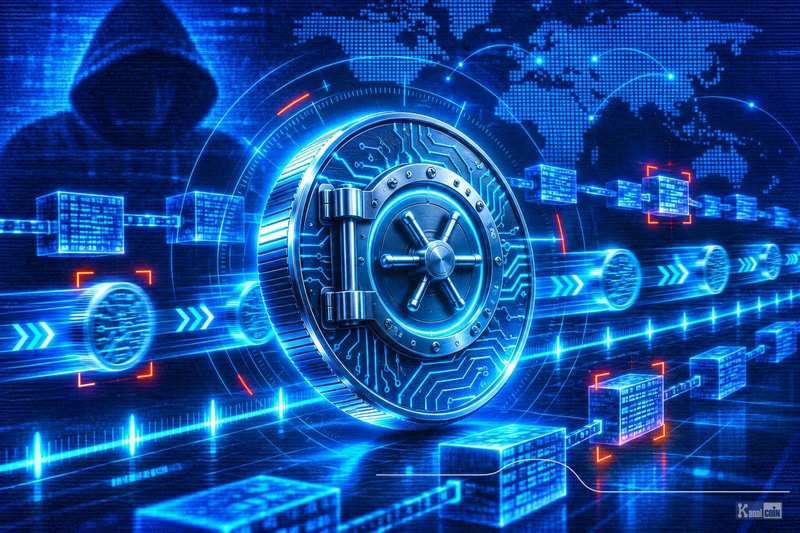
North Korea-linked actors are reportedly laundering funds tied to the Binance hack by routing them through a new cryptocurrency wallet every 25 seconds, according to a public service announcement published by the FBI's Internet Crime Complaint Center (IC3). The reported cadence points to an automated, high-speed wallet rotation strategy designed to fragment the on-chain trail left by the stolen funds.
The IC3 advisory attributes the activity to state-linked North Korean actors but does not independently verify the total value of funds being moved or the precise start date of the laundering operation. All attribution in this article reflects the reported claims in that advisory and has not been independently substantiated by this publication.
What the reported 25-second rotation actually means
A wallet rotation of one new address every 25 seconds means that, over the course of a single hour, funds could theoretically pass through more than 140 separate wallet addresses. At that pace, the transaction graph an investigator must reconstruct grows exponentially with each passing minute.
The FBI has previously linked North Korea to the Binance hack, flagging specific crypto addresses across Bitcoin, Ethereum, and Solana networks in a prior advisory. The reported 25-second cadence, if accurate, would represent an escalation in the operational tempo of that laundering effort.
Rapid wallet cycling of this kind is typically executed by automated scripts rather than manual transfers. Each hop between wallets requires a separate on-chain transaction, meaning each step leaves a timestamped, publicly readable record on the blockchain, even if the addresses themselves are freshly generated and previously unseen.
Why rapid wallet changes complicate, but do not defeat, on-chain tracing
How wallet rotation works
In a wallet rotation scheme, funds move from address A to address B to address C in rapid succession. Each new address has no prior transaction history, which means automated screening tools that flag known bad addresses may not immediately catch the intermediate hops. The goal is to increase the analytical workload required to trace a full transaction path back to its origin.
Southeast Asian exchanges and compliance teams, including those operating under frameworks set by regulators in Singapore, Thailand, and Indonesia, rely heavily on address-screening tools that check wallets against published blacklists. A freshly created address that has never appeared on a sanctions list will pass those initial checks, at least until the connection to flagged funds is established. Thai regulators have already signaled heightened scrutiny of exchange-level controls in the wake of the Binance hack.
What analysts can still follow
Despite the obfuscation attempt, rapid wallet rotation does not erase data from a public blockchain. Every transaction is permanently recorded with a timestamp, a sender address, a receiver address, and a value. Blockchain analytics firms can reconstruct transaction chains by following the flow of funds across hundreds of intermediate addresses, identifying clustering patterns, and flagging wallets that share common inputs or behavioral signatures. Investigators can follow these chains directly on public block explorers such as BscScan, which indexes every transaction on the BNB Chain.
The sheer volume of transactions generated by a 25-second rotation rate may actually assist investigators in one respect: it creates a distinctive, machine-like pattern on-chain that stands apart from typical organic wallet activity. That signature can itself become a detection heuristic. Market sentiment around the Binance hack has already prompted broader scrutiny of suspicious on-chain flows by institutional participants.
Investigators tracing state-linked hacks have previously succeeded in following funds through hundreds of wallet hops before identifying off-ramp points, typically exchanges or over-the-counter desks where digital assets are converted to fiat currency. Those conversion points remain the critical chokehold in any laundering chain, regardless of how many intermediate wallets are used.
Regional implications for Southeast Asian exchanges
Exchanges operating in the Philippines, Vietnam, Indonesia, and Thailand face direct exposure if laundered funds attempt to cash out through regional platforms. Compliance teams at exchanges such as Indodax, Tokocrypto, and Coins.ph rely on transaction monitoring systems that flag suspicious inbound flows. A high-velocity wallet rotation scheme that continuously generates fresh addresses places a heavier burden on those systems to detect anomalies beyond simple address matching.
The IC3 advisory effectively puts regional platforms on notice: waiting for an address to appear on a published sanctions list before flagging it is insufficient when addresses are being rotated faster than blacklists can be updated. Behavioral screening, which looks at transaction velocity, amounts, and timing patterns rather than address identity alone, becomes essential in this environment. The Binance hack's broader market impact has already prompted compliance conversations across the region.
Regulators across ASEAN have increasingly pushed exchanges to implement travel rule compliance and real-time transaction monitoring. The reported laundering pattern described in the IC3 advisory underscores why address-only screening is a floor, not a ceiling, for anti-money-laundering controls. Binance itself has acknowledged being targeted in the underlying incident that set this laundering chain in motion.
TLDR Keypoints
- North Korea-linked actors are reportedly moving alleged Binance hack proceeds through a new wallet every 25 seconds, according to an IC3 advisory; this claim has not been independently verified.
- The reported 25-second cadence describes an automated wallet rotation pattern intended to fragment the on-chain transaction trail and outpace address-blacklist updates used by exchange compliance teams.
- Rapid wallet rotation complicates but does not prevent blockchain tracing; every transaction remains permanently recorded, and the machine-like velocity itself creates a detectable behavioral signature for analysts.
Disclaimer: This article is for informational purposes only and does not constitute financial or investment advice. Cryptocurrency and digital asset markets carry significant risk. Always do your own research before making decisions.
Read original article on kanalcoin.com