The Quantum threat to crypto is garnering greater interest after France revealed intentions to begin imposing post-quantum encryption requirements for authorized security solutions starting i
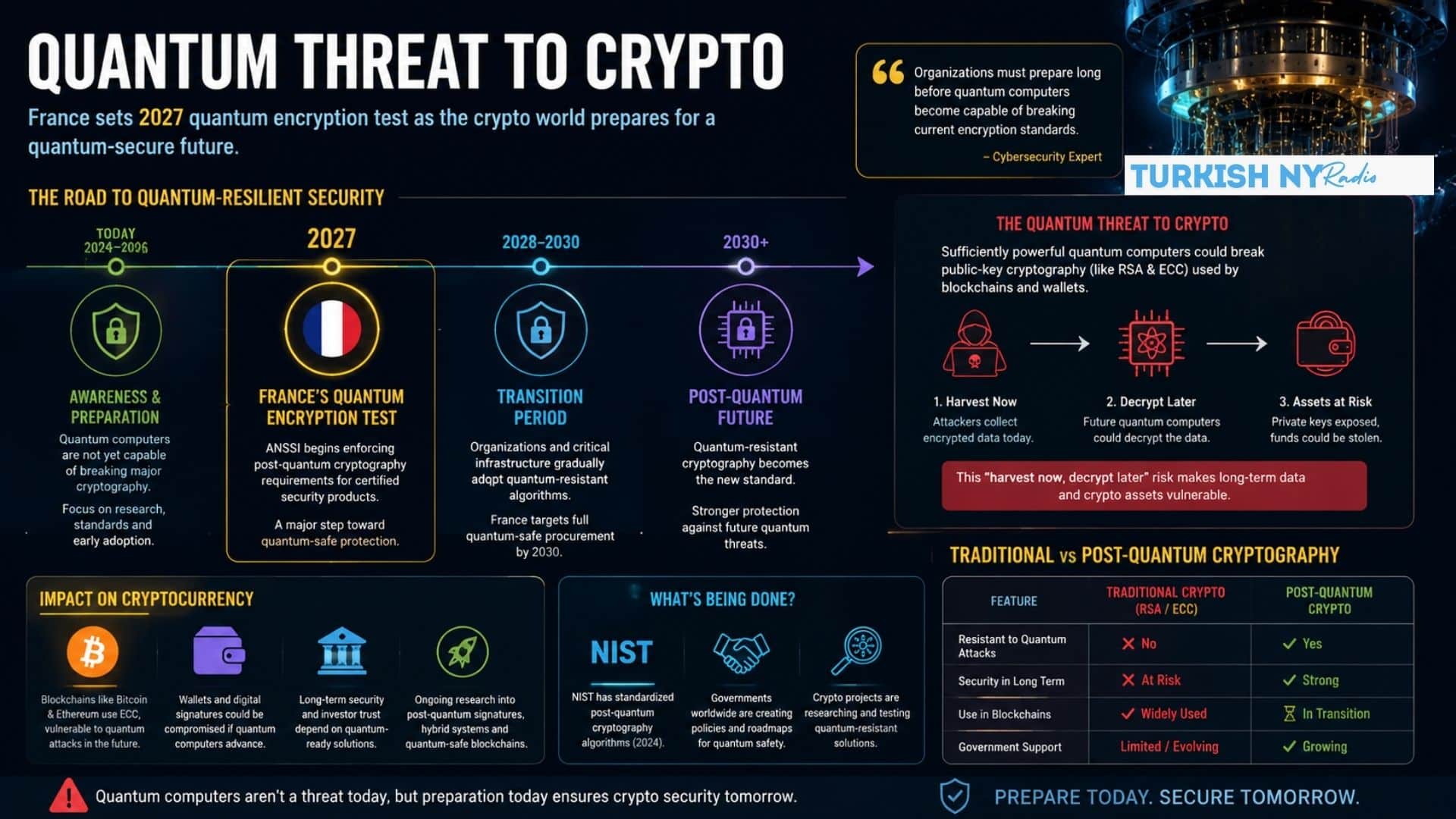
The Quantum threat to crypto is garnering greater interest after France revealed intentions to begin imposing post-quantum encryption requirements for authorized security solutions starting in 2027. The action follows rising fears that future quantum computing systems may compromise standard encryption methods used to safeguard banking institutions, public sector systems, and blockchain technology itself.
ANSSI, France’s cybersecurity organization, has developed a roadmap to accelerate the deployment of quantum-resistant encryption solutions. While real quantum assaults are still years away, experts warn that countermeasures ought to start now to reduce long-term threats. The statement has prompted debate within the digital currency market, where the Quantum threat to cryptocurrency remains a hot subject among investors, tech companies, and legislators.
France Pushes for Post-Quantum Security
France’s decision marks one of the most significant government-led initiatives addressing the Quantum threat to crypto and digital security. Under the proposed framework, products seeking certification will be expected to support post-quantum cryptographic mechanisms designed to resist attacks from future quantum computers.
The policy is intended to protect sensitive information against the so-called “harvest now, decrypt later” strategy, where attackers collect encrypted data today with the expectation of decrypting it once advanced quantum machines become available.
“Organizations must prepare long before quantum computers become capable of breaking current encryption standards,” cybersecurity experts have repeatedly emphasized.

Why in the world Quantum Computing is Important for Currencies
The quantum threat to crypto arises from the prospect that enough powerful quantum systems might break commonly used public-key encryption methods like RSA and Elliptic Curve encryption (ECC). Certain digital currencies, including Bitcoin and Ethereum, use ECC to safeguard transactions and wallet access.
If quantum technologies advance to the requisite level, attackers might conceivably infer private keys from publicly accessible keys, posing significant security issues for online assets. Although experts believe that existing quantum technology is a long way from having this capacity, the quantum threat to cryptocurrency continues to fuel development on cognitive-resistant blockchain technologies.
Industry Response and Ongoing Research
The cryptocurrency community has already begun to investigate ways to solve the Quantum danger to crypto. Certain blockchain projects are looking toward post-quantum identification techniques that can survive assaults by quantum computer technology.
“Migration to post-quantum cryptography is not a question of if, but when,” many security analysts argue.
The rising emphasis on quantum-safe solutions illustrates how seriously the industry takes the quantum danger to cryptocurrency, even if immediate risks remain low.
Global Implications Beyond France
France’s declaration has the potential to have an impact on other governments and regulatory organizations throughout the world. Similar projects are sprouting in US, Europe, and Asia as politicians plan for a future defined by quantum computer technology.
For digital currency markets, quantum physics threat to crypto may become a crucial element in determining sustained blockchain stability. Organizations that effectively adopt a quantum-resistant protections may receive more confidence from organizations and users.
As authorities expedite adoption timetables, conversations about the quantum threat to cryptocurrency are anticipated to heat up in both the public and private industries.
Conclusion
France’s 2027 post-quantum encryption program emphasizes the growing need to prepare for a quantum-equipped reality. Whereas today’s quantum computing machines cannot access large blockchain systems, quantum computing’s danger to cryptocurrencies remains a tactical concern that requires proactive planning. By investing in Quantum threat to crypto alternatives now, governments and blockchain developers may prevent future hazards and improve technological security for subsequent generations.
Summary
France has made public plans to implement post-quantum cryptography rules starting in 2027, citing mounting worries about future quantum computer capabilities. The program seeks to safeguard sensitive data from future quantum-based assaults and urges enterprises to use quantum-resistant protection. The development emphasizes the need of planning for growing security threats in the bitcoin industry. Although existing quantum threats to crypto are incapable of breaching blockchain networks, industry experts are constantly investigating methods to mitigate future dangers and assure long-term viability.
Glossary of Key Terms
Quantum Computing: An extreme computer technique that processes data using quantum physicals.
Post-Quantum Cryptography (PQC): Cryptographic algorithms meant to protect against quantum computer-related assaults.
Elliptic Curve Cryptography (ECC): A popular encryption method that protects multiple blockchain systems.
Harvest Now, Decrypt Later: A method that collects encrypted data today for later decryption with more sophisticated technology.
Quantum-Resistant Encryption: Security techniques developed expressly to withstand quantum computation attacks.
FAQs for Quantum Threat to Crypto
1. What exactly is the Quantum danger to cryptocurrency?
It refers to the possibility that future quantum computers might compromise the cryptography mechanisms that protect blockchain infrastructure and digital resources.
2. For what reason is France implementing post-quantum standards?
France intends to prepare administration and vital infrastructure systems for the future cybersecurity risks posed by quantum computing technology.
3. Can modern quantum computers smash Bitcoin?
No, existing quantum computing systems are insufficiently strong to hack Bitcoin or other significant blockchain networks.
4. What constitutes post-quantum cryptanalysis?
It is a class of encryption methods that are designed to be secure even against contemporary quantum computers.
5. How has the cryptocurrency sector responded?
Developers and academics are looking toward quantum-resistant cryptography and hybrid security approaches to defend future blockchain systems.
Sources