A UK court has ruled that Chinese law governs the ownership claims tied to 61,000 seized bitcoin, a choice-of-law decision that shapes how competing claimants must prove their rights to one o
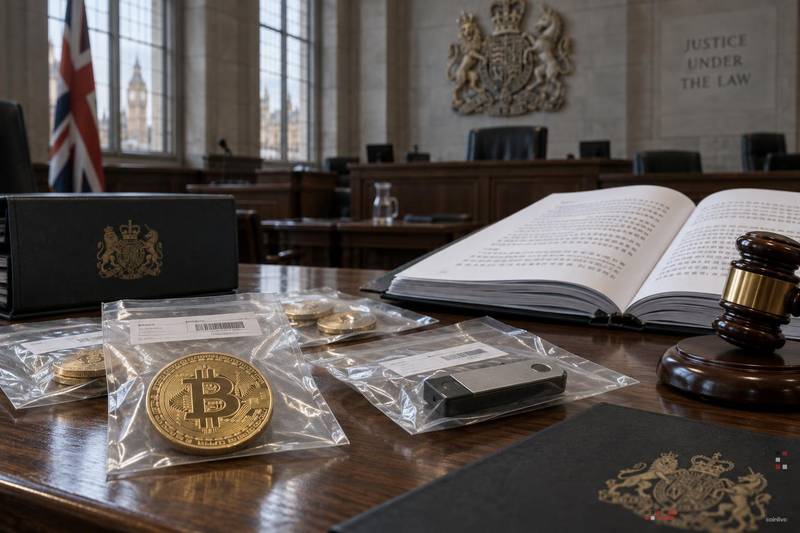
A UK court has ruled that Chinese law governs the ownership claims tied to 61,000 seized bitcoin, a choice-of-law decision that shapes how competing claimants must prove their rights to one of the largest crypto asset pools ever frozen by a Western jurisdiction.
The ruling does not determine who ultimately owns the bitcoin. It establishes which legal framework the court will apply when assessing those competing claims, a threshold question in any cross-border dispute where the origin of funds and applicable property rules differ between countries. For related coverage, see Strive Acquires 3,311 BTC in Latest Bitcoin Purchase.
According to reporting by CryptoSlate, the court also found that being defrauded is not, on its own, sufficient grounds to establish a claim over the seized funds. That threshold condition matters because it signals claimants cannot rely solely on alleged victimhood; they must satisfy the substantive requirements set out under Chinese law. For related coverage, see Bitcoin Volatility Rises as Liquidations Top $800M.
What a Governing-Law Ruling Actually Decides
A choice-of-law ruling is a procedural milestone, not a final ownership verdict. It tells the court which country's legal rules to use when weighing the evidence. In this case, that means Chinese property and fraud law will define what constitutes a valid ownership interest in the 61,000 BTC at stake. For related coverage, see Bitcoin Oct. 16 Options: $451M at $76K-$80K Strikes.
The UK court retains jurisdiction over the proceedings. What changes is the substantive legal test: claimants must now frame their arguments within Chinese law concepts of title and entitlement, rather than English property law defaults. This distinction can be outcome-determinative, since the two systems treat tracing rights and constructive ownership differently. For related coverage, see Bitcoin Nears $85K as Ethereum Derivatives Flash Warnings.
Courts in other jurisdictions have also grappled with disputed bitcoin seizures. In a separate US proceeding, a judge rejected third-party claims over 127,271 BTC forfeiture, illustrating how difficult it is for claimants to prevail once assets are in state custody regardless of jurisdiction.
What Remains Unresolved
The court has not ruled on whether any specific claimant holds valid title to the bitcoin. The governing-law decision clears the procedural path for that merits assessment, but the substantive questions remain open. Claimants who allege fraud or theft must now demonstrate that Chinese law supports their specific theory of ownership.
The scale of the dispute, with approximately $5 billion in bitcoin at stake per CryptoSlate's reporting, makes this one of the most consequential digital asset legal proceedings currently active in a UK court. The next phase will turn on whether any claimant can satisfy the Chinese law standard the court has now set.
Cross-border crypto disputes where assets are held in one jurisdiction but originate in another increasingly force courts to resolve these conflicts-of-law questions before reaching the merits. The outcome here will be watched closely by legal practitioners handling similar seized-asset cases across Europe and beyond.
Additional source references: source document 1.
Disclaimer: This article is for informational purposes only and does not constitute financial or investment advice. Cryptocurrency and digital asset markets carry significant risk. Always do your own research before making decisions.
Read original article on coinlive.me